Sales








Last Updated: October 2026
Electric bikes have become a popular way to commute, run errands, and replace short car trips. As they get faster and more common, states are paying closer attention to how ebikes are classified and where they can be ridden.
Federal law sets a product-safety definition, but states decide most riding rules: classes, age limits, helmets, licensing, registration, and where you can ride. In 2026, California, New Jersey, Delaware, Hawaii, Oregon, Tennessee, Utah, Washington, and North Carolina all enacted changes. This guide covers the rules in effect now and flags changes that haven't taken effect yet.
Black Friday Starts Now

- What Is an Electric Bike?
- How Do Class 1, Class 2, and Class 3 Ebikes Work?
- Major 2026 Electric Bike Law Updates
- Do You Need a License for an Ebike?
- What Is the Minimum Age to Ride an Electric Bike?
- Do You Need to Register or Insure an Electric Bike?
- Do You Have to Wear a Helmet on an Ebike?
- Where Can You Ride an Ebike?
- What Happens If You Modify an Ebike?
- Ride Safely and Comfortably With Velotric Electric Bikes
- Frequently Asked Questions
What Is an Electric Bike?
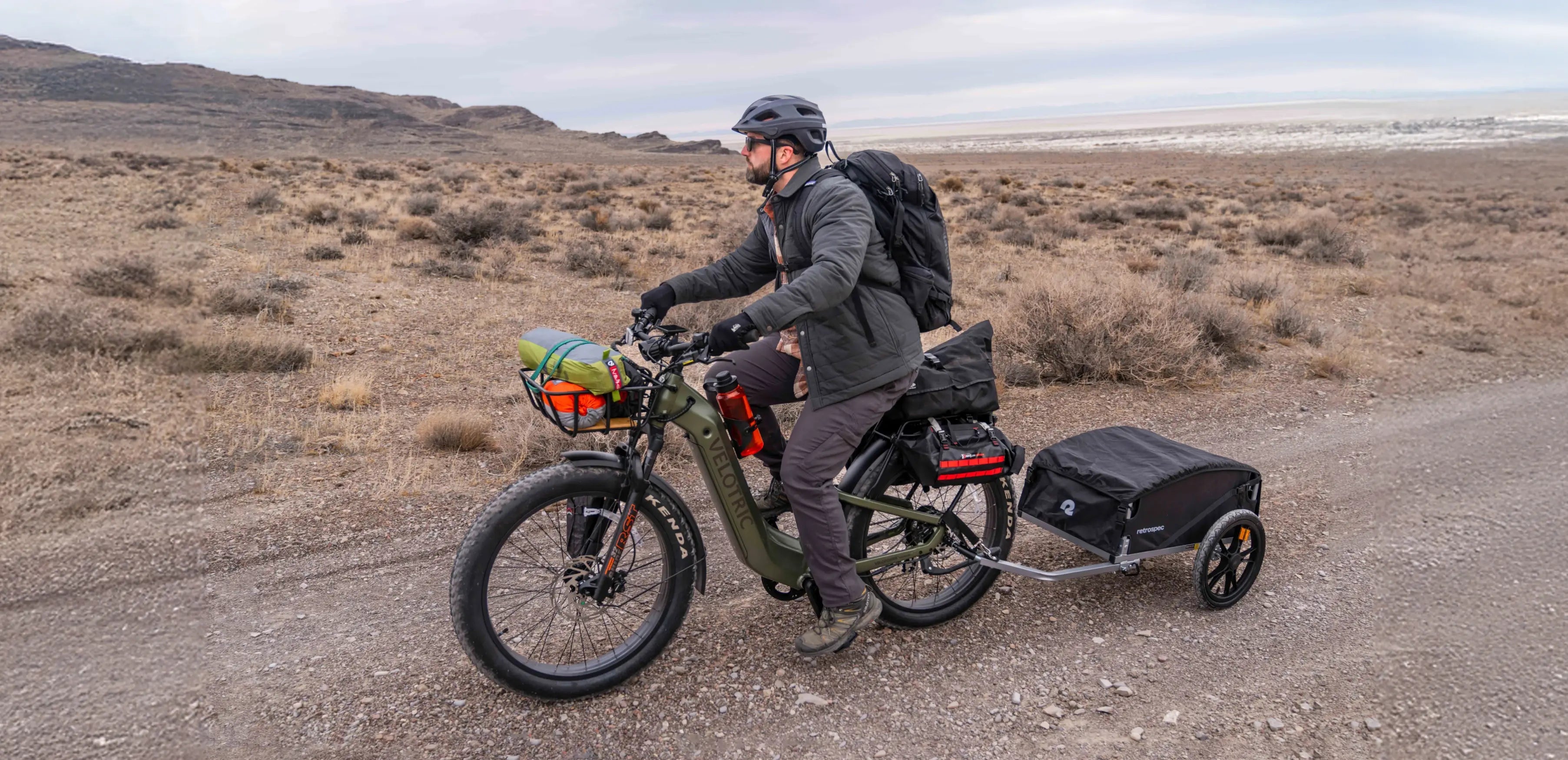
Under federal law (15 U.S.C. §2085), a “low-speed electric bicycle” has fully operable pedals, a motor under 750 watts, and a top speed under 20 mph on motor power alone (measured on a paved, level surface with a 170-pound rider). The CPSC regulates these bikes as consumer products.
That definition governs how ebikes are built and sold, not where or how you ride them. There is no national Class 1, Class 2, and Class 3 traffic law. States set the rules on throttles, speed, helmets, age, and access to sidewalks, paths, and trails.
How Do Class 1, Class 2, and Class 3 Ebikes Work?
Most state laws are built around this model:
| Ebike Class | Motor Operation | Assistance Stops At |
|---|---|---|
| Class 1 | Motor assists while the rider pedals | 20 mph |
| Class 2 | Motor can propel the bike without pedaling | 20 mph |
| Class 3 | Motor assists while the rider pedals | 28 mph (speedometer typically required) |
States don't all define these classes the same way. California, for example, lets Class 1 and Class 3 ebikes have a start-assist or walk mode that moves the bike on motor power alone up to 3.7 mph without making it a Class 2. See California Vehicle Code §312.5.
Which States Use the Three-Class Ebike System?

Most states now use some version of the three-class system. By our count, as of October 2026, 42 states do (definitions and operating rules still vary): Alabama, Arizona, Arkansas, California, Colorado, Connecticut, Delaware, Florida, Georgia, Hawaii, Idaho, Illinois, Indiana, Iowa, Kansas, Louisiana, Maine, Maryland, Michigan, Minnesota, Mississippi, Missouri, Nebraska, Nevada, New Hampshire, New Mexico, New York, North Dakota, Ohio, Oklahoma, Oregon, Rhode Island, South Dakota, Tennessee, Texas, Utah, Vermont, Virginia, Washington, West Virginia, Wisconsin, and Wyoming.
Notable exceptions:
- New York: Class 3 may run without pedaling, assistance stops at 25 mph, and the class exists only in cities of one million or more (in practice, New York City).
- Massachusetts: Defines only Class 1 and Class 2.
- New Jersey: Uses separate “low-speed electric bicycle” and “motorized bicycle” categories instead.
- North Carolina: Its new three-class law takes effect December 1, 2026, so it isn't counted yet.
- Alaska, Kentucky, Montana, Pennsylvania, and South Carolina: Don't use the three-class framework statewide, though some parks, trails, or cities may.
A class label alone doesn't tell you where you can ride. Check your state's definitions and the rules for your route.
Major 2026 Electric Bike Law Updates
There is still no federal overhaul of ebike riding rules; those remain up to states and cities. On the product side, the CPSC published a proposed rule on June 24, 2026, that would make lithium-ion battery safety standards mandatory for ebikes and other micromobility products.
California
California's key rules:
- Rear visibility (AB 544, since Jan. 1, 2026): Ebikes need a rear red reflector or a red light with a built-in reflector at all times, not just at night.
- Battery safety (SB 1271, since Jan. 1, 2026): Batteries in ebikes sold or leased must be tested by an accredited lab. Rental rules follow on Jan. 1, 2028.
- Class 3 limits: Riders must be 16 or older, riders and passengers must wear helmets, and selling a Class 3 to anyone under 16 is an infraction (AB 965).
- Sales and labeling (SB 1167, from Jan. 1, 2027): Sellers must disclose when a vehicle isn't a legal ebike and requires registration or a license. Labeling and crash-reporting rules are also updated.
(Source: California Vehicle Code §312.5 | California Vehicle Code §21201 | California SB 1271)
New Jersey
New Jersey made one of the biggest changes of 2026. P.L. 2025, Chapter 285 took effect January 19, 2026, giving existing riders until July 2026 to comply, with first-year fees waived. The law sorts ebikes into two categories:
- Low-speed electric bicycles: Pedal-assist only, with assistance stopping at 20 mph. Registration required; insurance not required.
- Motorized bicycles: Any ebike with a throttle (up to 28 mph), or pedal-assist bikes that assist between 21 and 28 mph. Registration and insurance required.
All riders must be at least 15, wear a helmet, and hold a driver's license or an ebike license. The only exception is for riders 16 and older on low-speed ebikes from a shared-bike program contracted by a local government. (Source: P.L. 2025, Chapter 285 | NJMVC)
Delaware
Delaware's Truth in E-Bike Marketing Act (House Substitute 1 for HB 439) took effect September 24, 2026. Sellers may no longer market electric mopeds or motorcycles as ebikes, and must disclose in writing the vehicle's legal classification, maximum power, and any registration, licensing, or insurance requirements. That matters to buyers: a vehicle advertised as an “ebike” may actually be subject to motor vehicle rules.
Hawaii
Act 259 (HB 2021), signed July 15, 2026, brought the three-class system to Hawaii. Key points:
- Riders under 16 may operate Class 2 or Class 3 ebikes only under direct supervision.
- Riders under 18 must wear a helmet.
- All three classes may use sidewalks at up to 10 mph, except in business districts or where county ordinances restrict it.
- Ebikes must still be registered.
- “High-speed electric devices” (motors over 750 watts and speeds over 28 mph) are banned from public roads, bike lanes, paths, and sidewalks, with limited exceptions such as properly registered motor vehicles.
Labeling and point-of-sale rules take effect around November 12, 2026, or earlier if implementing rules are adopted. (Source: Hawaii State Legislature 2026 Acts)
Oregon
Oregon's HB 4007 took effect June 5, 2026, but its main provisions don't apply until January 1, 2027. Until then, Oregon ebike riders must generally be 16 or older. Starting in 2027:
- Minimum age drops to 14 for Class 1; it stays 16 for Class 2 and Class 3. Riders in a bicycle safety program are exempt for Class 1 and Class 2.
- Helmet rules for riders under 16 are consolidated across bikes, ebikes, scooters, and similar devices.
- Selling a bike as an ebike when it doesn't qualify, or when it is designed to be unlocked beyond its class, becomes an offense.
- Batteries and chargers sold for ebikes must be certified by an accredited lab (used sales exempt).
(Source: Oregon HB 4007)
Tennessee
Under Public Chapter 651, the minimum age to operate a Class 3 ebike on a street or highway rose from 14 to 16 on July 1, 2026. The law also clarified local and state authority over Class 1 and Class 2 access and added Class 3 path and trail rules. (Source: Tennessee SB 1782 / Public Chapter 651)
Utah
Utah's HB 381 took effect May 6, 2026. It keeps the three-class system but excludes bikes that can exceed 20 mph on motor power alone, and requires riders under 21 to wear a helmet on public roads, with limited exceptions. From January 1, 2027, sellers of electric vehicles that aren't ebikes must say so clearly.
Washington
Washington's ESSB 6110 (Chapter 159, Laws of 2026), effective June 11, 2026, narrowed the ebike definition. Bikes that can exceed 20 mph on motor power alone no longer qualify, and neither do bikes designed to be easily configured beyond the legal limits by switch, app, or software. Qualifying ebikes still need no driver's license, and riders under 16 may not operate a Class 3. (Source: Washington Chapter 159, Laws of 2026)
North Carolina
Session Law 2026-46 adds Class 1, 2, and 3 definitions starting December 1, 2026. Class 3 assistance stops at 28 mph, and Class 3 riders and passengers under 18 must wear a helmet. Cities and counties may regulate ebikes on sidewalks and multiuse paths, including restricting classes and setting speed limits, and may require helmets for riders and passengers under 18 on Class 1 and Class 2. (Source: North Carolina Session Law 2026-46)
Do You Need a License for an Ebike?

If your bike meets your state's ebike definition, you usually don't need a driver's license. For example:
- Alabama: Qualifying ebikes are exempt from license, registration, title, and insurance requirements.
- Washington: No driver's license is required.
- Massachusetts: Qualifying Class 1 and Class 2 ebikes are treated as electric bicycles rather than motorized bicycles.
- New Jersey: The major exception. Riders need a driver's license or an ebike license.
- Alaska: Licensing rules cover motorized bicycles and motor-driven cycles, so check how your ebike is classified.
If a bike exceeds your state's speed or power limits, lacks working pedals, or has been modified out of class, it may be treated as a moped or motorcycle, and licensing rules can change entirely.
What Is the Minimum Age to Ride an Electric Bike?
There is no national minimum age, and many states only set one for Class 3:
| State | Current / Relevant Rule |
|---|---|
| Alabama | Class 3 operators must be at least 16 |
| California | Class 3 operators must be at least 16 |
| Connecticut | Riders under 16 may not operate Class 3 |
| Hawaii | Riders under 16 may operate Class 2 or Class 3 only under direct supervision |
| Louisiana | Riders under 12 may not operate Class 3 |
| Michigan | Riders under 14 may not operate Class 3 |
| New Jersey | All ebike operators must be at least 15 |
| Oregon | 16 through Dec. 31, 2026. From Jan. 1, 2027: 14 for Class 1, 16 for Class 2 and Class 3 (bicycle safety program exceptions apply) |
| Tennessee | Riders under 16 may not operate Class 3 on streets or highways (raised from 14 on July 1, 2026) |
| Vermont | Riders under 16 may not operate Class 3 |
| Washington | Riders under 16 may not operate Class 3 |
That's why a national table listing “Michigan: 14” or “Washington: 16” can mislead: in both states, the limit applies only to Class 3.
Do You Need to Register or Insure an Electric Bike?
Most states don't require registration for a qualifying ebike. The main exceptions are New Jersey, where every ebike must be registered and motorized bicycles must also be insured, and Hawaii, which uses a permanent registration system. In any state, a bike that exceeds the legal ebike definition may need registration, a license, and insurance like a motor vehicle.
Do You Have to Wear a Helmet on an Ebike?
Even where it isn't required, we strongly recommend wearing a helmet on every ride. Legal requirements vary widely:
| State | Key Helmet Rule |
|---|---|
| Connecticut | All riders and passengers must wear a helmet (CGS §14-289k) |
| New Jersey | All ebike riders must wear a helmet |
| California | Class 3 riders and passengers; also all riders under 18 |
| Georgia | Class 3 riders and passengers |
| Louisiana | Class 3 riders and passengers |
| Michigan | Class 3 riders and passengers under 18 |
| Massachusetts | Riders and passengers 16 or younger |
| Hawaii | Riders under 18 |
| Utah | Riders under 21 on public roads, with limited rental exceptions (since May 6, 2026) |
| Oregon | Riders under 16; rules are consolidated from Jan. 1, 2027 |
| Washington | No statewide law; some cities and counties require helmets |
Where Can You Ride an Ebike?
Can You Ride an Ebike on the Sidewalk?
There's no simple national answer. Sidewalk rules depend on state law, ebike class, and local ordinances, so they can change from one city to the next. A few examples:
- Massachusetts: State law bans ebikes on sidewalks.
- Connecticut: No statewide ban, but cities and state traffic regulations can restrict sidewalk riding.
- Hawaii: All classes are allowed at up to 10 mph, except in business districts or where counties restrict it.
- Washington: Class 3 ebikes generally aren't allowed on sidewalks unless local rules permit it.
- California: Largely left to cities and counties, so check the local ordinance.
What About Bike Paths and Trails?
Being legally a bicycle doesn't mean an ebike can go everywhere a bicycle can. Class 3 ebikes face the most restrictions on shared-use paths and trails, and natural-surface trails are often stricter still. In Washington, Class 1 and Class 2 ebikes are generally allowed on shared-use paths, but Class 3 ebikes are barred unless the local jurisdiction allows them. Massachusetts bans ebikes on natural-surface trails designated for nonmotorized use unless the managing agency approves them. Always check the rules for the specific park or trail.
What Happens If You Modify an Ebike?
Changing an ebike's speed or motor setup can change its legal status, and more states are enforcing this:
- California: A new class label doesn't make an out-of-class bike legal; it may be treated as a moped or motorcycle.
- Washington and Utah: Bikes that can exceed 20 mph on motor power alone are no longer ebikes. Washington also excludes bikes designed to be easily unlocked by app, switch, or software.
- New Jersey: Selling kits that convert a low-speed ebike into a motorized bicycle is prohibited.
- Oregon (from Jan. 1, 2027): Selling a bike with modes that push it outside its class is an offense.
- Hawaii: Devices with motors over 750 watts and speeds over 28 mph are banned from public roads, bike lanes, paths, and sidewalks.
Bottom line: a speed-unlocked bike isn't necessarily still an ebike just because it has pedals or was sold as one.
Ride Safely and Comfortably With Velotric Electric Bikes
Whether you ride to work, cruise your neighborhood, or explore local bike paths, knowing your state's ebike law matters as much as choosing the right bike. Many states give Class 1 and Class 2 ebikes broader access than Class 3, and more are watching throttles, programmable modes, labeling, battery safety, and speed modification.
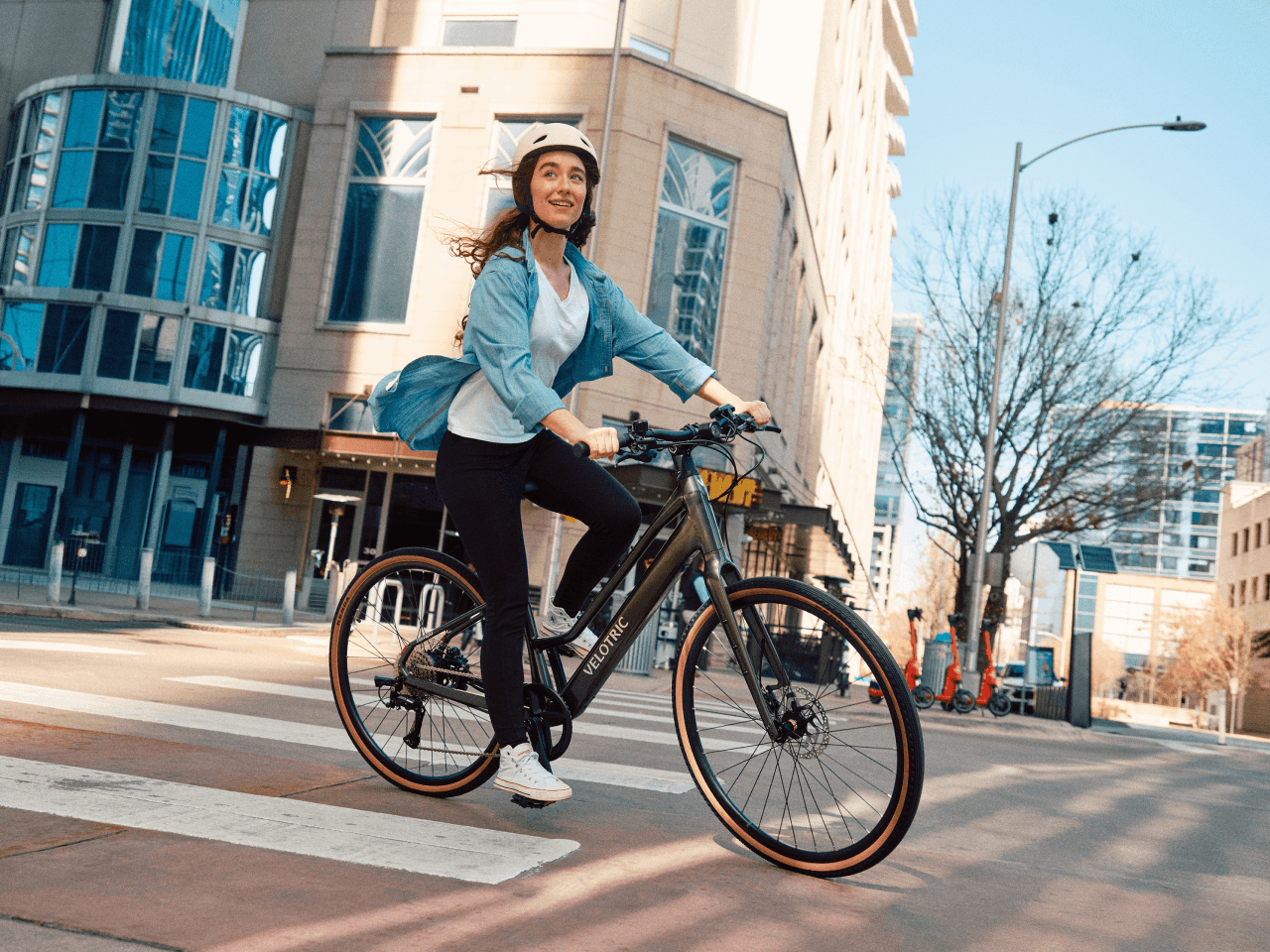
If your ebike has multiple riding modes, keep in mind that switching to a lower-speed mode doesn't necessarily make it legal. Some states judge a bike by what it can do. Check your model's capabilities and your state's rules, then explore Velotric's lineup to find the right fit for your commute or weekend rides.
Frequently Asked Questions
Do I need a driver's license to ride an ebike?
Usually not, if your bike meets your state's ebike definition. New Jersey is the main exception: riders need a driver's license or an ebike license, except for certain shared-bike programs. In Alaska, check your model's classification with the DMV.
Do I need to register my ebike?
Most states don't require it for a qualifying ebike. New Jersey and Hawaii are the main exceptions.
Can a 14-year-old ride an ebike?
It depends on the state and class. In Michigan, a 14-year-old may operate a Class 3; in New Jersey, the minimum age for any ebike is 15; and in Oregon, 14-year-olds may ride Class 1 ebikes starting January 1, 2027.
Does a Class 1 ebike have a throttle?
Under the standard model, no; Class 1 is pedal-assist only. Some states allow a limited motor-only mode. California, for example, permits a start-assist or walk mode up to 3.7 mph on Class 1 and Class 3 ebikes.
Can Class 3 ebikes go on bike paths?
Sometimes, but Class 3 access is more restricted than Class 1 or Class 2 in many states, and local governments and land managers can add their own limits.
Is a 30 mph electric bike still an ebike?
Usually not. If motor assistance exceeds your state's ebike limits, the vehicle may be regulated as a moped, motorcycle, or other motor vehicle.
Can I ride an ebike on a sidewalk?
It depends on state and local law. Some states ban it, some set rules by class, and others leave it to cities.
Legal Disclaimer & Data Sources
This guide is for general information and is not legal advice. Selected state-law updates were reviewed on October 29, 2026; it is not an exhaustive review of every state law or local ordinance. Some enacted changes take effect later, including Hawaii's Act 259 labeling and point-of-sale provisions (around November 12, 2026), North Carolina's new classification provisions (December 1, 2026), and Oregon's age, helmet, and sales amendments, California's SB 1167, and Utah's seller-disclosure rules (all January 1, 2027). Confirm the requirements for your vehicle and route with the relevant state agency and local authority before riding.
- 15 U.S.C. §2085 (Low-Speed Electric Bicycles)
- U.S. Consumer Product Safety Commission: Bicycles
- CPSC Proposed Rule: Lithium-Ion Batteries in Micromobility Products (June 24, 2026)
- California Vehicle Code §312.5
- California Vehicle Code §21201
- California SB 1271
- California AB 544
- California AB 965
- California SB 1167
- Massachusetts General Laws Chapter 90, §1
- Massachusetts General Laws Chapter 85, §11B3/4
- Connecticut Chapter 248
- Delaware House Substitute 1 for HB 439
- Hawaii State Legislature 2026 Acts
- Michigan Vehicle Code
- New Jersey MVC E-Bike Requirements
- New Jersey P.L. 2025, Chapter 285
- New York §102-c
- North Carolina Session Law 2026-46
- Oregon Revised Statutes §801.258
- Oregon HB 4007
- Tennessee SB 1782 / Public Chapter 651
- Washington Chapter 159, Laws of 2026
- Washington RCW 46.20.500
- Washington RCW 46.61.710