




Last updated: August, 2026.
Electric bikes can be used for many different types of riding across Illinois, from everyday transportation in Chicago and suburban communities to longer trips on rural roads and recreational trails. However, the rules that apply may change as riders move between city streets, county paths, forest preserves, and state-managed property.
This guide explains the Illinois electric bike laws currently in effect in 2026 and outlines the changes that could arrive in 2027 under pending legislation.
Law Status Update: Illinois SB 3484 passed both chambers of the General Assembly and was sent to the governor on June 30, 2026. As of August 20, 2026, the official bill page still listed it as awaiting action by the governor. Its proposed rules are therefore discussed separately and should not be treated as current law.
Illinois Ebike Laws at a Glance
Before riding, these are the main statewide rules to understand:
- A legal low-speed ebike must have fully operable pedals.
- Its electric motor must be rated at less than 750 watts.
- Class 1 and Class 2 assistance must end at 20 mph.
- Class 3 assistance must end at 28 mph.
- Low-speed ebikes may generally use streets and bicycle lanes where conventional bicycles are allowed.
- They may not be operated on sidewalks.
- A rider must be at least 16 years old to operate a Class 3 ebike.
- Class 3 ebikes must have a speedometer.
- Local authorities may restrict ebike access on bicycle paths under their control.
- A compliant low-speed ebike does not require a driver’s license, vehicle registration, or license plate under current law.
What Counts as a Low-Speed Electric Bicycle in Illinois?
Illinois law does not classify every two-wheeled electric vehicle as an ebike. To qualify as a low-speed electric bicycle, the vehicle must have fully operable pedals and an electric motor rated at less than 750 watts. It must also fit within one of the state’s three recognized classes.
| Class | How the Motor Works | Maximum Assisted Speed |
|---|---|---|
| Class 1 | Motor assistance is provided only while the rider is pedaling | 20 mph |
| Class 2 | The motor may propel the bicycle without pedaling | 20 mph |
| Class 3 | Motor assistance is provided only while the rider is pedaling | 28 mph |
Under the current definition, a Class 3 ebike is pedal-assist only. A throttle-equipped vehicle that continues providing motor power beyond 20 mph would not fit Illinois’ standard Class 2 or Class 3 definition. The official definitions can be found in 625 ILCS 5/1-140.10.
Why Motor Wattage and Assisted Speed Matter
Illinois law uses both motor power and assisted speed to determine whether a vehicle qualifies as a low-speed electric bicycle. This distinction matters because vehicles marketed online as "ebikes" may have:
- A motor rated at 750 watts or more
- No functional pedals
- Throttle-powered speeds above 20 mph
- Motor assistance beyond 28 mph
- Motorcycle-style seats, frames, or controls
Riders should check the motor’s rated output, assisted-speed limit, pedal configuration, and classification label before using a vehicle on public roads or bicycle facilities.

Where Low-Speed Ebikes Can Be Ridden
Illinois law creates a general statewide starting point, but not every route is controlled by the same agency. A city, county, park district, forest preserve, or state agency may manage the path or property a rider plans to use. Understanding who controls the route is often just as important as knowing the ebike’s class.
Public Streets and Roadways
Low-speed electric bicycles may be operated on where conventional bicycles are authorized. When using a public roadway, an ebike rider is generally subject to the same traffic rules that apply to a conventional bicyclist.
The right to use a roadway doesn't guarantee access to every street. Bicycles may still be prohibited on certain controlled-access highways, expressways, or other roads marked with restrictive signs.
Bicycle Lanes
Illinois law specifically allows low-speed electric bicycles in bicycle lanes where bicycles are permitted. This generally includes:
- Conventional painted bike lanes
- Buffered bike lanes
- Protected bike lanes
- Shared roadway bicycle routes
Riders should use a speed appropriate for traffic, pavement, visibility, and the number of people using the lane. The maximum assisted speed of an ebike is not automatically a safe riding speed for every bicycle facility.
Bicycle Paths and Multi-Use Trails
Low-speed ebikes may generally use bicycle paths unless the municipality, county, or other local authority responsible for the path prohibits all ebikes or restricts a particular class. This means trail access is not completely uniform across Illinois. For example, a route may be managed by:
- A municipality
- A county
- A park district
- A forest preserve district
- A conservation district
- The Illinois Department of Natural Resources
- Another state or regional agency
One trail may allow all three ebike classes, while another may restrict Class 2 or Class 3 use. Before riding, check the managing agency’s website and review signs at the trail entrance.
Sidewalks
Illinois law prohibits operating a low-speed electric bicycle on a sidewalk. This statewide rule applies to Class 1, Class 2, and Class 3 ebikes. Riders shouldn't assume that a local rule allowing some conventional bicycles on sidewalks also allows electric bicycles. When sidewalk access is needed to reach a building or parking location, riders should dismount and walk the ebike while continuing to yield to pedestrians.
State Parks and IDNR-Managed Trails
Illinois contains many state parks, recreation areas, canal trails, and rail trails managed by the Illinois Department of Natural Resources. Bicycle access varies by property and sometimes by section within the same property. A park may have:
- Paved bicycle routes
- Shared hiking and biking trails
- Mountain bike trails
- Pedestrian-only natural areas
- Seasonal or weather-related closures
At Matthiessen State Park, for example, bicycles are prohibited on trails in the Dells Area, while bicycle trails are available in the Vermilion River Area. Other state properties may close mountain bike trails after rain or during hunting seasons. The fact that a location allows bicycles doesn't always confirm that every ebike class is permitted. Riders should verify the rule for the specific property rather than relying only on a general statewide summary.
Current park information and notices are available through the Illinois Department of Natural Resources.
How Old Must You Be to Ride an Ebike in Illinois?
Under the Illinois law currently in effect, a rider must be at least 16 years old to operate a Class 3 low-speed electric bicycle. Current Section 11-1517 does not establish the same specific statewide minimum age for operating a Class 1 or Class 2 ebike. Parents and guardians should still consider whether a younger rider can:
- Safely start and stop the bicycle
- Control its weight and acceleration
- Understand traffic signals and right-of-way rules
- Look behind before turning or changing position
- Respond safely to vehicles and pedestrians
- Place both feet securely on the ground when stopped
Local programs, rental services, private properties, and organized events may impose higher minimum ages than state law.
Passenger Rules for Illinois Ebikes
Illinois bicycle law states that a bicycle should not carry more people than it is designed and equipped to carry. For ebike passengers, this means the bicycle should have a passenger-compatible design and appropriate seating or carrying equipment. A rear rack intended only for cargo should not automatically be treated as a passenger seat. Current law allows a person under 16 to ride as a passenger on a Class 3 ebike if the bicycle is designed to accommodate passengers. Riders should also follow:
- The manufacturer’s passenger guidance
- The bicycle’s total payload limit
- The accessory’s individual weight limit
- Age and fit recommendations for child-passenger equipment
- Requirements for secure seating and foot support
Adding a passenger changes the bicycle’s balance, acceleration, turning response, and braking distance. Riders should practice in a controlled area before entering traffic.
Explore Passenger EbikeDoes Illinois Require Ebike Helmets?
The current statewide provisions reviewed for this guide don't establish a general helmet requirement for ordinary Class 1, Class 2, or Class 3 ebike riders. However, a helmet may still be required by a rental provider, school, employer, organized event, park program, or private property owner. Helmet use is strongly recommended, particularly for:
- Children and teenage riders
- Class 3 ebike riders
- Roadway commuting
- Night riding
- Gravel or off-road routes
- Trips involving passengers
A helmet should fit securely, sit level on the rider’s head, and be replaced after a significant impact.
Do Illinois Ebikes Need a License or Registration?
A compliant Class 1, Class 2, or Class 3 low-speed electric bicycle is not treated as a motor vehicle, moped, or motor-driven cycle under the current Illinois ebike definition. As a result, riders do not currently need:
- A driver’s license
- A vehicle title
- State registration
- A license plate
- Motor vehicle insurance
These exemptions apply to vehicles that genuinely satisfy the low-speed ebike definition. They shouldn't be assumed to cover an electric motorcycle, e-moto, or other higher-powered device merely because it has been advertised as an electric bicycle.
Required Equipment for an Illinois Ebike
Illinois applies several manufacturing and operating requirements to low-speed electric bicycles.
Classification Label
Manufacturers and distributors must permanently attach a label to the bicycle in a prominent location. The label must identify:
- The bicycle’s class
- Its top assisted speed
- Its motor wattage
Riders should avoid removing, covering, or altering this label.
Motor Cutoff
The motor on a Class 2 ebike must disengage or stop functioning when the brakes are applied. On a Class 1 or Class 3 ebike, motor assistance must disengage when the rider stops pedaling.
Class 3 Speedometer
Every Class 3 ebike used in Illinois must have a speedometer that displays the bicycle’s speed in miles per hour.
Brakes
Every bicycle must have a brake capable of adequately controlling, stopping, and holding the bicycle. Because ebikes may be heavier and faster than conventional bicycles, riders should inspect brake pads, rotors, cables, hoses, and lever response regularly.
Nighttime Lighting
When used at night, a bicycle must have:
- A front lamp emitting white light visible from at least 500 feet
- A rear red reflector visible from the legally specified distance, or a qualifying red rear light
Reflective clothing and additional side visibility are not substitutes for required equipment, but they may make a rider easier to see at intersections and on roads with limited lighting. The applicable bicycle equipment rules appear in 625 ILCS 5/11-1507.
What Happens If an Ebike Is Modified?
Illinois requires the classification label to reflect the bicycle’s actual class, assisted speed, and motor wattage. A person may not knowingly modify the bicycle’s speed capability or motor engagement without replacing the required label. Replacing the label doesn't automatically make every modification legal. If a modification causes the bicycle to exceed the state’s class limits, the vehicle may no longer qualify as a low-speed ebike. Examples include:
- Increasing motor assistance beyond 28 mph
- Allowing throttle-only propulsion above 20 mph
- Replacing the motor with one that does not meet the legal power limit
- Removing or disabling the functional pedals
Once a vehicle falls outside the low-speed ebike definition, bicycle access rules and ebike exemptions may no longer apply.
Local Rules Still Matter
Illinois provides the basic legal framework, but many practical riding decisions are made locally. A rider traveling through several communities may encounter different rules for:
- Trail access
- Park hours
- Parking
- Business-district riding
- Speed limits on shared paths
- Seasonal trail closures
- Class-specific restrictions
Chicago, for example, has its own municipal bicycle regulations in addition to Illinois law. Forest preserves, park districts, and suburban trail systems may also post rules that apply only on property under their control. When local guidance conflicts with general online summaries, riders should consult the current ordinance, managing agency, or posted trail signs.
What Could Change in 2027?
SB 3484 would create a broader statewide framework for ebikes, high-speed electric vehicles, e-scooters, and other micromobility devices. If enacted in its enrolled form, many of its provisions would take effect on January 1, 2027. Potential changes include:
New Minimum Ages
Riders would need to be at least:
- 15 years old to operate a Class 1 or Class 2 ebike
- 16 years old to operate a Class 3 ebike
Additional Passenger Restrictions
An ebike designed to accommodate passengers generally couldn't be operated by a person under 18 with a passenger unless that passenger was the operator's sibling, stepsibling, child, or stepchild.
More Statewide Consistency
The proposal would limit the ability of most local governments to create separate low-speed ebike regulations, while preserving certain authority for park districts, forest preserve districts, conservation districts, transit districts, and state agencies to regulate bicycle-path access under their control.
Rules for Higher-Powered Vehicles
Electric bicycles outside the low-speed ebike definition could be treated as motor-driven cycles. Depending on the vehicle, this could introduce requirements involving:
- A driver’s license
- Vehicle title
- Registration
- License plates
- Insurance
- Restrictions from sidewalks, bike lanes, and bicycle paths
These proposed changes are particularly relevant to e-motos and other high-speed electric vehicles that resemble bicycles but exceed the legal low-speed ebike limits. As of August 20, 2026, SB 3484 had not yet been listed as signed into law. Riders should check the official Illinois General Assembly bill page before relying on any proposed 2027 requirement.
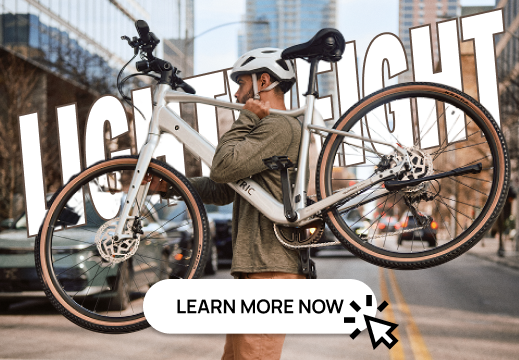
A Lightweight Option for Illinois City Riding
For riders using Illinois bike lanes and urban streets, a lightweight commuter ebike can be easier to manage than a larger, heavier model. The Velotric Tempo weighs approximately 34 pounds without the battery, making it more practical for apartment storage, stairs, public transportation connections, and indoor parking. Its gravel-capable tires can help manage rough pavement and mixed urban surfaces, while Shimano hydraulic disc brakes provide controlled stopping for everyday traffic.

A 500-lumen headlight, rear brake light, and turn signals support visibility during early or late commutes. With up to 60 miles of claimed pedal-assist range, the Tempo can also cover longer daily routes without adding the size and weight of a heavy-duty ebike. Riders remain responsible for confirming that their bicycle’s current configuration and use comply with state law, local regulations, and route-specific restrictions.
Illinois Ebike FAQs
Are Class 1 ebikes legal in Illinois?
Yes. A Class 1 ebike is legal if it has operable pedals, a motor rated at less than 750 watts, and pedal assistance that ends at 20 mph.
Are throttle ebikes allowed in Illinois?
Yes. Throttle-equipped ebikes may qualify as Class 2 bicycles if motor assistance ends at 20 mph and the vehicle meets the other low-speed ebike requirements.
Are Class 3 ebikes legal in Illinois?
Yes. Class 3 ebikes are legal, but the rider must be at least 16 years old. The bicycle must be pedal-assist only, stop providing assistance at 28 mph, and have a speedometer.
Can ebikes use Illinois bike paths?
Generally, yes. However, the authority responsible for a path may prohibit all ebikes or restrict certain classes. Always check local rules and posted signs.
Can ebikes be ridden on sidewalks?
No. Illinois law prohibits operating a low-speed electric bicycle on a sidewalk.
Is ebike insurance required in Illinois?
No motor vehicle insurance is currently required for a compliant Class 1, Class 2, or Class 3 low-speed ebike. Different rules may apply to vehicles that fall outside those classes.
Is a 750-watt ebike considered a low-speed ebike in Illinois?
The current statutory language defines a low-speed electric bicycle as having a motor rated at less than 750 watts. Because the wording is “less than,” riders should not automatically assume that a motor labeled exactly 750 watts satisfies the state definition. Confirm the manufacturer’s rated output and seek current guidance from the appropriate Illinois authority if classification is uncertain.
Can I ride an ebike in an Illinois state park?
It depends on the property and trail. Some state-managed routes allow bicycling, while other areas prohibit bicycles or apply seasonal and weather-related closures. Check the specific park page and entrance signage before riding.
Pre-Ride Illinois Ebike Checklist
Before using an ebike on a public route, confirm that:
- The bicycle has fully operable pedals.
- The motor rating meets Illinois’ low-speed ebike definition.
- The motor assistance ends at the speed required for its class.
- The classification label is present and accurate.
- A Class 3 bicycle has a working speedometer.
- The brakes, front light, and rear reflector or light are functioning.
- The rider meets the age requirement for the ebike class.
- The route permits bicycles and the relevant ebike class.
- There are no temporary closures or posted restrictions.
- Any passenger equipment is designed for the intended passenger and load.
Final Takeaway
Illinois generally treats compliant low-speed ebikes like conventional bicycles on streets and in bike lanes. The most important statewide exceptions involve sidewalk use, Class 3 age requirements, equipment, and trail rules established by the agency responsible for a particular route. The legal line between an ebike and a higher-powered electric vehicle also depends on the bicycle’s actual design and performance, not simply the name used by a seller. With broader micromobility legislation awaiting final action in 2026, riders should review the law again before January 2027. Until any new legislation is signed and takes effect, the existing Illinois Vehicle Code remains the basis for determining how low-speed electric bicycles may be operated.
Fair Use Statement
This guide does not constitute legal advice. Electric bike classifications, local ordinances, trail policies, agency rules, and pending legislation may change. Riders should consult the current Illinois Vehicle Code and verify local or property-specific requirements before riding.
Data Sources
- Illinois Vehicle Code, 625 ILCS 5/1-140.10: Low-Speed Electric Bicycle Definitions
- Illinois Vehicle Code, 625 ILCS 5/11-1517: Low-Speed Electric Bicycles
- Illinois Vehicle Code: Bicycle Operation and Equipment Rules
- Illinois Secretary of State: Micromobility in Illinois
- Illinois Secretary of State: Know the Rules
- Illinois Department of Natural Resources: State Parks
- Illinois General Assembly: SB 3484 Status