Sales









The battery is the most expensive part of an electric bike and the one that decides how far, how often and how safely you ride. How you charge it affects all three.
This guide covers how to charge an ebike battery step by step, how long charging takes, when to plug in, and the safety habits that protect both the battery and your home. Most of it applies to any lithium-ion ebike battery. Always follow your own bike's manual where it differs.
- How to charge an ebike battery: step by step
- How long does it take to charge an ebike battery?
- Start with a battery you can trust: Velotric Discover 3
- When should you charge your ebike battery?
- Understanding charge cycles and battery lifespan
- Ebike battery charging safety tips
- Charging in cold or hot weather
- Signs your ebike battery needs attention
- How to dispose of an old ebike battery
- Frequently asked questions
- The bottom line
How to charge an ebike battery: step by step
- Turn off the bike. If your battery is removable, you can charge it on the bike or take it indoors to charge.
- Let a warm battery cool down. After a long or hot ride, wait until the battery is close to room temperature.
- Check the charger and port. Make sure the connector is clean and dry, and the cable has no cuts or kinks.
- Plug the charger into a wall outlet, then connect it to the battery, unless your manual specifies a different order.
- Confirm it is charging. The charger light or the battery indicator should change color or show progress.
- Unplug when it is full. Disconnect the battery, then unplug the charger from the wall. Do not leave it connected for days.
How long does it take to charge an ebike battery?
Most ebike batteries take about 3 to 8 hours to charge from empty to full. The exact time depends on two numbers: the battery's capacity and the charger's output.
You can estimate it with a simple formula:
Charging time (hours) ≈ battery capacity (Wh) ÷ charger output (W) × 1.1 to 1.2
Charger output is roughly its voltage multiplied by its amps. The extra 10 to 20% accounts for heat loss and the slower final stage of charging.
| Battery | Charger | Estimated time from empty |
|---|---|---|
| 500Wh | 48V, 2A | About 5.5 to 6.5 hours |
| 730Wh | 48V, 3A | About 5.5 to 6 hours |
| 730Wh | 48V, 2A | About 8.5 to 9 hours |
Charging also slows down near the end. Lithium-ion chargers deliver steady current at first, then taper as the battery approaches full, so the last 10 to 20% takes longer than the rest. Topping up from 30% to 80% is much faster than charging from empty to 100%.
Start with a battery you can trust: Velotric Discover 3
Good charging habits matter, but they work best on a battery that was built and tested to a recognized safety standard. The Velotric Discover 3 is a good example of what to look for.

- Certified electrical safety. The Discover 3 is certified to UL 2849 for its complete electrical system, including the battery, charger, motor and controller working together. Its battery is separately certified to UL 2271, and it uses Samsung and LG 21700 cells. New York City and several states now require certification like this for ebikes and batteries sold there.
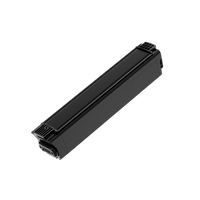
- A large battery with a fast charger. The 48V, 730Wh battery supports up to 80 miles of pedal-assist range under test conditions. It comes with a 48V, 3A charger, so a full charge takes roughly 5.5 to 6 hours, and the display shows an estimated time to full while charging. The battery is removable and lockable, so you can charge it indoors.
- Built for real-world weather. The battery is rated IPX7 and the bike IPX6, so riding in rain is not a problem. That protection is for weather, not for submerging the bike or pressure-washing it.
- Backed by a longer warranty. Every Velotric ebike comes with a 2-year limited warranty. Register within 60 days of purchase and coverage extends for free: the battery to 3 years or 400 charging cycles, electrical parts to 3 years, and the frame to 10 years. See the full Velotric warranty.
A certified battery and a longer warranty do not replace safe charging habits, but they add a meaningful layer of protection.
When should you charge your ebike battery?
You do not need to wait until the battery is empty. Lithium-ion batteries have no memory effect, and running them flat regularly adds stress.
- For daily riding, keeping the charge roughly between 20% and 80% is gentle on the cells. Charge to 100% before a long ride, then ride soon after.
- After a ride, let the battery cool before charging, especially in summer or after climbing.
- Avoid leaving it at 100% for days. A full battery sitting unused ages faster than one stored partly charged.
- For a new bike, follow the manual. Many brands recommend a full charge before the first ride.
- For long storage, such as over winter, leave the battery around 40 to 70% charged, store it indoors and check it every month or two. Top it up if it drops much lower.
For more habits that keep your battery healthy, see our guide to how to extend your ebike battery’s life.

Understanding charge cycles and battery lifespan
A charge cycle is one full 100% of capacity used and recharged, not one plug-in. Charging from 50% to 100% twice counts as one cycle.
Most quality ebike batteries last several hundred to around 1,000 cycles before capacity drops noticeably. For many riders, that means several years of use. Capacity fades gradually rather than failing all at once, so an older battery simply delivers less range.
This is also why battery warranties often read "X years or Y cycles, whichever comes first." A rider who uses about three full charges a week reaches 400 cycles in roughly two and a half years, so a cycle-based warranty covers most commuters for most of its term. Read more about how long an ebike battery lasts and what affects its lifespan.
Ebike battery charging safety tips
- Use the original charger, or a replacement approved by the manufacturer. A mismatched charger can overcharge or overheat the battery.
- Plug directly into a wall outlet. Avoid extension cords and power strips.
- Charge on a hard, non-flammable surface in a ventilated room with a working smoke detector. Keep the battery away from curtains, bedding and paper.
- Keep exits clear. Never charge in a hallway or near the only door out of a room.
- Do not charge overnight or while you are away. Stay nearby and unplug when it is full.
- Charge at room temperature. Avoid charging below freezing or in a hot garage or car.
- Stop using a damaged battery. Swelling, leaking, unusual smells, cracks, or a battery that has been dropped hard or submerged should not be charged. Contact the manufacturer or dealer.
- Do not open or modify the battery, and avoid uncertified replacement or rebuilt packs.
- If a battery smokes, hisses or overheats, get everyone away from it and call 911. Do not try to move or put out a burning battery yourself.

Charging in cold or hot weather
Temperature affects both charging and battery life. As a general guide, charge at about 50 to 77°F (10 to 25°C), which is also the ideal range Velotric recommends. Many batteries will not charge, or will stop charging, when they are much colder or warmer than that.
- In cold weather, bring the battery inside and let it warm to room temperature for at least an hour before charging. Never use a heater or hair dryer to speed it up. Shorter winter range is normal and recovers when it warms up.
- In hot weather, do not charge in direct sun, in a hot car or right after a hard ride. Let the battery cool first.
- For storage, keep the battery indoors in a dry place at room temperature, not in an unheated garage, shed or balcony. See our tips for storing your ebike battery in winter.
Signs your ebike battery needs attention
- Range drops sharply over a short period, not gradually over years
- The battery will not reach full charge, or charging takes much longer than usual
- The battery or charger gets unusually hot during charging
- The case is swollen, cracked or leaking, or there is a chemical smell
- The display shows battery error codes, or power cuts out unexpectedly
If you notice any of these, stop charging and contact the manufacturer or your dealer for an inspection. Do not try to open or repair the battery yourself. If the bike is still under warranty, a defect may be covered.
How to dispose of an old ebike battery
Never put an ebike battery in household trash or curbside recycling. Damaged lithium-ion batteries can start fires in garbage trucks and recycling facilities.
Instead, take it to a battery recycling drop-off, a household hazardous waste site, or a bike shop that accepts ebike batteries. Tape over the terminals before transporting it. If the battery is swollen or damaged, ask the collection site how to handle it before you bring it in.
Frequently asked questions
Can I charge my ebike battery overnight?
It is best not to. Modern batteries have management systems that stop charging when full, but charging while you are awake and nearby lets you notice problems early and unplug promptly.
Should I charge my ebike battery after every ride?
Not necessarily. If you have plenty of charge left for your next ride, you can wait. Many riders top up whenever the battery falls to around 20 to 30%.
Can I use a different or faster charger?
Use the charger that came with your bike or a replacement approved by the manufacturer. A charger with the wrong voltage or connector can damage the battery and may void the warranty.
Can I charge my ebike in the rain or leave it outside?
Charge indoors in a dry place. Water resistance ratings protect the bike while riding in rain, not the charger or connector while charging. Do not leave the battery outside in freezing or very hot weather.
How long does an ebike battery last?
Most quality ebike batteries last several hundred to around 1,000 charge cycles, often several years of regular riding, before range drops noticeably. Charging habits, temperature and storage all affect lifespan.
Is it bad to let my ebike battery die completely?
Occasionally running low is not harmful, but regularly draining it to zero, or storing it empty, shortens its life. Recharge soon after the battery runs low.
How long does it take to charge a Velotric Discover 3?
With the included 48V, 3A charger, a full charge of the 730Wh battery takes roughly 5.5 to 6 hours from empty. Partial top-ups are faster, and the display shows an estimated time to full while charging.
The bottom line
Charging an ebike battery well comes down to three habits: use the right charger, keep the charge in a comfortable range, and charge at room temperature where you can keep an eye on it. Do that and your battery will deliver more range for more years.
If you are choosing a new ebike, look for a certified battery and a warranty that covers it for longer. The Velotric Discover 3 pairs UL 2849 and UL 2271 certification with an IPX7 battery and up to 3 years or 400 cycles of battery coverage when you register your warranty within 60 days.