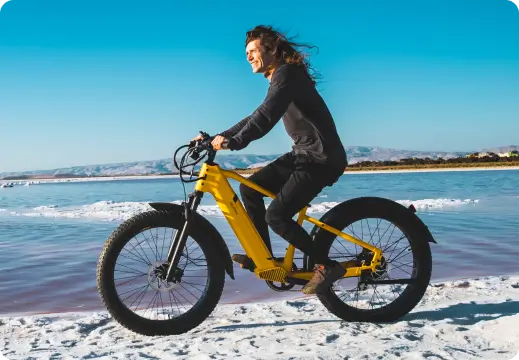






In most of the United States, you do not need a driver’s license to ride an electric bike. A standard electric bicycle is generally regulated more like a traditional bicycle than a motorcycle or car, which means it is usually exempt from driver licensing, vehicle registration, title, and motor vehicle insurance requirements.
However, the answer depends on more than where you live.
Your bike must first meet the legal definition of an electric bicycle in that state. A bike with excessive motor power, a higher motor-assisted speed, no functional pedals, or certain modifications may instead be classified as a motorized bicycle, moped, motor-driven cycle, or motorcycle. Once the vehicle moves into one of those categories, licensing and registration requirements can change significantly.
New Jersey has also introduced licensing and registration requirements that apply more broadly to e-bike riders, while Alaska continues to regulate many electric bikes through its motor-driven-cycle framework.
This guide explains where an electric bike license is required, why electric bicycles and motorized bicycles are not always treated the same, and how to determine which rules apply to your bike.
Legal notice: This article provides general educational information and is not legal advice. State and local laws can change, and cities, counties, parks, campuses, and trail authorities may impose additional restrictions. Review the relevant state agency or motor vehicle code before riding.
- Do You Need a License for an Electric Bike?
- Electric Bike License Requirements in Every State
- States Where Electric Bicycles and Motorized Bicycles Must Be Distinguished
- Do Class 3 Electric Bikes Require a License?
- Do You Need to Register an Electric Bike?
- Do You Need Insurance for an Electric Bike?
- Frequently Asked Questions
Do You Need a License for an Electric Bike?
For a conventional electric bicycle that meets the applicable state definition, the answer is usually no.
Most states have adopted a version of the three-class electric bicycle system:
- Class 1: The motor assists only while the rider is pedaling and stops assisting at 20 mph.
- Class 2: The motor may propel the bicycle without pedaling, usually through a throttle, and stops assisting at 20 mph.
- Class 3: The motor assists while the rider is pedaling and stops assisting at 28 mph.
Under the most common state framework, these electric bicycles must also have fully operable pedals and a motor rated at no more than 750 watts.
A qualifying Class 1, Class 2, or Class 3 electric bicycle generally does not require:
A driver’s license, a motorcycle endorsement, a vehicle title, a license plate, motor vehicle registration, or motor vehicle insurance
These exemptions apply to the electric bicycle category, not necessarily to every two-wheeled vehicle with an electric motor.
For example, Alabama law expressly states that an electric bicycle and its operator are not subject to requirements concerning driver’s licenses, registration, title, license plates, financial responsibility, or motor vehicle insurance. The law separately requires manufacturers and sellers to label the bike’s class, maximum assisted speed, and motor wattage.
Missouri uses a similar approach. A legally defined electric bicycle is treated substantially like a conventional bicycle, even though the state also maintains a separate legal category for motorized bicycles.
Choose an Ebike That Adapts to Local Laws
Velotric electric bikes are designed around the widely adopted three-class system, making them a great choice for riders across the U.S. Many models feature One-Touch Class Switching and a removable throttle, allowing you to configure your e-bike for different riding preferences and, where permitted, better align with local regulations. Combined with UL-certified electrical systems and clear class labeling, Velotric makes it easier to ride with confidence wherever your journey takes you.
Electric Bike License Requirements in Every State
The table below focuses specifically on whether a driver’s license is required to operate a standard electric bicycle.
“Standard electric bicycle” means a vehicle that meets the relevant state definition, including applicable requirements for pedals, motor power, assisted speed, equipment, and classification.
| State | License Required? | Key Note |
|---|---|---|
| Alabama | No | Qualifying electric bicycles are expressly exempt from driver licensing and motor vehicle registration requirements. |
| Alaska | Yes or classification-dependent | Alaska does not provide the same clear modern three-class exemption used by most states. Electric bikes may be regulated as motor-driven cycles, making licensing requirements possible. |
| Arizona | No | A qualifying electric bicycle is generally regulated like a bicycle rather than a motor vehicle. |
| Arkansas | No | Standard Class 1, 2, and 3 electric bicycles do not require a driver’s license. |
| California | No | No license is required for a qualifying Class 1, 2, or 3 electric bicycle. Class 3 has additional age, helmet, and access rules. |
| Colorado | No | Standard electric bicycles do not require a driver’s license, title, or registration. |
| Connecticut | No | No license for a qualifying electric bicycle. Higher-powered vehicles may become motor-driven cycles or motorcycles. |
| Delaware | No | A qualifying electric bicycle does not require a driver’s license. |
| Florida | No | Electric bicycles are generally treated like bicycles rather than licensed motor vehicles. |
| Georgia | No | No driver’s license is required for a qualifying electric bicycle. |
| Hawaii | No | A driver’s license is not generally required for a qualifying electric bicycle, but bicycle or e-bike registration requirements may apply. |
| Idaho | No | Standard electric bicycles do not require a driver’s license. |
| Illinois | No | No license is required for a qualifying low-speed electric bicycle. |
| Indiana | No | No driver’s license is required for a qualifying electric bicycle. |
| Iowa | No | Standard electric bicycles are generally treated like bicycles. |
| Kansas | No | No license is required for a qualifying electric-assisted bicycle. |
| Kentucky | No | A qualifying electric bicycle does not require a driver’s license. |
| Louisiana | No | No license for a vehicle meeting the state’s electric bicycle definition. Mopeds or motorized bicycles may follow different rules. |
| Maine | No | No driver’s license is required for a qualifying electric bicycle. |
| Maryland | No | Standard electric bicycles do not require a driver’s license. |
| Massachusetts | No, if it qualifies as an electric bicycle | Motorized bicycles require a license or learner’s permit, but qualifying electric bicycles are a separate category. |
| Michigan | No | No driver’s license is required for a standard electric bicycle. Class 3 operation is subject to age and access restrictions. |
| Minnesota | No | Standard electric-assisted bicycles do not require a driver’s license. |
| Mississippi | No | A qualifying electric bicycle does not generally require a driver’s license. |
| Missouri | No | Electric bicycles are separately recognized from motorized bicycles. |
| Montana | No | No driver’s license is required for a qualifying electric bicycle. |
| Nebraska | No | Standard electric bicycles do not require a driver’s license. |
| Nevada | No | No license is required for a qualifying electric bicycle. |
| New Hampshire | No | A standard electric bicycle does not require a driver’s license. |
| New Jersey | Yes | Riders must generally be at least 15 and hold either an e-bike license or a valid driver’s license. Registration is also required. |
| New Mexico | No | Electric bicycles and their operators are exempt from operator’s-license, title, registration, and financial-responsibility provisions. |
| New York | No | No driver’s license is required for a qualifying electric bicycle, but class, speed, location, and local-use restrictions apply. |
| North Carolina | No | No driver’s license is required for a qualifying electric-assisted bicycle. |
| North Dakota | No | No license for a qualifying Class 1, 2, or 3 electric bicycle. A separate permit applies to motorized bicycles. |
| Ohio | No | Standard electric bicycles do not require a driver’s license. |
| Oklahoma | No | A qualifying electric-assisted bicycle does not require a driver’s license. |
| Oregon | No | No driver’s license is required for a qualifying electric bicycle, although class-based age and access restrictions apply. |
| Pennsylvania | No | A qualifying pedalcycle with electric assist does not require a driver’s license. |
| Rhode Island | No | A standard electric bicycle generally does not require a driver’s license. Vehicles outside the definition may be treated differently. |
| South Carolina | No | No driver’s license is generally required for a qualifying electric bicycle. |
| South Dakota | No | Standard electric bicycles do not require a driver’s license. |
| Tennessee | No | A qualifying electric bicycle does not require a driver’s license. |
| Texas | No | Standard electric bicycles are not subject to driver licensing requirements. |
| Utah | No | No driver’s license is required for a qualifying electric-assisted bicycle. |
| Vermont | No | A standard electric bicycle does not require a driver’s license. Motor-driven cycles are a separate category. |
| Virginia | No | Qualifying electric power-assisted bicycles do not require a driver’s license. |
| Washington | No | No driver’s license is required for a qualifying electric-assisted bicycle. |
| West Virginia | No | Standard electric bicycles do not require a driver’s license. |
| Wisconsin | No | No driver’s license is required for a qualifying electric bicycle. |
| Wyoming | No | A standard electric bicycle does not require a driver’s license. |
| District of Columbia | No | A qualifying electric bicycle does not generally require a driver’s license, although higher-powered or moped-style vehicles may fall under different rules. |
The Federal Definition of a Low-Speed Electric Bicycle
Federal law defines a low-speed electric bicycle as a two- or three-wheeled vehicle with:
- Fully operable pedals
- An electric motor of less than 750 watts
- A maximum motor-powered speed of less than 20 mph on a paved, level surface when ridden by a person weighing 170 pounds
This federal definition primarily determines how a product is regulated for manufacturing and consumer-product safety. It does not create one nationwide set of road-use rules.
States and local authorities still determine:
- Whether a license is required
- Where electric bikes may be ridden
- Minimum rider ages
- Helmet requirements
- Registration requirements
- Trail and sidewalk access
- How modified or higher-powered vehicles are classified
That is why the same electric bike may be subject to somewhat different operating rules after crossing a state line.
Electric Bicycle vs. Motorized Bicycle: Why the Difference Matters
An electric bicycle and a motorized bicycle may sound like the same thing in everyday conversation, but they can be different legal vehicle categories.
A state may define an electric bicycle as a pedal-equipped vehicle that falls within specific power, speed, and operating limits. That vehicle is commonly treated like a bicycle and does not require a driver’s license.
A motorized bicycle may be regulated more like a moped. Depending on the state, operating one may require:
- A regular driver’s license
- A learner’s permit
- A special motorized-bicycle license
- Registration
- A title or identification number
- Liability insurance
- A helmet
- A minimum operating age
The category matters more than the name used by a retailer or rider. Calling a vehicle an “e-bike” does not automatically make it an electric bicycle under state law.
A standard electric bicycle usually has:
- Two or three wheels
- Fully operable pedals
- A motor within the state power limit
- Motor assistance that stops at the applicable class speed
- A permanent classification label where required
- Bicycle-style equipment and geometry
A motorized bicycle, moped, or motor-driven cycle may include:
- A vehicle that exceeds the electric bicycle wattage limit
- A vehicle capable of motor-powered speeds beyond the legal e-bike limit
- A vehicle without functional pedals
- A gas-powered bicycle
- A motorcycle-style vehicle marketed as an e-bike
- A modified electric bicycle that no longer complies with its original class
The exact definition varies by state. Some states use “motorized bicycle” for a separate moped-like vehicle, while others use similar wording within older bicycle statutes. Always review the complete definition rather than relying only on the category name.
States Where Electric Bicycles and Motorized Bicycles Must Be Distinguished
The distinction can matter in every state, but it is especially important in states that maintain separate licensing rules for motorized bicycles, mopeds, or motor-driven cycles.
| State | Standard Electric Bicycle | Motorized Bicycle or Related Category | Why the Difference Matters |
|---|---|---|---|
| Alaska | Often not separated under a modern three-class framework | Electric bikes may fall within the motor-driven-cycle framework | A driver’s license or motorcycle-related credential may be required, depending on the vehicle |
| Connecticut | No driver’s license for a qualifying electric bicycle | Higher-powered vehicles may be motor-driven cycles or motorcycles | Power, equipment, and speed can move the vehicle into a licensed category |
| Hawaii | A qualifying electric bicycle does not require a driver’s license, although bicycle registration rules may apply | A moped requires a driver’s license and registration | Electric bicycle registration should not be confused with moped licensing |
| Massachusetts | No driver’s license for a qualifying electric bicycle | A motorized bicycle requires a valid driver’s license or learner’s permit | Older motorized-bicycle rules should not be applied automatically to Class 1 or Class 2 electric bicycles |
| Missouri | No license for a legally defined electric bicycle | Separate motorized-bicycle provisions exist | Articles that rely on the motorized-bicycle statute may incorrectly say all e-bikes require a license |
| New Jersey | Licensing and registration requirements now apply to covered e-bikes | Motorized bicycles face additional requirements, including insurance | Riders must determine whether the vehicle is a low-speed electric bicycle or motorized bicycle |
| North Dakota | A qualifying Class 1, 2, or 3 electric bicycle is separately defined | A motorized-bicycle operator permit exists for the separate motorized-bicycle category | The permit requirement should not be applied to every electric bicycle |
| Washington, D.C. | A qualifying electric bicycle is generally treated separately from motorcycles | Mopeds and motorized bicycles may be subject to motor-vehicle requirements | Vehicle design and performance determine the category |
Connecticut
Connecticut’s updated framework distinguishes qualifying electric bicycles from more powerful vehicles. A standard electric bicycle with operable pedals and a motor within the state limit does not require a driver’s license or vehicle registration.
A higher-powered vehicle may be classified as a motor-driven cycle or motorcycle, at which point driver licensing, registration, insurance, and equipment requirements may apply. This is an important example of why motor wattage and vehicle configuration cannot be ignored.
Hawaii
Hawaii requires registration for many bicycles and electric bicycles, but registration is not the same as a driver’s license.
By contrast, Hawaii’s official moped guidance states that a driver’s license is required to operate a moped. A rider who does not otherwise hold a driver’s license may obtain a Class 1 license for moped operation.
Therefore, the correct summary is:
- Electric bicycle: No driver’s license, but registration rules may apply.
- Moped: Driver’s license and registration required.
Massachusetts
Massachusetts law now recognizes electric bicycles separately from motorized bicycles.
A qualifying electric bicycle receives substantially the same rights and responsibilities as a conventional bicycle, although it cannot generally be operated on sidewalks.
A motorized bicycle is different. Massachusetts General Laws require the operator of a motorized bicycle to hold a valid driver’s license or learner’s permit.
This distinction means an article should not state simply that “Massachusetts requires an e-bike license.” The more accurate answer is:
No license is required for a qualifying electric bicycle. A license or learner’s permit is required if the vehicle is legally classified as a motorized bicycle.
Missouri
Missouri separately refers to bicycles, electric bicycles, and motorized bicycles in its traffic statutes. A qualifying electric bicycle is treated like a bicycle and is not subject to the licensing rules applicable to motor vehicles.
A vehicle that does not meet the electric bicycle definition may fall into a different category and should be evaluated under the motorized-bicycle or motor-vehicle provisions.
North Dakota
North Dakota defines an electric bicycle as a bicycle with fully operable pedals, a seat or saddle, and an electric motor of 750 watts or less that meets one of the state’s three classes.
The state also maintains a motorized-bicycle operator permit. That permit belongs to the separate motorized-bicycle category and should not be treated as a universal license requirement for all qualifying electric bicycles.
The Two Most Important Exceptions
Alaska
Alaska is difficult to summarize using the modern Class 1, Class 2, and Class 3 model because its statutes have historically placed powered two-wheeled vehicles within the motor-driven-cycle framework.
As a result, riders should not assume that an electric bike is automatically exempt from licensing merely because it has pedals or is marketed as an e-bike.
Before riding on public roads in Alaska, verify:
- The motor output
- Maximum powered speed
- Whether the vehicle is classified as a motor-driven cycle
- Whether a standard driver’s license or motorcycle credential is required
- Whether registration or equipment requirements apply
Because the legal classification can be vehicle-specific, “Yes or classification-dependent” is more accurate than an unqualified statewide “No.”
New Jersey
New Jersey introduced major e-bike licensing and registration changes in 2026.
According to the New Jersey Motor Vehicle Commission, an e-bike operator must generally:
- Be at least 15 years old
- Hold either an e-bike license or a valid driver’s license
- Register the e-bike with the NJMVC
- Wear a helmet
All covered e-bikes must be registered. Motorized bicycles require insurance, while qualifying low-speed electric bicycles do not.
The NJMVC began issuing e-bike licenses and registrations in June 2026.
Riders and owners can review the current requirements through the official New Jersey MVC e-bike page and the agency’s 2026 E-Bike and Moped Manual.
New Jersey also distinguishes between:
- Low-speed electric bicycles
- Motorized bicycles
That distinction affects insurance and vehicle specifications, even though both categories are now subject to licensing and registration requirements.
Do Class 3 Electric Bikes Require a License?
In most states, no.
A qualifying Class 3 electric bicycle is generally still an electric bicycle rather than a motorcycle or moped. However, Class 3 bikes commonly face stricter rules, including:
- A minimum operating age
- Mandatory helmet use
- A speedometer requirement
- Restrictions on sidewalks
- Restrictions on shared-use paths
- Restrictions on natural-surface trails
California, for example, does not require a driver’s license for a Class 3 electric bicycle, but it imposes additional operating restrictions compared with Class 1 and Class 2 bikes.
The exception is a state such as New Jersey, where current law requires an e-bike license or valid driver’s license for covered e-bike operation.
Explore Class 3 EbikesDo You Need to Register an Electric Bike?
In most states, a qualifying electric bicycle does not require motor vehicle registration.
Important exceptions or special situations include:
- New Jersey: Covered e-bikes must be registered with the NJMVC.
- Hawaii: Bicycle and electric bicycle registration requirements may apply through the counties.
- Local registration programs: Some municipalities operate voluntary or mandatory bicycle registration programs for theft prevention.
- Reclassified vehicles: A moped, motorized bicycle, or motorcycle may require registration even when a standard electric bicycle does not.
Registration and licensing should always be checked separately.
A state may require one without the other.
Do You Need Insurance for an Electric Bike?
Motor vehicle liability insurance is not required for standard electric bicycles in most states.
However:
- New Jersey requires insurance for motorized bicycles, although qualifying low-speed electric bicycles are exempt from that insurance requirement.
- A vehicle reclassified as a moped or motorcycle may require liability insurance.
- Homeowners or renters insurance may provide limited bicycle coverage, but exclusions and limits vary.
- Optional specialty e-bike insurance may cover theft, crash damage, liability, and roadside assistance.
The fact that insurance is optional does not mean every policy automatically covers an electric bicycle, particularly a high-value or modified model.
Frequently Asked Questions
Can you ride an electric bike without a driver’s license?
Yes, in most states, provided that the bike meets the state’s definition of an electric bicycle. Alaska requires additional classification review, and New Jersey now generally requires either an e-bike license or valid driver’s license.
Which states require a license for an electric bike?
New Jersey currently requires covered e-bike riders to hold an e-bike license or valid driver’s license. Alaska may require a license because electric bikes can fall within its motor-driven-cycle framework.
In other states, licensing may become necessary when a vehicle exceeds the legal electric bicycle definition and is classified as a motorized bicycle, moped, or motorcycle.
Do you need a motorcycle license for an electric bike?
Usually not for a standard Class 1, Class 2, or Class 3 electric bicycle.
A motorcycle license or endorsement may be required if the vehicle is legally a motorcycle or motor-driven cycle rather than an electric bicycle.
Is an electric bike considered a motor vehicle?
Usually not when it meets the state’s electric bicycle definition.
Many states specifically exempt electric bicycles from the vehicle-code provisions that apply to registration, title, insurance, and driver licensing. However, electric bicycles are still vehicles for many traffic-law purposes, and riders must follow applicable rules of the road.
Is a throttle e-bike considered a motorized bicycle?
Not automatically. A throttle-equipped bike that stops providing motor power at 20 mph commonly qualifies as a Class 2 electric bicycle. A throttle that continues providing power above the permitted speed may place the vehicle outside the Class 2 definition.
Can you ride an e-bike if your driver’s license is suspended?
In most states, a standard electric bicycle does not require a driver’s license, so the lack of a valid license may not by itself prevent operation.
However, court orders, DUI restrictions, probation terms, local laws, and rules applying to motorized bicycles or mopeds can produce a different result. New Jersey also requires an e-bike license or valid driver’s license for covered operation.
Anyone dealing with a suspended or revoked license should verify the rule with the relevant state motor vehicle agency or a qualified attorney.
Can a teenager ride an e-bike without a license?
Often yes, but minimum-age and helmet rules vary.
Some states impose a minimum age for Class 3 operation, while others restrict younger riders from operating specific classes. New Jersey generally requires riders to be at least 15 and properly licensed.
Does an e-bike need a license plate?
Usually not. A license plate may become necessary if the vehicle is registered as a moped, motorized bicycle, or motorcycle. New Jersey requires e-bike registration, so riders should follow the plate or registration-display instructions issued by the NJMVC.
Does removing the speed limiter make an e-bike illegal?
It may make the bike noncompliant with the electric bicycle definition.
The modification does not necessarily make ownership illegal, but it can change where the vehicle may be operated and whether a license, registration, insurance, or motorcycle equipment is required.
Does a 750-watt e-bike require a license?
Usually not, provided it also meets the state’s requirements for pedals, speed, class, and motor operation.
Motor wattage is only one part of the definition. A 750-watt vehicle capable of excessive motor-powered speed or lacking functional pedals may not qualify.
Does a 1,000-watt e-bike require a license?
It depends on the state. Many states limit the standard electric bicycle category to 750 watts. A 1,000-watt bike may therefore be classified as a motorized bicycle, moped, off-highway vehicle, or motorcycle.
Some states use a different wattage limit, so review the state definition before operating the bike on public roads.
What Electric Bike Owners Should Remember
The practical answer is simple for most riders:
You usually do not need a driver’s license to ride a legal Class 1, Class 2, or Class 3 electric bicycle in the United States.
The exceptions and qualifications are equally important:
- New Jersey requires licensing and registration for covered e-bikes.
- Alaska may regulate an electric bike as a motor-driven cycle.
- Hawaii may require registration even when a driver’s license is not required.
- Massachusetts, Missouri, North Dakota, and several other states distinguish electric bicycles from motorized bicycles.
- A modified, overpowered, or unusually fast vehicle may no longer qualify as an electric bicycle.
- Minimum age, helmet, path-access, and local operating restrictions may apply even when no license is required.
Before riding, identify the legal category of the vehicle rather than relying solely on the product name. Check its pedals, motor rating, assisted speed, throttle behavior, class label, and current configuration.
For broader information about riding locations, helmet requirements, age limits, and the three-class system, see our complete guide to electric bike laws by state.
Official Sources
Information reviewed: July 2026. Laws and agency guidance may change after publication.
- Federal Low-Speed Electric Bicycle Definition
- New Jersey E-Bike Licensing and Registration
- Massachusetts Electric Bicycle Law
- Massachusetts Motorized Bicycle Law
- Missouri Electric Bicycle Law
- Missouri Motorized Bicycle Law
- Alabama Electric Bicycle Law
- North Dakota Electric Bicycle Definitions
- Hawaii Moped Licensing Rules
- California Electric Bicycle Definition
- Florida Electric Bicycle Law
- Michigan Electric Bicycle Rules