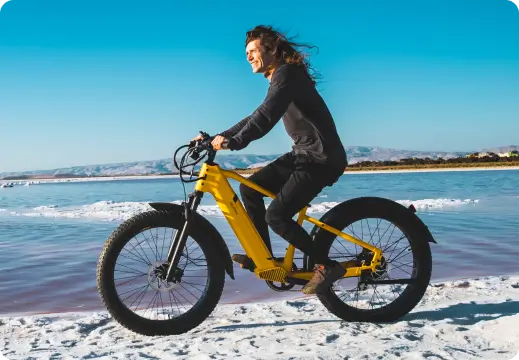




Choosing the right electric bike starts with more than finding your height on a size chart. Two riders who are the same height can have different inseams, torso lengths, arm lengths, mobility needs, and riding preferences. Those differences can change which frame size feels comfortable and which bike is easiest to control.
This electric bike size guide explains which body measurements matter, how they relate to ebike geometry, and what to check before buying. You will also find a Velotric ebike size chart covering city, commuter, folding, cargo, fat tire, hybrid, and three-wheel models.
Quick Ebike Fit Guide: Match Your Measurements to Ebike Geometry
If you already know your measurements, use this table to identify the specifications you should check on an ebike product page.
| Your Measurement or Need | Compare It With | What to Look For |
|---|---|---|
| Overall height | Recommended rider height range and frame size | Use it for an initial size match. |
| Inseam | Standover height | Look for comfortable clearance over the frame. |
| Inseam and leg extension | Minimum and maximum saddle height | Confirm the saddle adjusts for safe stops and comfortable pedaling. |
| Torso length | Frame reach and effective top-tube length | Avoid locked elbows or an overstretched back. |
| Arm length | Reach, stem length, and handlebar adjustment | Keep the controls within easy reach. |
| Hip and knee mobility | Standover height, step-over height, and frame style | Choose a lower step-over if mounting is difficult. |
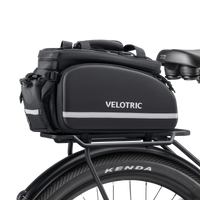
| Rider, cargo, and accessory weight | Maximum payload and rack capacity | Stay within both bike and rack limits. |
How to Measure Yourself for an Electric Bike
You do not need a professional bike-fitting studio to narrow down your size. A wall, a hardcover book, a tape measure, and a second person are enough for the basic measurements.

1. Measure Your Overall Height
- Remove your shoes and stand with your heels and back against a wall.
- Look straight ahead and keep your body upright.
- Place a flat book on top of your head, keeping it parallel to the floor.
- Mark the wall and measure from the floor to the mark.
Compare this number with the manufacturer's recommended rider height range. This is the fastest way to eliminate obviously unsuitable sizes, but riders near the boundary between two sizes should continue with inseam and reach checks.
2. Measure Your Inseam
- Stand barefoot with your feet roughly shoulder-width apart and your back against a wall.
- Place a hardcover book between your legs and raise it firmly to simulate the pressure of a saddle.
- Keep the book level with the floor.
- Measure from the top edge of the book to the floor.

Your inseam helps you evaluate standover clearance and saddle adjustment. It is often more useful than height for riders with proportionally long or short legs.
*Before comparing saddle height with your inseam, check whether it is measured from the ground or the bottom bracket.
3. Consider Your Torso and Arm Length
Torso and arm length influence how far you must reach to the handlebar. There is no universal home formula that converts these measurements into the perfect frame reach because the stem, handlebar shape, saddle position, and riding posture also affect the cockpit.
4. Check Your Step-Over Mobility
Fit is not only about body dimensions. Consider how easily you can lift your leg, rotate your hips, and support the bike during a stop. A rider with limited hip or knee mobility may be more comfortable on a step-through frame even if a high-step frame technically fits their height.

This becomes especially important when the bike has a rear basket, child seat, or cargo that prevents you from swinging a leg over the back.
Explore Step-Thru Ebikes5. Add Your Rider and Cargo Weight
Weight doesn't determine frame size, but it affects load capacity. Include the rider, cargo, and accessories, and stay within both the bike’s total payload and each accessory’s limit.
Electric Bike Geometry Explained

Standover Height
Standover height is the vertical distance from the ground to a specified point on the frame's top tube. It indicates how much room you have while standing over the bike.

More clearance generally makes mounting, dismounting, and emergency stops easier. It can be especially helpful for new riders, shorter riders, and anyone riding on uneven terrain.
Minimum and Maximum Saddle Height
The saddle range tells you how far the seat can be lowered or raised. At the bottom of the pedal stroke, your knee should retain a slight bend and your hips should not rock from side to side.

Sitting on the saddle with both feet completely flat on the ground is not required for a proper pedaling position. Many riders stop by moving forward from the saddle and placing one or both feet on the ground.
Reach and Effective Top-Tube Length
Frame reach is the horizontal distance from the center of the bottom bracket to the top-center of the head tube. Effective top-tube length is another horizontal frame measurement that can help compare how spacious two bikes feel.

Neither measurement describes the entire distance to your hands. Stem length, handlebar sweep, saddle position, and handlebar adjustment also shape your real riding position.
Stack and Handlebar Height
Stack is the vertical distance from the center of the bottom bracket to the top-center of the head tube. More stack generally supports a taller front end and a more upright posture, while less stack can contribute to a lower, more forward riding position.

An adjustable stem or handlebar can fine-tune posture, but adjustment cannot always compensate for a fundamentally incorrect frame size.
Wheelbase and Overall Length
Wheelbase is the distance between the front and rear wheel axles. A longer bike may feel stable at speed or while carrying cargo, but it can require more room for low-speed turns, storage, elevators, car racks, and tight paths.
Frame Size vs. Wheel Size
A 20-inch, 26-inch, or 27.5-inch number usually describes the wheel, not the rider size. A compact 20-inch folding or cargo ebike may accommodate a wide range of rider heights through an adjustable seatpost and handlebar. A 26-inch fat tire ebike can also fit shorter riders when it uses a low step-through frame.
Wheel size affects ride feel and packaging, but frame geometry determines whether the contact points fit your body.

How Riding Style Changes the Fit You Need
The same rider may prefer different geometry on a commuter, cargo, or trail-oriented ebike. Before comparing models, decide where you will ride and what the bike must do.
Urban riding involves frequent starts, stops, turns, and interactions with traffic. Look for a position that keeps your head up and your shoulders relaxed, with a short-to-neutral reach and easy access to the brakes.
A lower step-over can make repeated mounting easier, while an adjustable stem can help balance visibility and pedaling efficiency.


Velotric Electric Bike Size Chart
Velotric models use different combinations of frame styles, sizes, and adjustment ranges. The chart below provides a starting point for comparing current models.
| Velotric Model | Frame or Size Options | Recommended Rider Height | Fit Highlights |
|---|---|---|---|
| Tempo | Mid-Step or High-Step; Regular or Large | Mid-Step Regular: 4'10"–5'5" Mid-Step Large: 5'3"–5'11" High-Step Regular: 4'11"–5'8" High-Step Large: 5'6"–6'4" |
Multiple frame and size combinations for lightweight city and fitness riding. |
| Breeze 1 | Regular or Large | Regular: 4'11"–5'8" Large: 5'6"–6'4" |
Low step-over and a comfort-oriented, upright riding position. |
| Discover 3 | Regular or Large | With suspension seatpost: Regular: 5'2"–5'11"; Large: 5'9"–6'7" Without suspension seatpost: Regular: 4'11"–5'9"; Large: 5'6"–6'4" |
Comfort commuter with an upright position; seatpost choice changes the effective fit range. |
| Fold 1 Plus | One Size | 4'9"–6'5" | Broad seat and handlebar adjustment for compact storage and shared use. |
| GoMad | One Size | 5'0"–6'3" | Compact utility geometry; fit should be checked with the intended cargo setup. |
| Nomad 2X | Step-Through or High-Step | Step-Through: 4'11"–5'10" High-Step: 5'10"–6'5" |
Frame-specific height ranges for a full-suspension fat tire platform. |
| Summit 2 | Regular or Large | Regular: 5'2"–5'10" Large: 5'7"–6'5" |
Hybrid geometry for riders combining pavement, gravel, and trail use. |
| Triker | One Size | 4'10"–6'5" | Broad adjustment range and three-wheel stability for riders who prioritize support at a stop. |
Which Velotric Ebike Fits Your Height and Needs?
The chart above should be your first reference. The examples below can help narrow your choice based on fit priorities and riding needs.
-
Options for Short and Petite Riders
Consider Tempo, Fold 1 Plus, or Nomad 2X Step-Through. These models offer easier mounting, adjustable fit, or lighter handling for smaller riders.
-
Options for Lightweight Handling and Storage
Tempo is the strongest choice for riders who want a lighter, easier-to-carry city ebike, while Fold 1 Plus is better when compact storage is the priority.
-
Options for Cargo and Heavier Loads
GoMad and Nomad 2X are better suited to heavier-duty use, with stronger utility and payload-focused designs.
-
Options for Mixed Terrain and Outdoor Riding
Nomad 2X and Summit 2 are better choices for mixed terrain, offering more capable tires, suspension, and off-road-oriented geometry.