



On pavement, a tire meets a relatively consistent surface. Move onto loose gravel, sand, mud, snow, or an uneven trail, and that relationship changes. Stones shift beneath the wheels, soft ground compresses, and available grip can change within a few feet.
In these conditions, motor power is only useful when the tires can transfer it to the ground. This is where fat tires earn their place on an all-terrain ebike. Their width and air volume can create a more stable foundation on loose, soft, and uneven ground.
This guide explains why that matters, how fat tires behave across different terrain, and why a capable all-terrain bike still needs more than wide tires alone.
How Fat Tires Improve All-Terrain Performance
You're grinding up a loose gravel climb, throttle open, motor humming at full power—and the rear wheel just spins. In that moment,an ebike's motor is only as useful as the tires that put its power to the ground.
Power gets you moving. Traction determines how much of that power you can actually use. This is where fat tires make their case. A wider working footprint, greater air volume, and increased flotation on soft surfaces all work together to keep that connection to the ground intact.
A larger contact patch helps maintain traction
A fat tire has a wider casing than a conventional road, commuter, or hybrid tire. At an appropriate pressure, that casing can create a broader contact patch and help the bike feel more planted on unstable ground.
Loose gravel is a useful example. Small stones can shift beneath the wheels and redirect a narrow tire more abruptly. A fat tire meets more of the surface at once, making those small movements feel less disruptive and giving the rider a more stable foundation for steering, accelerating, and braking.
More flotation helps on soft terrain
On sand, snow, or soft dirt, the challenge is not limited to grip. The tire must also avoid sinking too deeply into the surface. A narrow tire concentrates the combined weight of the bike and rider over a smaller area, making it more likely to cut into soft ground.

A fat tire distributes that weight across a wider footprint. This added flotation can help the wheel remain closer to the surface, reducing how quickly it sinks and making it easier to maintain momentum.
Lower tire pressure helps the tire adapt to the surface
One of the most useful characteristics of a fat tire is its greater air volume. Within the tire manufacturer’s recommended range, this allows the tire to operate at a moderately lower pressure than many narrower bicycle tires.
At an appropriate lower pressure, the casing can conform more closely to small stones, shallow ruts, roots, and other irregularities instead of bouncing as sharply across them. Maintaining more consistent contact with the ground can improve usable traction while also reducing some of the vibration transferred to the bike and rider.
How Fat Tires Behave on Different Terrain
Gravel: Stability Matters More Than Flotation
Loose gravel moves beneath the wheels rather than providing one solid layer of grip. Here, a fat tire's main contribution is a more planted feel. Its wider working footprint can make individual stones less likely to redirect the wheel abruptly, while its air volume helps reduce vibration over coarse or washboard sections.

Sand: This Is Where Tire Width Really Matters
Sand makes flotation the priority. A wider tire distributes weight across more surface area, and moderately lower pressure can enlarge the footprint further. That doesn't mean every four-inch tire can cross every beach. Sand depth, moisture, slope, pressure, bike weight, and cargo all affect how quickly the wheels sink. Deep, dry sand also increases energy use and can reduce steering precision.

Snow: More Contact Can Help, but Conditions Matter
Fat tires can add stability on packed snow and flotation in shallower soft snow. Deep powder can still overwhelm the available footprint, while frozen ruts may pull the wheel off line. Ice creates a different problem because a wider tire does not create friction where little exists.

Dirt and Mud: Tread Becomes Just as Important as Width
Firm dirt may provide predictable grip, but mud places more emphasis on tread. The pattern needs to engage with soft ground and shed material effectively enough to keep working. Clearance also matters because mud collecting around the tire can add resistance. Pressure must balance surface adaptation with enough support for cornering and impacts.

Rocks, Roots and Broken Pavement: Tire Volume Adds a Layer of Cushioning
A high-volume tire can absorb smaller edges and irregularities before they create a sharp impact at the wheel. That helps on cracked roads, embedded stones, and shallow roots. Larger rocks, deep potholes, and repeated ruts demand more movement than the tire can provide.
Fat Tires Aren't Enough: What Makes an Ebike Truly All-Terrain?
Four-inch tires provide a useful foundation, but all-terrain capability depends on how the rest of the bike supports them.
| System | Why It Matters |
|---|---|
| Controllable Power | Smooth power delivery helps prevent sudden wheelspin on loose or slippery terrain. |
| Suspension Support | Suspension manages larger and repeated impacts that tire cushioning alone cannot absorb. |
| Braking Control | Progressive braking helps a heavier eBike slow down without overwhelming the available grip. |
Velotric Nomad 2X: Building an All-Terrain Ebike Around the Tires
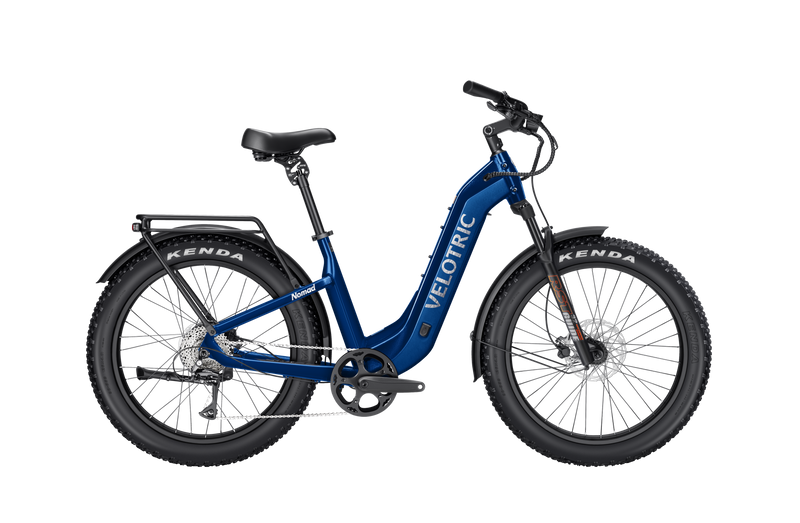
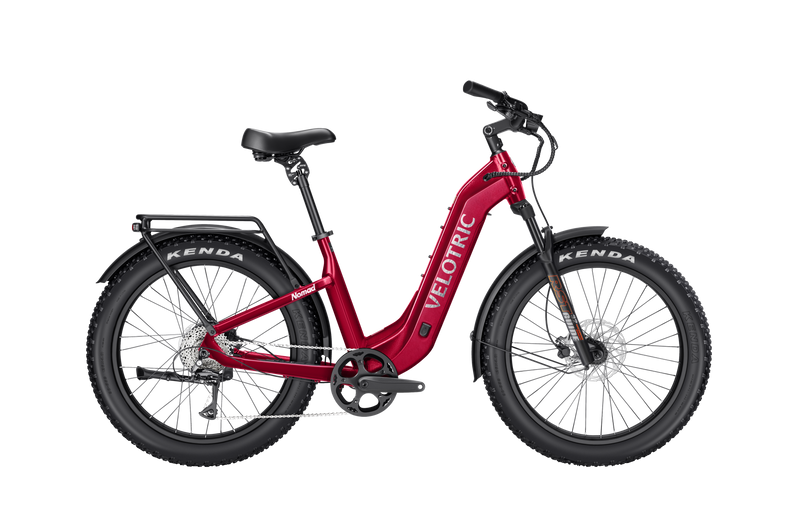
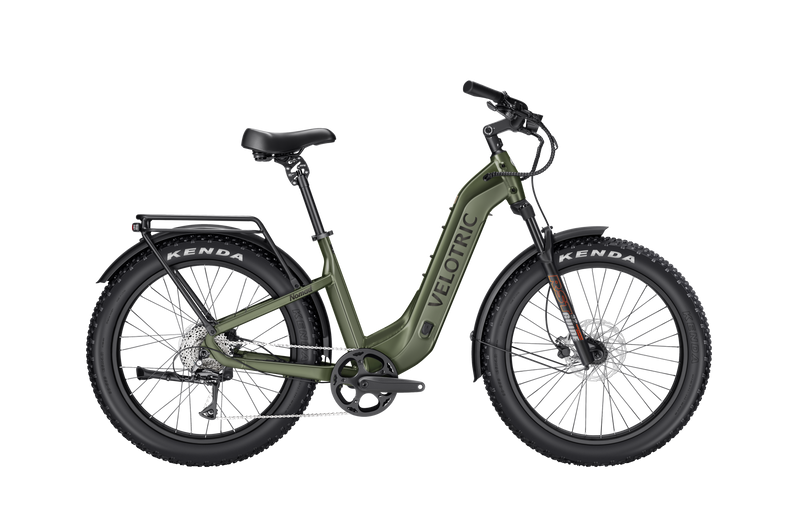
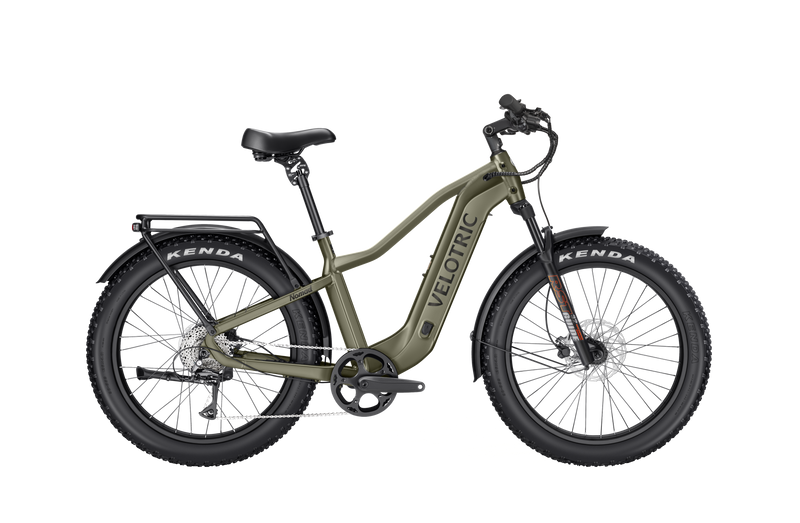
That is the more useful way to look at the Velotric Nomad 2X fat tire all-terrain ebike. Its fat tires aren't an isolated feature. They are part of a system built for riding when pavement gives way to less predictable terrain.
This combination makes sense on Nomad 2X because the bike is intended to move between surfaces rather than specialize in one. The tires provide a stable footprint, while the surrounding systems address the demands that width and air volume cannot handle by themselves.
Puncture-resistant fat tires for changing terrain
Nomad 2X uses Kenda 26 × 4.0-inch puncture-resistant tires designed to support rides that move between pavement, gravel, dirt, sand, and other uneven surfaces. Their wide footprint helps improve stability on loose ground, while the high-volume casing adds flotation on softer terrain and cushioning over rough roads.
Power you can actually control on loose terrain
Nomad 2X combines a 750W motor with up to 1,400W of peak output and 105Nm of torque, providing support for climbs, soft ground, and loaded rides. SensorSwap™ lets riders choose responsive Torque Mode or more relaxed Cadence Mode to match changing terrain. Where permitted, the trigger-controlled throttle can also assist with starts, although gradual input remains important on loose surfaces.
Full suspension takes over where tire volume stops
Nomad 2X pairs a 120mm adjustable front air fork with 80mm of rear-wheel travel. Together, they manage larger and repeated impacts that fat tires alone cannot absorb, helping the wheels maintain contact across ruts, rocks, and uneven ground.
It isn't a dedicated eMTB for aggressive technical singletrack. Nomad 2X is better suited to mixed terrain, rough access roads, and recreational trails where stability and versatility matter.
Braking matters even more on the way back down
Nomad 2X uses Tektro hydraulic disc brakes with a 203mm front rotor and a 180mm rear rotor. The larger front rotor supports the higher braking demand typically placed on the front wheel, while hydraulic operation allows braking force to build progressively. That modulation is especially relevant on loose descents, where locking a wheel can quickly use up the available traction.
Certified Safety and Weather Protection
Nomad 2X meets UL 2849 for its electrical system and UL 2271 for its battery, providing independently tested standards for electrical and battery safety.
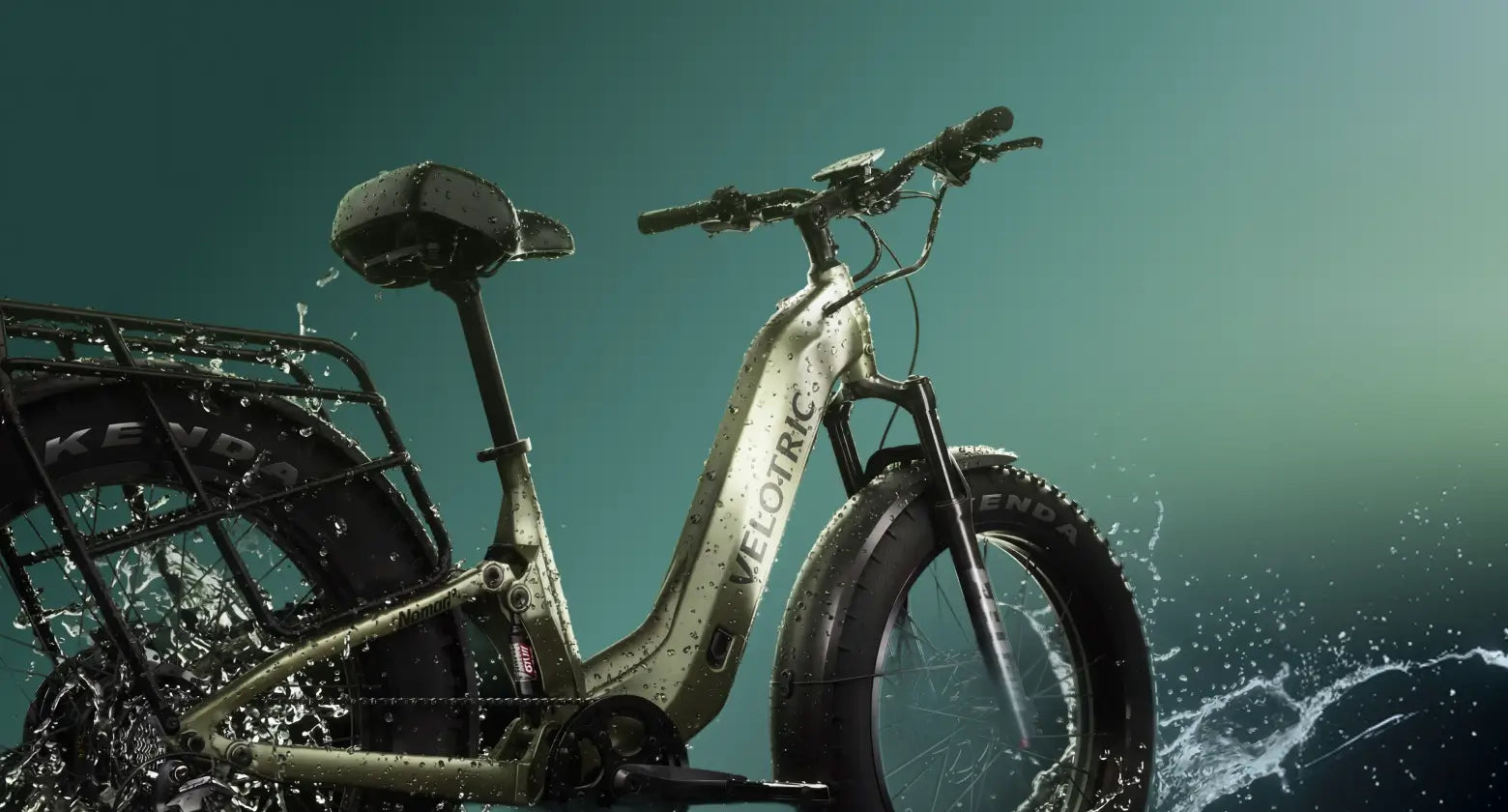
An IPX6-rated frame and IPX7-rated battery add protection for rain and wet riding conditions. These ratings improve weather readiness, but the bike should not be submerged or cleaned with a pressure washer.
Fat Tire Ebike FAQs
Are fat tire ebikes better for off-road riding?
They can be better suited to loose, soft, and uneven surfaces because their air volume supports a broader working footprint and lower pressure. Tread, suspension, geometry, brakes, power delivery, and rider technique still determine the bike's overall capability.
Are fat tire ebikes good on gravel?
Yes. Their wider footprint can help the bike feel more stable as small stones move beneath the wheels, while the high-volume casing can reduce vibration. Riders should still slow for turns and brake progressively.
Can fat tire ebikes ride on sand?
They can ride on some sand because wider tires provide additional flotation. Packed or slightly damp sand is generally more supportive than deep, dry sand. Pressure, tread, weight, slope, and rider technique all affect performance.
Are fat tire ebikes good in snow?
They can add contact and flotation on packed snow or shallower soft snow. Deep powder, frozen ruts, and ice remain difficult. A fat tire is not a substitute for a studded winter tire when ice is the main hazard.
What tire pressure should I use on a fat tire ebike?
Use the manufacturer's stated range and adjust within it for rider weight, cargo, terrain, and handling preference. Avoid universal PSI recommendations because tires, rims, loads, and conditions differ.
Do fat tires reduce ebike range?
They can. Fat tires are generally heavier and may create more rolling resistance than narrower, smoother tires, especially at lower pressure. Soft terrain, aggressive tread, cold weather, hills, speed, and cargo can reduce range further.
Is a fat tire ebike the same as an electric mountain bike?
No. “Fat tire” describes the tire format, while “electric mountain bike” describes a bike developed around mountain bike terrain and handling. The categories can overlap, but a dedicated eMTB may use specialized geometry, suspension, gearing, and components for technical trails.
Fat Tires Are the Starting Point, Not the Whole Story
Fat tires give an all-terrain ebike a useful foundation. Their extra volume can improve how the bike behaves when the ground becomes loose, soft, or uneven, but tire width alone doesn't determine capability. What matters is how the rest of the bike works with those tires.
That is where the Nomad 2X makes its case. Rather than relying on four-inch tires as the entire definition of “all terrain,” it combines them with controllable power delivery, full air suspension, and hydraulic braking to make that traction useful across changing surfaces.
If your rides regularly move between pavement, gravel, dirt, and rougher recreational terrain, that is the kind of balance worth looking for in a fat tire ebike.