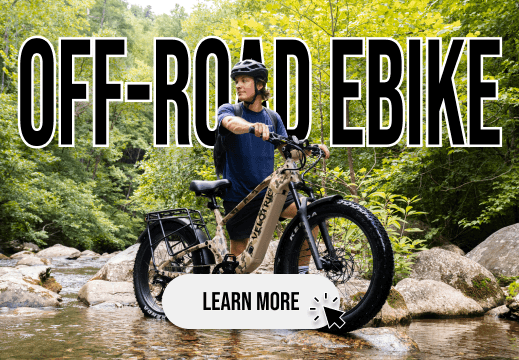




Many recreational rides begin on pavement because that is how you reach everything else. The road may lead to a gravel connector, a forest access route or a relaxed dirt trail. When those surfaces belong to the same ride, choosing a separate bike for each one creates more complication than freedom.
You don't necessarily need one ebike for the road and another for the trail. For many recreational riders, the better solution is a bike designed around the transition between them.
That is the real appeal of an all-terrain ebike designed for road-and-trail riding. It doesn't have to be the fastest option on smooth pavement or the most specialized machine on technical singletrack. It needs to remain comfortable, controllable and useful as the route changes.
The Route Matters More Than the Category
Bike categories tend to separate road riding from trail riding. Real routes often connect them.
A road-focused commuter ebike can be efficient during the paved approach, but loose gravel and repeated trail impacts may expose the limits of its tires and suspension. At the other extreme, a purpose-built eMTB is designed for riders who need trail-specific geometry and components for technical terrain. That specialization can be unnecessary when most of the route is road, gravel and moderate recreational trail.
A road-and-trail ebike starts with a different question:
What does the rider need across the entire route?
This shifts the focus from peak capability to continuity. The goal is to ride from home, follow the route as it changes and return on the same bike without arranging a vehicle, changing equipment or avoiding the unpaved section.
What Changes When the Road Becomes a Trail?
The transition may look simple on a map, but the bike begins dealing with different demands as soon as the pavement ends.
1. Traction Becomes Less Predictable
Smooth pavement provides a consistent surface for accelerating, cornering and braking. Gravel and dirt move beneath the tires, so abrupt inputs have a greater effect on stability.

This is why the best ebike for roads and trails needs more than strong motor output. Assistance has to remain manageable when grip becomes the limiting factor. A gradual response allows the rider to add power without making a loose climb feel unnecessarily abrupt.
Tire support matters as well. A larger, more forgiving contact area can help the bike feel planted when the surface becomes loose. It can't remove the need for careful speed and line choice, but it gives the rider a more stable foundation during the change.
2. Small Vibrations Become Repeated Impacts
On pavement, comfort is often about fit, posture and isolating normal road vibration. A trail adds ruts, roots and uneven sections that arrive more frequently and with greater force.
High-volume tires can soften smaller surface chatter. Suspension becomes important when the impacts are too large or repetitive for tire volume to manage well by itself. For a road-to-trail bike, the useful result is less disruption at the handlebar and saddle, along with better composure through rough sections.
3. Range Has to Cover Both Parts of the Ride
Trail distance is only part of the calculation. The paved approach and return can represent a significant share of the total route, while hills, loose surfaces, tire pressure, rider weight and assistance level all affect energy use.
For this reason, the advertised range shouldn't be treated as the distance to the turnaround point. A sensible plan includes the complete loop plus a reserve. A bike with useful range and adjustable assistance gives the rider more control over how that reserve is managed.
Why One All-Terrain Ebike Can Be More Practical Than Two Specialized Bikes
One all-terrain ebike can make mixed-surface riding simpler. Instead of driving a trail bike to the trailhead, you can ride the connecting roads and continue when the pavement ends. Electric assistance helps offset the added weight and rolling resistance of a more capable setup, making the crossover practical across roads, gravel and moderate trails. Riders who regularly combine road training with technical singletrack may still prefer specialized bikes.
Why the Nomad 2X Works as an All-Terrain Ebike for Roads and Trails
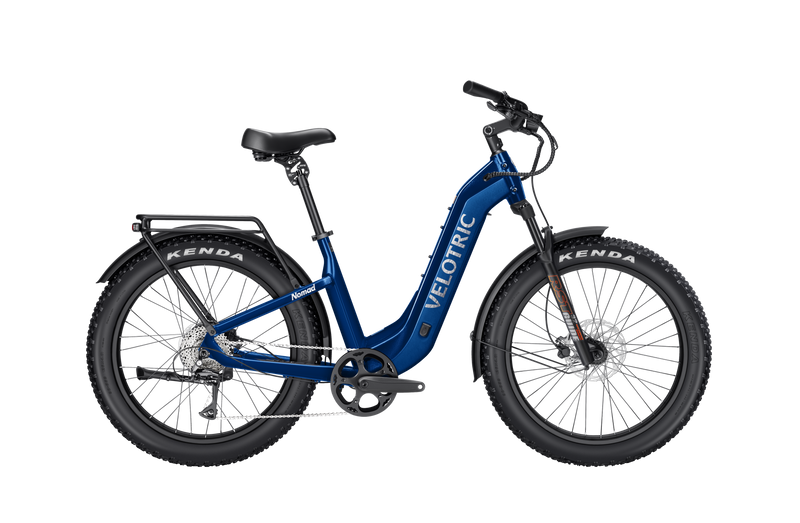
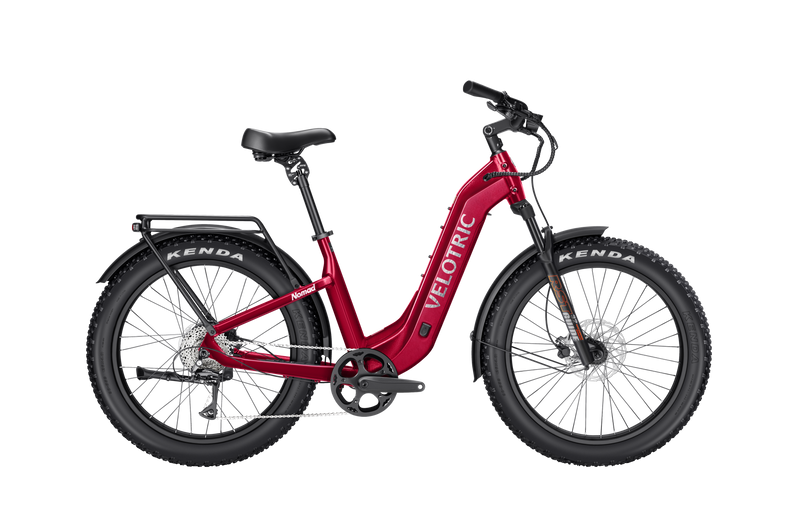
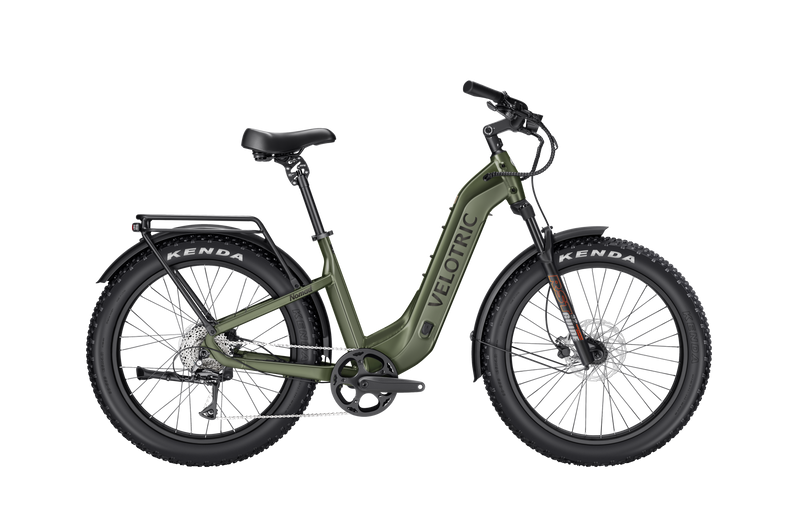
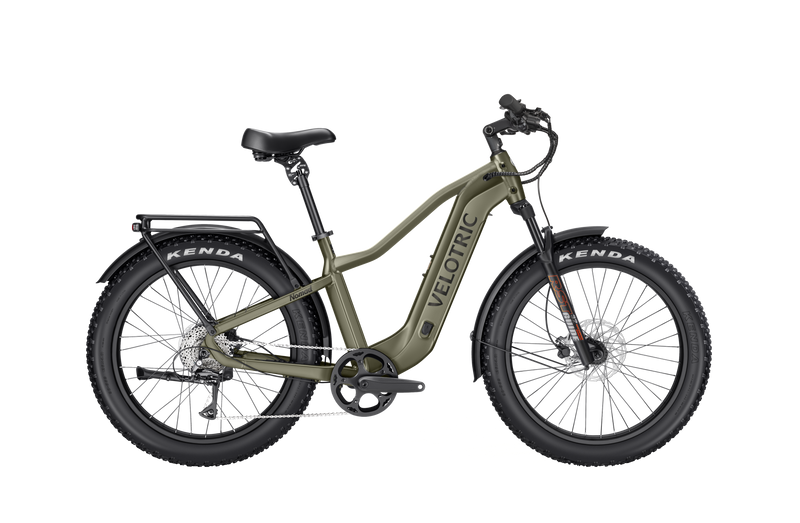
The Velotric Nomad 2X approaches mixed-surface riding in exactly this way. Its wide tires, full air suspension and adjustable power delivery aren't isolated off-road features. Together, they show how a road-and-trail ebike can manage the transition without making it feel like the point where the wrong bike was chosen.
Different Powerful Riding Rhythms
The Nomad 2X uses a 750W rear-hub motor that reaches up to 1,400W of peak power and produces 105Nm of torque. Those figures provide useful support for hills and heavier mixed-surface riding, but power alone doesn't explain why the bike fits this use case.
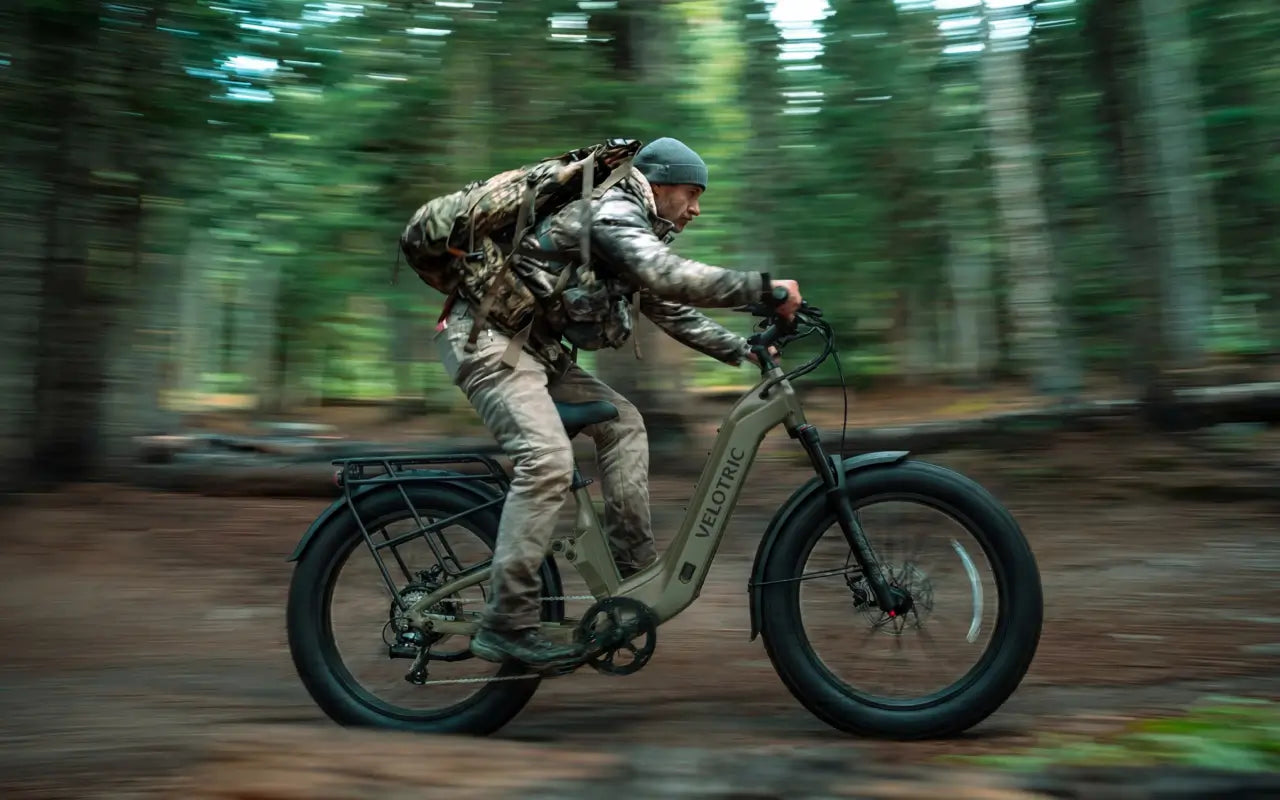
SensorSwap™ lets the rider choose between torque- and cadence-based assistance. The distinction becomes particularly useful on a route with two different rhythms.
- Cadence Mode can support a steady, lower-effort cruise during the road section.
- Torque Mode responds to pedaling input, making it easier to regulate assistance when the rider reaches loose ground or needs more deliberate control through an uneven section.
The Fat Tires Work Across the Transition
The Nomad 2X uses Kenda 26 × 4.0-inch puncture-resistant tires. On pavement, this setup prioritizes stability and cushioning over the low rolling resistance of a narrow road tire. Electric assistance helps make that compromise easier to live with.

The purpose becomes clearer on gravel and dirt. The tire volume creates a more forgiving platform as the surface loosens, while the substantial overall wheel diameter helps the bike roll across broken roads and moderate trail obstacles.
Full Air Suspension Extends Comfort Beyond the Road
Tire volume can filter smaller irregularities, but it shouldn't be responsible for the entire ride. The Nomad 2X pairs a 120mm adjustable front air fork with 80mm of rear-wheel travel. The front and rear suspension help manage repeated impacts that would otherwise pass through the frame and rider.
This matters when the trail is part of a longer loop. Comfort isn't only about one obstacle; it can make the entire rough section less punishing before the ride home.
Braking Is Sized for a Heavier Mixed-Surface Bike
Road-to-trail riding changes braking conditions as well as traction. A heavier ebike can carry significant momentum, and a loose descent requires the rider to apply braking force progressively rather than simply grabbing more brake.
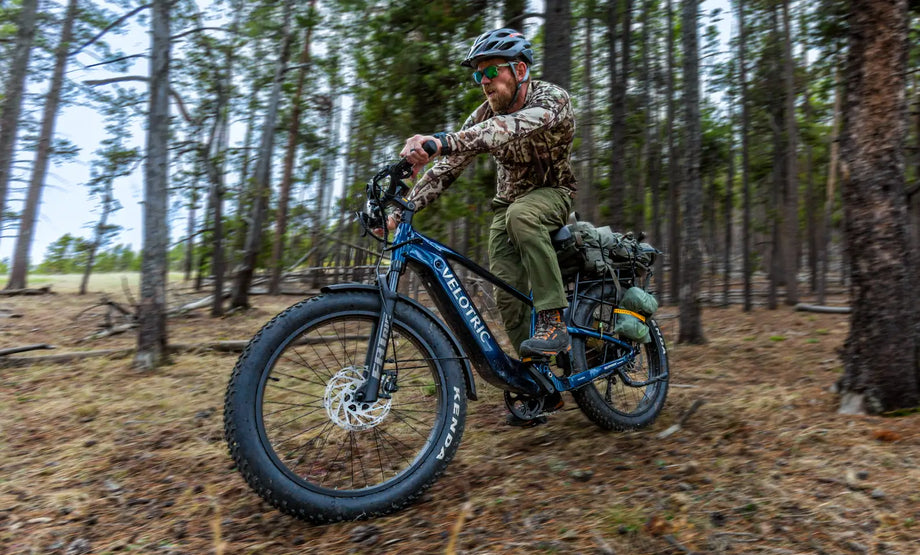
The Nomad 2X uses Tektro hydraulic disc brakes with a 203mm front rotor and 180mm rear rotor. The hydraulic system supports controllable braking, while the larger front rotor helps manage the greater share of braking load handled by the front wheel.
Range, Payload and Towing for the Complete Loop
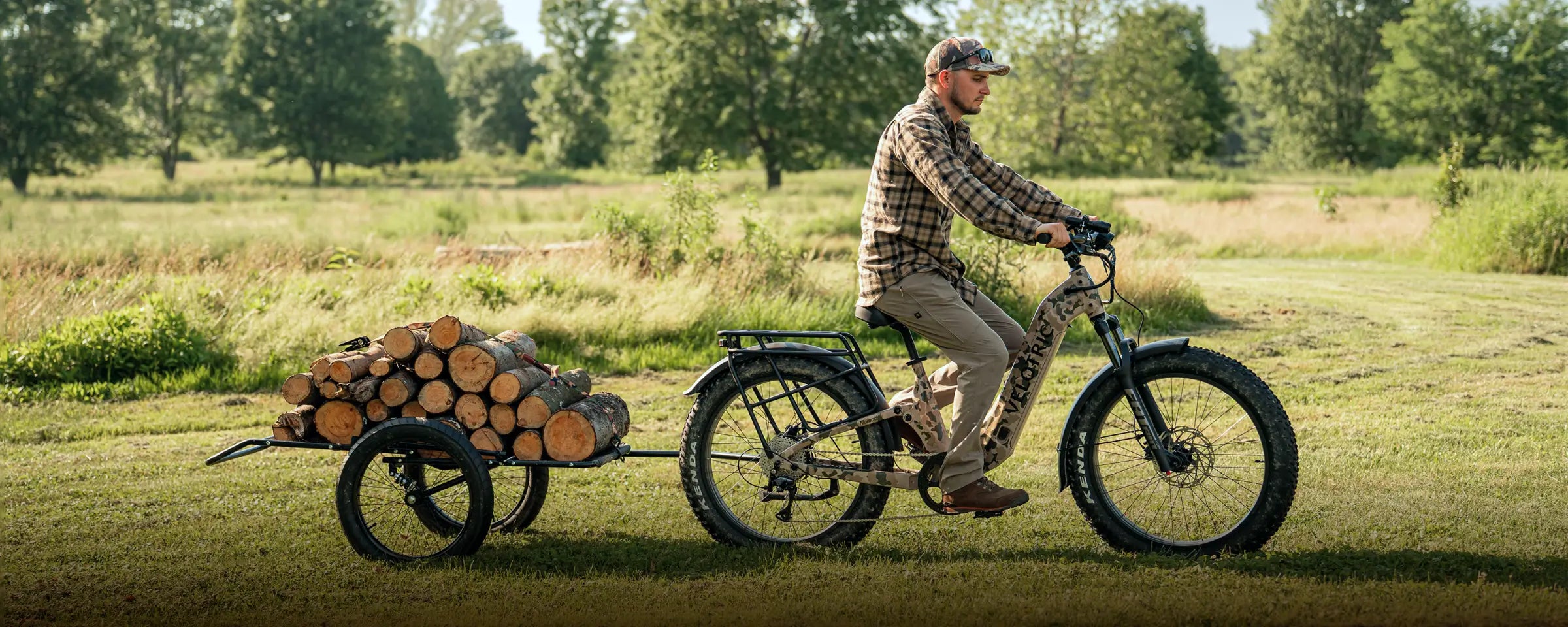
The Nomad 2X has a pedal-assist range of up to 75 miles and supports a maximum payload of 560 pounds, giving riders room for additional gear. For compatible towing setups, it is rated to tow up to 1,000 pounds.
Is the Nomad 2X the Right All-Terrain Ebike for You?
The Nomad 2X is a strong fit when road mileage is a necessary part of reaching the places you want to explore. Its capabilities are especially relevant if gravel, dirt roads and recreational trails appear regularly rather than once or twice a year.
It may suit you if:
-
You want to begin mixed-surface rides from home instead of driving to the trailhead.
-
Your routes combine meaningful pavement distance with gravel, dirt or moderate trails.
-
You value stability, suspension comfort and adjustable power delivery more than minimum bike weight.
-
You want one recreational ebike that remains useful when the planned route changes.
A different bike may be the better choice if nearly every ride stays on smooth pavement. A lighter commuter ebike will usually be easier to lift, store and transport, with less rolling resistance on the road.
The Nomad 2X also isn't a substitute for a purpose-built eMTB when the route involves technical singletrack, repeated drops, rock gardens or aggressive descending. Its sweet spot is the crossover space before that level of trail specialization becomes necessary.
How to Choose an All-Terrain Ebike for a Road-and-Trail Route
Begin with a route you actually ride or genuinely plan to ride. Then look at the transition points rather than assigning the entire route a single label.
- Estimate the road share. If pavement represents most of the distance, comfort, range and predictable cruising remain important even when the trail is the destination.
- Describe the trail honestly. Smooth dirt, maintained gravel and recreational paths require less specialization than technical singletrack.
- Look for controllable assistance. Strong output is helpful on climbs, but adjustable, predictable delivery matters when traction changes.
- Match tires and suspension to repeated conditions. Choose enough support for the rough surfaces you encounter regularly without buying around a rare extreme.
- Plan the complete loop. Include the approach, trail, return and a battery reserve when evaluating claimed range.
- Confirm access before riding. Ebike rules can differ across roads, bike paths, parks and individual trail systems. Check current local regulations and posted restrictions for the entire route.
This route-first approach prevents two common mistakes: choosing a bike that is comfortable only before the pavement ends, or buying technical capability that adds cost and complexity to every ride but is rarely used.
Frequently Asked Questions
What Is the Best All-Terrain Ebike for Roads and Trails?
For routes that combine pavement with gravel, dirt roads and moderate recreational trails, an all-terrain crossover ebike is often the most practical starting point. Look for stable tires, controllable assistance, suitable suspension, dependable brakes and enough range for the complete route.
The Velotric Nomad 2X brings these systems together with 26 × 4.0-inch tires, full air suspension and SensorSwap, making it particularly well suited to riders who regularly move from roads onto non-technical trails.
Can a Fat Tire Ebike Ride Comfortably on Pavement?
Yes. Fat tire ebikes can be ridden on pavement, although their wider tires are heavier and generally create more rolling resistance than road-oriented tires. Electric assistance helps offset that difference. The trade-off makes the most sense when the same ride also includes loose or uneven surfaces where the additional stability and tire volume become useful.
Do I Need Full Suspension for Road-and-Trail Riding?
Not every mixed-surface route requires full suspension. A front-suspension ebike may be sufficient for pavement, maintained gravel and smoother dirt paths. Full suspension becomes more valuable when rough sections are frequent, impacts reach the rear of the bike or comfort over a longer mixed-surface loop is a priority.
How Much Range Do I Need for a Mixed-Surface Ride?
Choose enough range for the full planned loop plus a reserve. Loose ground, elevation, rider and cargo weight, assistance level, temperature and tire pressure can all reduce real-world distance. Treat the manufacturer's claimed range as a comparison and planning figure rather than a guaranteed result.
One Ebike, More Complete Routes
The best all-terrain ebike for roads and trails isn't defined by the most extreme section it can survive. It is defined by how naturally it connects the sections riders use most.
That is why road-to-trail capability deserves its own place between commuter and mountain-bike specialization. It allows the road to become the beginning of the adventure rather than the surface you have to escape before the ride starts.
The Nomad 2X is built around this continuity. Its motor and SensorSwap system support changing riding rhythms, while its fat tires and full air suspension become more valuable as pavement gives way to rougher ground. Hydraulic braking and a claimed range of up to 75 miles help complete the same idea across descents and longer loops.
For riders whose routes regularly cross from road to gravel and onto moderate trails, one well-chosen ebike may be more useful than two bikes designed around separate worlds.