



Seeing dirt on your route doesn't automatically mean you need an electric mountain bike.
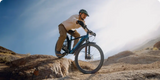
An eMTB is built for technical trails where roots, rocks, steep grades, and repeated impacts define the ride. Mixed-terrain riding is different. The route may leave pavement and continue onto gravel or a moderate dirt trail, but technical mountain biking isn't its main purpose.
That distinction matters when choosing a bike. An eMTB may offer more specialized trail capability, while an all-terrain ebike is designed to remain practical as the surface changes. The right choice depends less on the most difficult section you might encounter and more on the terrain that makes up most of your ride.
All-Terrain Ebike vs eMTB: Quick Comparison
| Category | All-Terrain Ebike | Electric Mountain Bike |
|---|---|---|
| Primary Purpose | Versatility across changing surfaces | Technical mountain bike trails |
| Typical Terrain | Pavement, gravel, dirt roads, and moderate trails | Singletrack, rock gardens, roots, and steep descents |
| Tires | Often wide or fat for stability and flotation | Trail-specific tread and casing for handling |
| Suspension | Front or full suspension, depending on intended use | Trail-focused suspension for repeated impacts |
| Motor Approach | Practical assistance across mixed conditions | Often mid-drive support for technical climbing |
| Everyday Utility | Often supports racks, cargo, and longer mixed routes | Usually secondary to trail performance |
| Best Fit | The surface changes during the ride | The trail is the reason for the ride |
In short: Choose an all-terrain ebike when rough terrain is one part of a broader route. Choose an eMTB when technical trail riding is the main activity.
What Is an All-Terrain Ebike?
All-terrain ebike is not a regulated technical classification. It generally describes an ebike designed to remain useful when a route includes both paved and unpaved surfaces. Instead of optimizing every component for technical mountain biking, it balances traction and rough-surface support with comfort, range, and everyday practicality.

Wide tires are common because they can create a stable footprint on gravel and provide flotation on softer ground. Some models use front suspension, while others add rear suspension for rougher recreational riding. The riding position may also be less aggressive than that of a trail-focused mountain bike, which can be more comfortable when much of the route remains on roads.
What Is an Electric Mountain Bike?
An electric mountain bike begins with mountain bike requirements. Its geometry, suspension, drivetrain, tires, and brakes are selected for off-road control when the trail itself becomes demanding.
Many eMTBs use mid-drive systems because the motor can work through the bike's gears. That becomes valuable during slow, steep climbing where maintaining cadence and choosing the correct gear matter. Trail-focused suspension also does more than soften bumps. It helps the wheels follow uneven ground while the rider manages repeated impacts.

Those are meaningful advantages on technical trails. On routes dominated by pavement and gravel, however, some riders may rarely use the capability they are paying for.
Where the Velotric Nomad 2X Fits All Terrains
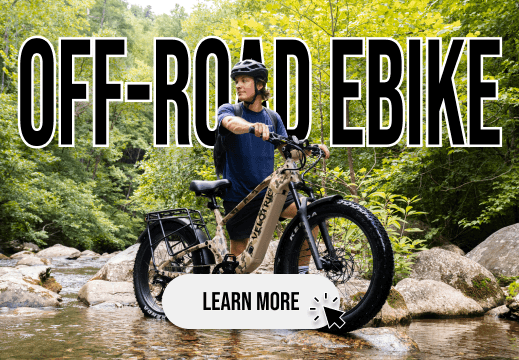
The Velotric Nomad 2X belongs on the all-terrain side of this comparison. It is designed for riders whose routes move beyond pavement but do not primarily involve aggressive technical singletrack.
1. Fat Tires for Changing Surfaces
Kenda 26 × 4.0-inch puncture-resistant tires provide a wide footprint for loose gravel and high air volume for rough or softer surfaces. They give the bike a stable foundation when traction changes, although pressure, tread, speed, and conditions still affect grip.
2. Power Matched to Mixed-Terrain Use
The 750W motor produces up to 1,400W of peak output and 105Nm of torque for hills, soft ground, and loaded rides. SensorSwap™ allows riders to choose between torque- and cadence-based assistance, helping the power delivery suit changing terrain or a more relaxed section of the route.
3. Full Suspension for Rougher Sections
A 120mm adjustable front air fork works with 80mm of rear-wheel travel to manage impacts that tire volume alone cannot absorb. This setup supports rough access roads and recreational trails, but it should not be confused with suspension developed for jumps, drops, or aggressive technical riding.
4. Range and Capacity Beyond the Trail
Up to 75 miles of claimed pedal-assist range provides room for longer route planning, although actual distance varies with terrain, load, temperature, tire pressure, and assistance level. A maximum payload capacity of 560 pounds also supports riders and equipment whose needs extend beyond trail performance alone.
These features position the Nomad 2X as a versatile full-suspension fat-tire ebike. It makes the most sense when the route changes underneath the rider and the bike must remain useful across the entire trip.
The Main Differences That Affect Your Choice
Changing Surfaces vs Technical Obstacles
This is the most important difference. Loose gravel, rough pavement, and maintained dirt roads can reduce traction without requiring mountain bike geometry. An all-terrain ebike is designed for that broader range of surfaces.
An eMTB becomes more relevant when the rider must repeatedly choose lines around rocks, control the bike over roots, or maintain stability through steep technical sections. The difficulty comes from trail features, not simply from leaving pavement.
Fat Tires vs Mountain Bike Tires
Fat tires use width and air volume to create stability, cushioning, and flotation. These qualities are useful on loose gravel, sand, snow, and broken roads. Within the manufacturer's approved range, moderately lower pressure can also help the casing conform to uneven ground.

Mountain bike tires solve a different problem. Their tread, compound, casing, and profile are developed around predictable cornering, climbing, and braking on trails. A four-inch tire is therefore not automatically more capable off-road than a narrower MTB tire. Each is designed around different terrain demands.
Comfort-Oriented vs Trail-Focused Suspension
On mixed routes, suspension mainly needs to manage rough roads, ruts, and moderate trail impacts without making the bike unnecessarily specialized. High-volume tires may already absorb smaller vibration, leaving suspension to handle larger movement.
Technical trails place greater demands on suspension. Travel, damping, frame geometry, and setup must work together through repeated roots, rocks, and descents. Full suspension is valuable in that environment, but the presence of front and rear suspension alone does not make every bike an eMTB.
Motor Output vs Trail-Specific Power Delivery
Motor wattage does not determine which category is better. A high-torque hub motor can support hills, soft surfaces, and loaded mixed-terrain rides. What matters is whether the assistance remains controllable when available grip changes.
On a technical eMTB climb, the ability of a mid-drive motor to work through the drivetrain can be more useful than a larger peak-output number. The motor system must match the speed, gearing, and obstacles involved in the ride.
Whole-Route Practicality vs Trail Specialization
Mixed-terrain riders should consider what happens before and after the unpaved section. A relaxed riding position, practical range, and support for racks or cargo may affect every trip. These features are often more important than additional trail capability that is used only occasionally.

An eMTB accepts a different balance. Its riding position and components prioritize control on the trail, while cargo utility and everyday comfort are usually secondary. That tradeoff makes sense when mountain biking is the purpose of the bike.
When an All-Terrain Ebike Makes More Sense
This category can also suit riders who want off-pavement capability without giving up practical features. Wider tires and suspension provide support when the route becomes rough, while a more versatile frame can remain useful for longer recreational trips or everyday riding.
The advantage is balance. You gain the traction and impact management needed for changing terrain without shaping the entire bike around aggressive singletrack.
When an eMTB Earns Its Advantages
If you regularly seek steep singletrack, repeated roots, rock gardens, drops, or difficult descents, trail-specific geometry and suspension are not unnecessary extras. They are central to controlling the bike. A dedicated eMTB may also be lighter and more responsive than a heavy fat-tire ebike when line choice and quick handling matter. Its drivetrain and motor behavior are developed around pedaling through technical terrain rather than carrying cargo or moving comfortably between roads and trails.
In that environment, a larger tire and a bigger peak-power figure cannot replace a purpose-built mountain bike platform.
- If that 80% is made up of pavement, gravel, dirt roads, and moderate recreational trails, begin with an all-terrain ebike
- If technical singletrack and demanding trail features account for a substantial part of your regular riding, begin with an eMTB
This approach does not ignore difficult terrain. It prevents an occasional section from defining the entire purchase. The best bike is not the one built for the hardest imaginable moment; it is the one that fits the route most of the time.
All-Terrain Ebike vs eMTB FAQs
Buy for Your Real Terrain
An electric mountain bike is the right tool when mountain biking is the purpose of the ride. It provides specialized control for technical terrain where obstacles and repeated impacts define the route.
Riding beyond pavement does not automatically require that level of specialization. If most of your rides combine roads, gravel, dirt, and moderate trails, an all-terrain ebike can provide the capability you need while remaining practical elsewhere.
Choose an eMTB when the trail is the destination. Choose an all-terrain ebike when the trail is one part of the journey.
For riders in the second group, Nomad 2X offers a useful balance: fat-tire traction, full suspension, controllable power, and practical range without presenting itself as a dedicated technical mountain bike.