



Last updated: August 19, 2026.
Electric bikes are becoming an increasingly common way to commute, run errands, and explore Chicago. The city offers an extensive network of bike lanes and recreational routes, including the Lakefront Trail and The 606.
However, riding an eBike in Chicago involves more than following ordinary bicycle etiquette. Riders must comply with Illinois eBike laws, Chicago traffic ordinances, and any additional rules posted by the agency responsible for a particular trail or park.
This guide explains the Chicago electric bike laws currently in effect, including eBike classifications, sidewalk restrictions, age requirements, equipment rules, and where different types of electric bikes may be ridden.
2026 Update: Illinois lawmakers passed SB 3484 in 2026, which could substantially update the state’s micromobility laws beginning January 1, 2027. As of August 19, 2026, the bill had been sent to the governor but had not yet become law. The current rules described below remain in effect unless otherwise noted.
- Chicago eBike Laws at a Glance
- Illinois eBike Definition
- Riding on Chicago Streets
- Chicago Bike Lanes
- Sidewalk Rules
- Chicago Lakefront Trail
- The 606
- Age Requirements
- Helmet Requirements
- License & Registration
- Speed Modifications
- Phone Use While Riding
- eBike Parking
- Illinois SB 3484
- Chicago eBike FAQs
Quick Overview of Chicago eBike Laws
| Rule | Current Chicago Requirement |
|---|---|
| Legal eBike classes | Class 1, Class 2, and Class 3 low-speed electric bicycles |
| Maximum motor rating | Less than 750 watts |
| Maximum assisted speed | 20 mph for Class 1 and Class 2; 28 mph for Class 3 |
| Bike lanes | Generally permitted where conventional bicycles are allowed |
| Sidewalks | Low-speed electric bicycles are prohibited under Illinois law |
| Minimum age | Current law establishes a minimum age of 16 for operating a Class 3 eBike |
| Helmet | No general statewide or Chicago helmet requirement for ordinary eBike riders, but helmet use is strongly recommended |
| License and registration | Not required for a compliant Class 1, Class 2, or Class 3 low-speed eBike |
| Class 3 speedometer | Required |
How Does Illinois Define an Electric Bike?
Chicago follows the Illinois three-class system for low-speed electric bicycles. Under the Illinois Vehicle Code, a legal low-speed electric bicycle must have fully operable pedals and an electric motor rated at less than 750 watts. The three classes are defined as follows:
Class 1 Electric Bike
A Class 1 eBike provides electric assistance only while the rider is pedaling. Motor assistance must stop when the bicycle reaches 20 mph.
Class 2 Electric Bike
A Class 2 eBike may use a throttle or another motor-powered control that can propel the bicycle without pedaling. Motor assistance must stop when the bicycle reaches 20 mph.
Class 3 Electric Bike
A Class 3 eBike provides assistance only while the rider is pedaling. Motor assistance must stop when the bicycle reaches 28 mph. Illinois law doesn't classify a compliant low-speed electric bicycle as a moped or motor-driven cycle.
However, an electric vehicle that exceeds the state’s motor, pedal, or assisted-speed limits may fall outside the eBike classification and could be treated differently under state law. Riders can review the definitions in 625 ILCS 5/1-140.10.
Are Electric Bikes Allowed on Chicago Streets?
Yes. A Class 1, Class 2, or Class 3 low-speed electric bicycle may generally be ridden on highways, streets, and roadways that are open to conventional bicycles. This includes most Chicago streets and on-street bicycle lanes.
Chicago’s bicycle rules generally apply to low-speed electric bicycles in the same way they apply to traditional bicycles. While riding on the road, eBike riders must follow applicable traffic-control devices and bicycle rules. This includes:
- Stopping at red lights and stop signs
- Yielding to pedestrians when required
- Following the direction of traffic
- Using appropriate hand signals when turning or stopping
- Riding at a reasonable and prudent speed for current conditions
- Avoiding roads where bicycles are prohibited by posted signs
Chicago also prohibits bicycles from being operated on DuSable Lake Shore Drive itself. Riders should use nearby bike routes or the designated Lakefront Bike Trail instead.

Can You Ride an eBike in Chicago Bike Lanes?
Yes. Illinois law allows low-speed electric bicycles to operate on roadways that are authorized for bicycle use, including bicycle lanes. This generally means Class 1, Class 2, and Class 3 eBikes may use Chicago’s conventional, buffered, protected, and neighborhood bike routes unless a sign or local rule states otherwise.
Access to a bike lane doesn't mean riders should always travel at the maximum assisted speed of their eBike. Chicago law requires bicycle riders to use a speed that is reasonable and prudent for current conditions. A lower speed may be necessary when:
- The bike lane is congested
- Visibility is limited
- Pedestrians are crossing the lane
- Vehicles are entering driveways or turning across the lane
- The pavement is wet, icy, damaged, or covered with debris
Are Electric Bikes Allowed on Chicago Sidewalks?
No. Illinois law states that a person may not operate a low-speed electric bicycle on a sidewalk. Chicago’s municipal code contains additional sidewalk restrictions for bicycles.
In general, a person who is 12 or older may only ride a conventional bicycle on a sidewalk where the sidewalk is officially marked as a bicycle route or when using it briefly to reach a roadway, intersection, designated path, or bike-share station. Chicago also specifically prohibits Class 3 eBikes from sidewalks. Because the Illinois rule applies to low-speed electric bicycles as a category, the safest legal interpretation is that riders should not operate Class 1, Class 2, or Class 3 eBikes on Chicago sidewalks.
If sidewalk access is necessary to reach a destination, dismounting and walking the eBike is the safer approach. Riders should continue to yield to pedestrians and avoid blocking entrances, curb ramps, or accessible paths.
Are eBikes Allowed on the Chicago Lakefront Trail?
Illinois law generally allows low-speed electric bicycles on bicycle paths unless the government agency or authority responsible for the path prohibits eBikes or a specific eBike class.
The Chicago Lakefront Trail includes a designated 18-mile Bike Trail and a separate pedestrian trail. The Chicago Park District’s public Lakefront Trail information identifies the bike trail as a route for cycling. However, trail access can be affected by temporary closures, construction, special events, weather conditions, and posted restrictions. Before entering the trail, eBike riders should:
- Use the section marked for bicycles
- Follow posted signs and temporary detours
- Reduce speed in crowded areas
- Yield where the trail crosses pedestrian access points
- Check current Chicago Park District notices
Riders should also be aware that the Chicago Park District's current guidance permits Class 1 and Class 2 eBikes on the Lakefront Trail's designated bike path, while Class 3 eBikes are not permitted on the trail. This Class 3 restriction generally applies across Park District multi-use paths, not just the Lakefront Trail. The official Chicago Lakefront Trail page should be checked for current access information.
Can You Ride an eBike on The 606?
The 606 is a Chicago Park District trail designed for activities that include bicycling, walking, and running. It's generally open daily from 6 a.m. to 11 p.m. As with other bicycle paths, eBike access may be subject to rules established by the responsible park authority and any restrictions posted at the trail.
Riders should pay particular attention to signs at entrances because The 606 is a heavily shared urban trail. Even where an eBike is permitted, riders should travel slowly around pedestrians, children, crowded access points, and limited-visibility areas.
As with the Lakefront Trail, Class 3 eBikes are generally not permitted on The 606. Riders using a Class 1 or Class 2 eBike should still follow posted signs, since rules can be updated or vary by section of the trail. Current hours and trail information are available from the Chicago Park District’s The 606 page.
How Old Do You Have to Be to Ride an eBike in Chicago?
Under the law currently in effect, a person must be at least 16 years old to operate a Class 3 low-speed electric bicycle. A person younger than 16 may ride as a passenger on a Class 3 eBike if the bicycle is designed to accommodate passengers. Current Illinois law does not establish the same specific statewide minimum operating age for Class 1 and Class 2 eBikes. Parents and guardians are still responsible for ensuring that younger riders can safely control the bicycle and comply with traffic laws.
Possible 2027 change: If SB 3484 becomes law in its enrolled form, riders would need to be at least 15 to operate a Class 1 or Class 2 low-speed eBike beginning January 1, 2027. The bill would retain the minimum age of 16 for Class 3 operation and introduce additional rules for riders under 18 carrying passengers. These proposed requirements are not part of the current law as of August 19, 2026.
Do You Have to Wear a Helmet on an eBike in Chicago?
The current Illinois and Chicago provisions reviewed for this guide do not establish a general helmet requirement for ordinary riders of Class 1, Class 2, or Class 3 low-speed electric bicycles. However, wearing a properly fitted bicycle helmet is strongly recommended. An eBike can accelerate more quickly and maintain a higher average speed than a conventional bicycle, which can increase stopping distance and the seriousness of a collision. A helmet may also be required by:
- A bike-share or rental agreement
- An organized ride or event
- An employer’s workplace safety policy
- A school, private property owner, or facility operator
The absence of a general helmet law should not be interpreted as meaning that riding without one is safe.
Do You Need a License or Registration for an eBike in Chicago?
No driver’s license, state vehicle registration, license plate, or motor vehicle insurance is currently required to operate a compliant Class 1, Class 2, or Class 3 low-speed electric bicycle in Chicago. This exemption depends on the vehicle continuing to meet Illinois’ low-speed eBike definition.
A vehicle with no operable pedals, a motor rated at 750 watts or more, or performance outside the legal class limits may be treated as another type of vehicle. Chicago riders can voluntarily register their bicycles with the Chicago Police Department. This is a theft-recovery measure, not a legal operating requirement. The city recommends registration because it can help police identify and return a recovered bicycle. More information is available through the city’s Bike Theft Prevention guide.
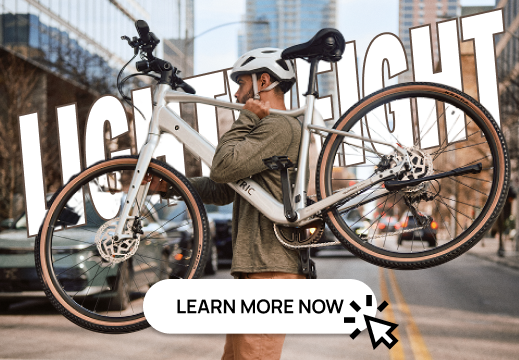
A Lightweight Ebike for Chicago City Riding
For riders navigating Chicago’s bike lanes, neighborhood streets, and daily commutes, the Velotric Tempo offers a practical combination of low weight, range, and urban-ready control.

At approximately 34 pounds without the battery, it‘s easier to carry or store than many full-size electric bikes. Its pedal-assist range of up to 60 miles also provides flexibility for commuting and longer rides along permitted city routes. With an IPX6-rated bike and IPX7-rated battery, the Tempo lightweight ebike is also better prepared for Chicago’s unpredictable weather, although riders should still adjust their speed and route for rain, snow, and icy surfaces.
What Equipment Does a Chicago eBike Need?
A low-speed electric bicycle used in Chicago must comply with applicable federal manufacturing requirements and Illinois equipment rules.
Permanent Classification Label
Manufacturers and distributors must place a permanent label in a prominent location on the eBike. The label must identify:
- The eBike class
- The top assisted speed
- The motor wattage
A rider should not knowingly modify the bicycle’s speed capability or motor engagement without replacing the classification label with one that accurately describes the modified bicycle.
Speedometer for Class 3 eBikes
Each Class 3 low-speed electric bicycle must have a speedometer that displays the bicycle’s speed in miles per hour.
Lights and Reflectors
When a bicycle is used at night in Chicago, it must have:
- A white front light visible from at least 500 feet
- A rear red reflector or red rear light that meets the applicable visibility requirement
Additional side reflectors and reflective clothing can improve visibility, especially when riding through intersections or poorly lit streets.
Brakes
Every bicycle must have a working brake capable of adequately controlling and stopping the bicycle. Chicago’s municipal code requires a brake capable of making the braked wheel skid on dry, level, clean pavement.
Motor Cutoff
A Class 2 eBike must be designed so that the motor disengages or stops functioning when the brakes are applied. For Class 1 and Class 3 eBikes, the motor must disengage when the rider stops pedaling.
Can You Modify the Speed of an eBike in Chicago?
Illinois and Chicago law require the classification label to accurately reflect an eBike’s class, assisted-speed limit, and motor wattage. A person may not knowingly modify the speed capability or motor engagement of a low-speed electric bicycle without replacing the required label. More importantly, a modification can cause the vehicle to fall outside the legal Class 1, Class 2, or Class 3 definition. If the motor rating, pedal configuration, throttle operation, or assisted speed no longer satisfies Illinois law, the vehicle may be considered a motor-driven cycle rather than an eBike. That change could affect:
- Where the vehicle may be ridden
- Whether a driver’s license is required
- Registration and insurance requirements
- Access to bicycle lanes and trails
Riders should check the vehicle’s current configuration and classification before using it on public streets or paths.
Can You Use a Phone While Riding an eBike?
Chicago generally prohibits operating a bicycle while using a handheld communication device. Exceptions include certain hands-free or voice-activated use, reporting an emergency, and using the device while the bicycle is stationary. Holding or actively operating a phone while riding can result in a fine and can make it more difficult to respond to pedestrians, opening car doors, traffic signals, and vehicles turning across a bike lane. Mounting a phone for navigation does not remove the rider’s responsibility to remain attentive and maintain control of the eBike.
How Should You Park an eBike in Chicago?
Chicago allows bicycles to be parked against a bike rack, parking meter, sign pole, building, or curb, provided they create as little obstruction as possible. An eBike should not block:
- Pedestrian travel
- Building entrances
- Bus stops
- Crosswalks
- Driveways
- Fire hydrants
- Curb ramps or accessible routes
When possible, secure the frame and at least one wheel to a fixed bicycle rack with a high-quality lock. Riders may also consider registering the bicycle with the Chicago Police Department and keeping a record of the serial number.
What Is Changing Under Illinois SB 3484?
Illinois SB 3484 would create a broader statewide framework for eBikes, high-speed electric devices, e-scooters, and other micromobility vehicles. The enrolled version includes several changes relevant to eBike riders:
- A minimum operating age of 15 for Class 1 and Class 2 eBikes
- A continued minimum operating age of 16 for Class 3 eBikes
- Additional passenger restrictions for eBike operators under 18
- Greater authority for park districts, forest preserve districts, conservation districts, transit districts, and state agencies to regulate eBike access on paths under their control
- Statewide limits on how local governments may independently regulate low-speed electric bicycles
- Separate requirements for higher-powered electric vehicles that do not qualify as low-speed eBikes
The proposal is especially important for riders using more powerful electric vehicles. Under the enrolled bill, an electric bicycle that does not meet the low-speed eBike definition could be treated as a motor-driven cycle and become subject to licensing, title, registration, or insurance requirements. However, SB 3484 was still listed by the Illinois General Assembly as “Sent to the Governor” as of August 19, 2026. Its proposed effective date is January 1, 2027, if enacted. Riders should not treat its proposed requirements as current law until the bill is signed and takes effect. The latest status can be checked on the official Illinois General Assembly SB 3484 page.
Chicago eBike Law FAQs
Are throttle eBikes legal in Chicago?
Yes. A throttle-equipped eBike may qualify as a Class 2 low-speed electric bicycle if it has operable pedals, uses a motor rated at less than 750 watts, and stops providing motor assistance at 20 mph.
Can a Class 3 eBike have a throttle in Chicago?
Illinois defines a Class 3 eBike as pedal-assist only, with assistance ending at 28 mph. A vehicle using throttle propulsion outside the Class 2 limits may not qualify as a standard Class 3 low-speed electric bicycle under current state law.
Can I ride an eBike on the sidewalk to avoid traffic?
No. Illinois law prohibits operating a low-speed electric bicycle on a sidewalk. Riders should use the roadway, an authorized bike lane, or a permitted bicycle path.
Are eBikes allowed on the Lakefront Trail?
Low-speed eBikes are generally allowed on bicycle paths unless the authority responsible for the path prohibits them. On the Lakefront Trail, riders should use the designated bike trail, follow posted signs, and check current Chicago Park District restrictions.
Do I need insurance for an eBike in Chicago?
Motor vehicle insurance is not currently required for a compliant Class 1, Class 2, or Class 3 low-speed electric bicycle. Insurance requirements may be different for a higher-powered vehicle that falls outside the legal eBike classes.
Can a child ride as a passenger on an eBike?
Current Illinois law allows a person younger than 16 to ride as a passenger on a Class 3 eBike designed to accommodate passengers. The bicycle must be properly designed and equipped for passenger use. Riders should also follow the manufacturer’s passenger, weight, seating, and accessory requirements.
Is a 1,000-watt eBike legal in Chicago?
A 1,000-watt electric bicycle does not meet Illinois’ definition of a low-speed electric bicycle because the legal definition requires a motor rated at less than 750 watts. It may be classified as another type of vehicle and may not have the same access to bike lanes, paths, or public roads.
Ride Legally and Responsibly in Chicago
Chicago provides many practical routes for electric bike commuting and recreation, but riders need to understand the difference between a legal low-speed eBike and a higher-powered electric vehicle. Before riding, confirm the eBike’s class, motor wattage, assisted-speed limit, equipment, and classification label. Use streets, bike lanes, and authorized bicycle paths rather than sidewalks. On Park District trails, follow posted rules and be prepared for location-specific restrictions. Because Illinois is considering significant changes for 2027, riders should also check the status of SB 3484 and review updated guidance before the new year.
Legal Notice
This guide is not legal advice. Electric bike laws, trail policies, enforcement practices, and proposed legislation can change. Rules may also differ on Chicago Park District property, Cook County Forest Preserve trails, private property, and routes managed by other agencies. Always check current signs and confirm requirements with the relevant government agency before riding.
Data Sources
- Illinois Vehicle Code, 625 ILCS 5/1-140.10: Low-Speed Electric Bicycle Definitions
- Illinois Vehicle Code, 625 ILCS 5/11-1517: Low-Speed Electric Bicycle Operation
- Municipal Code of Chicago, Section 9-52-120
- Municipal Code of Chicago, Section 9-52-020: Sidewalks and Prohibited Roadways
- Municipal Code of Chicago, Section 9-52-080: Lights, Reflectors, and Brakes
- Chicago Park District: Lakefront Trail
- Chicago Park District: The 606
- Illinois General Assembly: SB 3484 Status