Sales







E-bikes are a convenient, eco-friendly, and cost-effective way to get around—which is exactly why they attract thieves. They're valuable, easy to resell, and often parked in public. The good news: most thefts are opportunistic, and a few layers of protection make your bike a much harder target than the one parked next to it.
Here are 10 practical ways to keep your e-bike safe and secure, from choosing the right lock to picking an ebike with built-in tracking.
Black Friday Starts Now

Quick Summary
- Use a hardened-steel U-lock or chain—not a cable lock—as your main lock.
- Lock the frame and a wheel to a solid, fixed object.
- Take the battery and display with you when you park.
- Park in busy, well-lit areas and store the bike indoors at night.
- Add tracking, record your serial number, and consider insurance.
1. Use a High-Quality, Heavy-Duty Lock
A strong lock is your first line of defense. Look for locks made of hardened steel, which resist bolt cutters and saws far better than standard steel or cables.
- U-locks are rigid, which makes them hard to pry open with a crowbar. They're the best everyday choice for most riders.
- Chain locks are heavier but more flexible, so they work when a U-lock won't fit around a rack or post.
- Cable locks can be cut in seconds. Use them only as a secondary lock for wheels or the seat.
Some locks also include a built-in alarm that sounds when someone tampers with them—a useful extra deterrent in busy areas. As a rule of thumb, the harder and slower your lock is to defeat, the more likely a thief is to move on.

2. Lock It the Right Way
Even the best lock only works if you use it correctly.
- Lock to something fixed. Use a bike rack, sturdy metal post, or railing. Avoid small trees, wooden posts, thin poles, or anything a bike can be lifted over. Check that the rack itself is bolted down and can't be unscrewed.
- Lock the frame and a wheel. Locking only the wheel means a thief can leave the wheel and take the rest.
- Leave little room inside the lock. A U-lock with empty space inside is easier to attack with a jack or pry bar. Keep the lock off the ground, too—a lock resting on pavement is easier to smash.
- Use two different locks when you're parking for a long time, such as a U-lock plus a chain. Thieves usually carry tools for one type, and two locks double the time and effort needed.
3. Take the Battery and Display With You
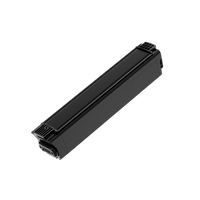
The battery is usually the most expensive part of an e-bike, and it's easy to resell. If your battery is removable, take it with you whenever you leave the bike for more than a few minutes. It also protects the battery from rain, heat, and cold.
Do the same with a detachable display. Without the battery and display, your bike is far less useful—and less appealing—to a thief. If your display isn't removable, check whether your bike supports a PIN code or app lock so it can't be ridden by someone else.
4. Replace Quick Releases With Locking Skewers
Quick-release levers on wheels and seat posts let you remove parts without tools—which is convenient for thieves too. Locking skewers and bolts can only be opened with a unique key or tool, so even if your main lock holds, your bike is much harder to strip for parts.
They're an inexpensive upgrade. If you'd rather keep quick releases, run a secondary cable lock through the wheels and seat rails.
5. Park in Busy, Well-Lit Places
Where you park matters as much as how you lock. Thieves prefer quiet, dark spots where they can work without being noticed.
- Choose busy areas with good visibility, such as near store entrances
- Look for bike parking covered by security cameras—even unmonitored cameras discourage theft
- Park among other bikes rather than on your own
- Avoid leaving your bike in the same public spot at the same time every day, which makes it easier to target
For longer stays, use secure bike parking such as bike lockers or staffed parking facilities, which many cities and transit stations offer.
6. Store Your E-Bike Securely at Home
Many bikes are stolen from home, not from the street. Keep your e-bike in a locked garage, a locked shed, or inside your home. Avoid shared hallways and unsecured bike rooms in apartment buildings.
If you store it in a garage or shed, lock it to a wall or floor anchor. If it has to stay outside, lock it to something fixed and cover it—a bike cover hides what's underneath and makes it less tempting. A cover alone isn't security, though, so always combine it with a good lock.
7. Add a GPS Tracker
A tracker won't stop a theft, but it greatly improves your chances of getting the bike back. Look for a model with real-time tracking, motion alerts sent to your phone, and long battery life. Hiding it inside the frame or seat post makes it harder for thieves to find and remove.
If you find your stolen bike's location, share it with the police rather than trying to recover it yourself.
8. Record Your Serial Number and Register Your Bike
Your bike's serial number is usually stamped under the bottom bracket, where the pedal cranks meet the frame. Write it down and keep it with your purchase receipt and a few clear photos of the bike, including any accessories or distinguishing marks.
You can also register your bike with a free registry such as Bike Index. Registered bikes are easier for police and buyers to identify, and having these records ready speeds up police reports and insurance claims.
9. Insure Your E-Bike
Insurance can't prevent theft, but it can cover the cost if the worst happens. Check whether your homeowner's or renter's policy covers e-bikes—many limit or exclude them—or look at dedicated e-bike policies that cover theft, damage, and sometimes liability.
When comparing policies, check the coverage limit, deductible, exclusions, and whether accessories are included. Some insurers also require you to use a specific type of lock, so read the terms carefully.
10. Choose an E-Bike With Built-In Tracking: Velotric Tempo
Add-on accessories help, but security works best when it's built into the bike. Several Velotric models, including the Discover 3, already work with Apple Find My. The Velotric Tempo takes this further for both iPhone and Android users.

Apple Find My and Google's Find Hub, built in
The Tempo is one of the first ebikes with both Apple Find My and Google's Find Hub built directly into the bike. You don't need to hide a separate tracker or pick a side—iPhone users can find it in the Find My app, and Android users can find it in Find Hub. Both networks use millions of nearby devices to help report your bike's location, even when you're nowhere near it.
Shared location for the whole household
Up to 35 family members can view the bike's location, which is useful when several people share one ebike.
NFC keyless unlock
Unlock the Tempo with a tap of an NFC card—no keys to carry and no codes to remember. Without the card, the bike can't simply be switched on and ridden away.
Light enough to bring inside
At 39 lbs (34 lbs without the battery), the Tempo is light enough to carry up stairs and store inside your home—one of the most effective ways to prevent theft. Its 374Wh battery is removable, so you can take it with you when you park.
Built-in tracking helps you find your bike, but it doesn't physically stop someone from taking it. For the best protection, pair the Tempo's smart features with a good lock and the habits above.
What to Do If Your E-Bike Is Stolen
- Report the theft to the police right away and give them your serial number, photos, and receipt.
- Check your bike's location in Find My, Find Hub, or your GPS tracker app, and share it with the police.
- Mark the bike as stolen on any registry you've used, such as Bike Index.
- Contact your insurer to start a claim.
- Watch local resale listings and online marketplaces for your bike.
Final Words
No single step makes an e-bike theft-proof, but several layers together make it far less attractive to thieves. Use a strong lock correctly, take the battery and display with you, park and store your bike wisely, and keep your records and insurance in order. Add built-in tracking like the Velotric Tempo's Apple Find My and Google's Find Hub support, and you'll have the best chance of keeping your bike—or getting it back.