



A full suspension label promises a smoother ride, but it doesn't guarantee one on its own. How well that suspension actually performs still depends on how it's matched to the bike's tires, power delivery, load capacity, and the terrain you ride most.
That distinction matters when you're choosing the best full suspension ebike. A trail-ready eMTB, a comfort-tuned cruiser, and a heavy-duty fat tire ebike can all check the "front and rear suspension" box, yet they're built for very different riders. This guide walks through what actually matters, and whether a full suspension setup fits the way you ride.
What is a full suspension ebike?
A full suspension ebike has suspension at both wheels: a front fork that lets the front wheel move over obstacles, and a rear shock-and-linkage system that does the same job at the back. Each end reacts independently as the wheels pass over the same stretch of ground.
That independent movement lets the tires track uneven ground instead of forcing the whole bike upward every time a wheel hits something. Better tire contact means better traction and steering, while less impact makes it through to the handlebars, pedals, and saddle.
There's more to the system than springs, though. Damping controls how quickly the suspension compresses and rebounds, so the bike doesn't keep bouncing after a hit. And the setup itself needs to be tuned — supporting the rider, the bike, and any cargo without feeling harsh or bottoming out.
*This article focuses on how these systems affect the bike as a whole. For a closer look at springs, dampers, travel, sag, and adjustment, read our complete ebike suspension guide.
Front suspension vs full suspension
A front-suspension ebike, often called a hardtail, pairs a suspension fork with a rigid rear frame. It's a practical option for commuting, rough pavement, maintained gravel, and lighter dirt routes, cutting handlebar impact without the added weight and upkeep of a rear shock.
Full suspension earns its keep once impacts start hitting both wheels on a regular basis. Ruts, roots, and washboard sections can repeatedly knock a hardtail's rear end off line. Letting the rear wheel move keeps the tire in contact with the ground and cuts the force that reaches the saddle and pedals.
| Feature | Front Suspension | Full Suspension |
|---|---|---|
| Wheel movement | Front wheel only | Front and rear wheels |
| Best suited to | Pavement, gravel and lighter dirt | Repeated impacts and rougher terrain |
| Ride comfort | Reduces front-end impacts | Reduces impacts through both ends of the bike |
| Weight and maintenance | Generally lower | Generally higher |
| Typical fit | Commuting and recreational riding | Frequent mixed-terrain and trail riding |
Neither setup is objectively better. If nearly every ride stays on smooth pavement, full suspension adds weight and complexity without much real payoff. Once rough surfaces become a regular part of the route, though, that extra rear-wheel control starts to matter.
When is full suspension worth it?
Full suspension pays off when rough ground is a regular feature of the ride, not an occasional surprise. It improves tire contact and cuts fatigue on rutted roads, gravel, and moderate trails — especially when the bike is hauling extra weight.
- Better traction: Both tires stay in closer contact with uneven ground.
- More control: Repeated bumps and ruts are less likely to throw the bike off line.
- Greater comfort: Less impact reaches the handlebars, pedals and saddle.
Why Nomad 2X stands out as a full suspension ebike
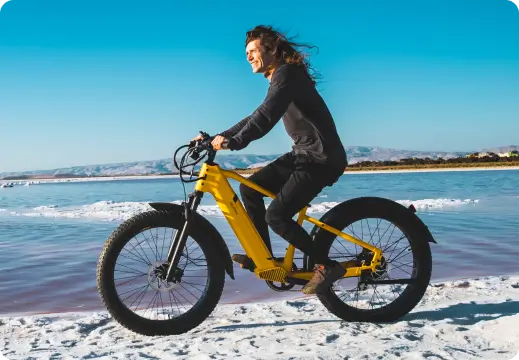
Nomad 2X brings these systems together with a focus on all-terrain, outdoor utility. Rather than treating full suspension as a standalone comfort feature, it pairs adjustable wheel travel with fat tires, strong motor output, and load ratings built for a wider range of riders and gear.
| System | Nomad 2X Setup | Why It Matters |
|---|---|---|
| Suspension | 120mm front air fork and 80mm rear-wheel travel | Lets both wheels absorb repeated impacts |
| Tires | Kenda 26 × 4.0-inch puncture-resistant tires | Adds traction, volume and stability across changing surfaces |
| Motor | 750W, 1,400W peak and 105Nm | Handles climbs, soft ground and a loaded bike |
| Power control | SensorSwap™ torque and cadence sensing | Lets the rider dial in a punchier or steadier assist feel |
| Range | Up to 75 miles of pedal-assist range | Leaves more room to plan longer, mixed-terrain routes |
| Capacity | 560 lbs total payload | Accommodates larger riders and heavier gear |
Full air suspension for mixed terrain
Nomad 2X runs a 120mm adjustable front air fork with lockout and rebound adjustment, paired with a rear air shock that delivers 80mm of rear-wheel travel. Because both ends use air springs, support can be dialed in for rider and cargo weight within the recommended range.
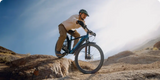
Those travel numbers reflect what the bike is built for. Nomad 2X targets mixed terrain, rough access roads, and recreational trail riding rather than aggressive downhill runs — it delivers more impact control than a hardtail without trying to be a long-travel enduro bike.
Fat tires support the suspension
The 26 × 4.0-inch Kenda tires bring the volume and footprint you'd expect from an all-terrain fat tire build. That wider footprint helps with traction and stability on gravel or loose ground, and the tire casing filters out small surface chatter before it ever reaches the suspension.

Power for terrain and load
The 750W rear-hub motor peaks at 1,400W and puts out 105Nm of torque — enough to handle climbs and loaded routes. But raw output only tells part of the story; how that power gets delivered matters just as much.
SensorSwap™ lets riders switch between torque- and cadence-sensing behavior, so the motor can work with whatever traction is available instead of treating every surface the same way.
Capacity beyond recreational riding
Nomad 2X offers up to 75 miles of pedal-assist range and a 560-pound total payload rating. Paired with a compatible trailer and properly managed setup, it's rated to tow up to 1,000 pounds.
Those numbers give Nomad 2X a clearer heavy-duty role than a typical recreational ebike. Riders can learn more about fit and component choices in our ebike guide for heavier riders.
Outdoor readiness beyond suspension
Suspension and power handle movement, but outdoor riding also comes down to braking, visibility, and weatherproofing. Nomad 2X uses hydraulic disc brakes and a lighting system with braking and turn-signal functions. Its electrical system is certified to UL 2849, and the battery to UL 2271.

The bike itself carries an IPX6 water-resistance rating, and the battery an IPX7 rating. Those ratings help it handle changing outdoor conditions — though they're not license to submerge the bike or skip the care instructions in the manual.
Who is Nomad 2X best for?
Nomad 2X suits riders who regularly hit rough or changing terrain and want more rear-wheel control than a hardtail offers. It's also a good fit for larger riders or outdoor users hauling serious equipment, since the suspension can be tuned around the load and the bike carries a high overall payload rating.
It makes the most sense on routes that actually use its combined strengths — gravel, rutted access roads, and moderate trails let the fat tires and full suspension work together. Riders who move between pavement and unpaved terrain also benefit from having one bike that isn't specialized for just one surface.
A different ebike may be a better fit when:
- Nearly every ride stays on smooth pavement.
- Low weight and frequent lifting are the main priorities.
- The intended use is aggressive or highly technical eMTB riding.
A lighter rigid or front-suspension model is generally easier to haul around for city use. At the other end of the spectrum, a dedicated eMTB offers geometry and components better suited to jumps, steep descents, and technical singletrack.
FAQs about full suspension ebike
Is a full suspension ebike better than a hardtail?
It depends on the route. Full suspension offers more comfort and wheel control when both tires regularly meet rough ground. A hardtail tends to be lighter, simpler, and more efficient on pavement, maintained gravel, and lighter trails.
Are fat tires enough without rear suspension?
Fat tires absorb smaller surface changes and help with contact on loose ground, but they offer limited give over larger or repeated impacts. Rear suspension lets the back wheel travel farther while the frame and rider stay more settled.
Does more suspension travel always mean a better ride?
Not necessarily. Travel needs to match the terrain, and it depends on solid spring support and damping to work well. A moderate-travel system that's properly tuned can feel more planted than a longer fork or shock that isn't.
Is Nomad 2X a full suspension electric mountain bike?
Nomad 2X is better described as a full suspension fat tire ebike built for all-terrain, outdoor use. It handles gravel, dirt roads, and moderate trails well, but it isn't positioned as a lightweight, aggressive eMTB for highly technical riding.
Is Nomad 2X the best full Suspension ebike for you?
The best full suspension ebike isn't defined by the rear shock alone. It needs tires suited to the surface, power that stays controllable, and enough range and capacity to match how the bike will actually be used.
Nomad 2X stands out because those pieces work together. For riders whose routes mix roads, gravel, and rough outdoor terrain, that combination makes Nomad 2X one of the most capable and practical full suspension ebikes in the Velotric lineup.