

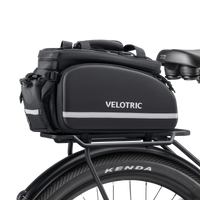


An ebike can shorten the trip from the trailhead to a hunting area, but the bike alone doesn't determine how useful it will be. The right accessories decide whether your equipment stays secure, whether the bike remains balanced and whether you have enough carrying capacity for the return trip.
That does not mean attaching every available bag and mount. A better hunting ebike setup starts with the job the bike must perform. This guide explains the main hunting ebike accessories, how trailers and racks differ, where to place equipment and what to check before riding into the field.
- Hunting Ebike Accessories at a Glance
- Cargo Trailers for Heavy or Bulky Loads
- Rear Racks, Panniers and Rack-Top Storage
- Safe Bow or Firearm Transport
- Battery and Range Accessories
- Navigation, Communication and Visibility
- Repair and Recovery Equipment
- Weather, Mud and Noise Control
- Where to Put Each Type of Gear
- Three Practical Hunting Ebike Setups
- Why the Base Ebike Still Matters
- Pre-Ride Hunting Ebike Checklist
- Check Access Rules Before Riding
- FAQs
Start With the Hunt, Not the Accessory List
Before choosing hardware, map the complete trip. Consider the legal route to the hunting area, the distance in both directions, the terrain and the heaviest possible return load. These factors determine what the bike needs to carry and where that weight should sit.
Ask four questions:
- What must stay with the bike? Tools, tire repair supplies and security equipment may remain attached even after you continue on foot.
- What needs to be immediately accessible? Navigation, water, a first-aid kit and an extra layer should not be buried beneath other cargo.
- What is heavy or bulky? Tree stands, camp equipment and recovered game usually belong in a trailer rather than high on a rack.
- What must remain protected? Electronics, batteries, optics and clothing need secure, weather-resistant storage.
The goal is to create a balanced system. Each accessory should solve a specific transport, safety or field-use problem without blocking the tires, brakes, lights, suspension or control cables.
Hunting Ebike Accessories at a Glance
| Accessory | Primary purpose | Best used for | Main compatibility check |
|---|---|---|---|
| Rear rack | Supports everyday cargo | Packs, clothing, food and tools | Frame mounts and rack load rating |
| Panniers | Keeps cargo low and organized | Dense or frequently used gear | Heel, tire and brake clearance |
| Rack-top bag or basket | Provides quick-access storage | Layers, food and lightweight equipment | Secure attachment and light visibility |
| Cargo trailer | Adds capacity beyond the rack | Bulky equipment and game recovery | Hitch, axle, width and load rating |
| Bow or firearm carrier | Secures hunting equipment in transit | Protected, hands-free transport | Bike fit, local laws and safe positioning |
| Spare battery | Adds a reserve for longer or loaded rides | Cold weather, hills and remote routes | Exact bike and battery-system compatibility |
| Lights and reflective gear | Improves visibility | Road connections and low-light travel | Local equipment rules and mounting position |
| Navigation and communication gear | Supports route finding and emergency contact | Remote or unfamiliar land | Offline function, power supply and reception limits |
| Repair kit | Handles common mechanical problems | Every remote ride | Tire, axle and component-specific tools |
| Fenders and protective covers | Reduces mud and water exposure | Wet ground and changing weather | Tire and suspension clearance |
1. Cargo Trailers for Heavy or Bulky Loads
A hunting ebike trailer is most useful when the expected cargo is too heavy, long or awkward for a rear rack. It can carry camp equipment, a portable blind, a tree stand or properly contained game.

The trailer does not remove weight from the overall system. The motor must still move it, and the brakes must still control it. Towing can reduce range, extend stopping distance and make tight turns or steep descents more difficult. A maximum towing figure therefore describes a structural limit under appropriate conditions, not a recommended load for every trail.
Single-Wheel vs. Two-Wheel Hunting Trailers
| Trailer type | Main advantage | Main limitation | Best fit |
|---|---|---|---|
| Single-wheel | Tracks closer to the bike and fits through narrower routes | Must be balanced carefully and usually depends on the bike to remain upright | Narrow trails and moderate loads |
| Two-wheel | Creates a stable cargo platform and can remain upright when detached | Adds width and may catch on trees, rocks, gates or deep ruts | Forest roads, wider trails and bulky loads |
A single-wheel trailer can follow the bike more naturally through turns, but uneven side-to-side loading can affect handling. A two-wheel design is generally easier to load, especially with an irregular item, although its outside wheel may travel over a different surface than the bike.
Neither format is automatically better. The route should decide. Measure the narrowest gates and trail sections, check the turning space and consider whether the trailer will need to cross side slopes, ruts or drainage channels.
Check the Hitch Before Checking Capacity
Trailer compatibility begins at the connection point. Rear-hub motors, thru-axles, nutted axles and quick-release systems may require different hitch hardware. Fat tires, disc brakes, fenders and rear suspension can also reduce available clearance.
Before installing a trailer, confirm:
- The hitch is approved for the bike's axle or frame design.
- The connector cannot rotate into the brake rotor, derailleur or motor cable.
- The safety retention strap has a secure attachment point.
- The trailer has clearance through the full range of suspension movement.
- The bike manufacturer, hitch and trailer ratings all support the intended load.
The safe capacity of the complete setup is limited by its lowest-rated component. A high-capacity bike does not raise the rating of a lighter trailer, hitch or rack.
How to Load a Hunting Ebike Trailer
Place dense items low and close to the trailer axle rather than stacking them at the back. Keep left-to-right weight as even as possible. Cargo should be attached to structural tie-down points with straps that cannot loosen into a wheel.
Before riding, push and pull the loaded trailer by hand. Nothing should shift, drag or change the hitch angle. Then complete a low-speed test that includes turning, braking and a short incline. If the trailer pushes the bike during braking, lifts the rear wheel, sways or prevents a controlled turn, reduce or reposition the load.
For game recovery, use a washable liner, sled or contained cargo bed that separates the load from moving parts. Secure antlers, legs and loose material so they cannot extend into the trail or contact a wheel. Follow tagging, evidence-of-sex, transport and retrieval rules for the hunting unit; an ebike does not create an exception to wildlife or vehicle-access regulations.
2. Rear Racks, Panniers and Rack-Top Storage
For most day hunts, a rear rack is more practical than a trailer. It does not add trailer width, is easier to maneuver and gives the rider a stable place for bags or a small basket.
Start with the rack's own load rating and mounting method. A rack attached to a full-suspension ebike must be designed for that frame and must not restrict rear-wheel movement. Universal clamps can appear to fit while placing stress on parts that were not designed as load-bearing mounts.
The rack rating is also not extra capacity added on top of the bike's total payload. Rider weight, clothing, rack cargo, mounted accessories and any other load carried by the bike all count toward the complete bike limit.

Panniers: Best for Keeping Weight Low
Panniers place cargo on the sides of the rack, lowering the center of gravity compared with a tall stack. They work well for water, tools, food, clothing and other compact equipment.
Choose panniers with firm hooks or locking mounts, quiet fabric and minimal loose webbing. Check that the bags remain clear of the rider's heels, rear tire, brake rotor and derailleur. After loading, compress soft contents so they do not bounce and wrap hard items that could knock together.

Two smaller panniers are often easier to balance than one heavily loaded bag. If only one side is needed, use it for lighter cargo or counterbalance it with equipment on the opposite side.
Rack-Top Bags and Baskets: Best for Quick Access
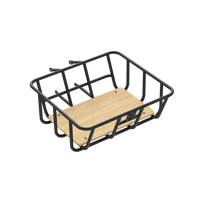
A rack-top bag is useful for an insulated layer, gloves, food or other gear needed during the ride. A basket can accept irregular shapes, but everything inside it still needs to be restrained.
Keep lightweight equipment on top. Placing the densest items high behind the rider can make the front end feel light on climbs and reduce steering control. Also check that the bag or basket does not cover the rear light or interfere with the saddle when the suspension compresses.
Front Racks and Handlebar Bags: Use Selectively
Small front bags can keep a phone, map or compact first-aid kit within reach. Large front loads are less suitable for uneven terrain because weight attached to the handlebar or fork changes steering directly.
If front storage is used, keep it light and confirm that it does not obstruct cables, the headlight or the view of the front tire. Equipment that affects steering is better moved to the frame, panniers or rear rack.
See Velotric's Bags3. Safe Bow or Firearm Transport
A bow or firearm carrier should hold hunting equipment securely while leaving both hands available for braking and steering. The carrier needs to prevent movement over rough ground and protect the equipment from branches, mud and contact with the wheels.
The safest arrangement depends on the equipment and applicable law, but several principles remain consistent:
- Transport firearms unloaded and follow all state, local and land-manager requirements.
- Use a protective case or scabbard appropriate to the equipment and conditions.
- Position the carrier so the equipment cannot point toward the rider or another trail user.
- Keep controls, brake levers, pedals and the rider's mounting path unobstructed.
- Confirm that straps and closures cannot enter a wheel or drivetrain.
- Remove the equipment before leaving the bike unattended.
Carrying a long item across the handlebar may seem convenient, but it can catch vegetation and restrict steering. A frame- or rack-compatible carrier that keeps the equipment close to the bike is usually easier to control. Laws governing loaded firearms, casing and transport can vary significantly, so check the regulations for the exact jurisdiction before the trip.
4. Battery and Range Accessories
Loaded off-road travel uses more energy than an unloaded ride on pavement. Soft ground, climbing, cold temperatures, lower tire pressure and towing can all increase demand. Range planning should therefore begin with the complete return route rather than the distance to the hunting location.
When a Spare Battery Makes Sense
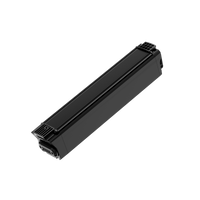
A spare battery can provide useful reserve on long routes, but only if it is made for the exact ebike system. Voltage, battery management, connectors, firmware and mounting hardware must match. An unapproved battery or improvised adapter can create electrical, warranty and safety problems.

Carry a spare in a padded, water-resistant compartment where it cannot move or contact metal tools. Do not place it at the bottom of a trailer where repeated impacts or water can reach it. Inspect the case and terminals before installation, and never use a battery that is cracked, deformed, leaking or otherwise damaged.
Cold conditions deserve additional margin. Lithium-ion battery performance temporarily decreases in low temperatures, so start with the battery charged and stored according to the manufacturer's guidance, then allow a cold battery to return to the recommended temperature before charging it.
Small Power Accessories
A handlebar-mounted phone may draw power throughout the day when used for mapping. If the bike offers a compatible USB port, route the charging cable so it cannot catch the handlebar, fork or brush. A separate power bank offers redundancy and can stay with the hunter after the bike is parked.
5. Navigation, Communication and Visibility
An ebike can cover distance quickly, which makes it easier to move beyond familiar landmarks. A mounted phone or GPS unit should be visible without requiring the rider to remove a hand from the handlebar. Download maps for offline use and carry a backup method of navigation.

Cell service should not be treated as guaranteed. On remote hunts, a satellite communicator or personal locator device may provide another layer of emergency communication, but it needs its own charging plan and should remain on the person rather than on a parked bike.

Lighting requires balance. Early starts and late returns make a strong headlight and rear light valuable around roads, vehicles and other trail users. If the bike includes a low-visibility or lights-out setting for field use, activate it only where reduced lighting is safe, legal and appropriate. Turn normal lighting back on before entering a public road or any place where visibility is required.
Reflective equipment can be stored or covered during the stationary hunting portion of a trip, then deployed for the ride out. Do not let camouflage or cargo cover legally required reflectors or lights while traveling.
6. Repair and Recovery Equipment
A hunting ebike carries more weight and often operates farther from immediate help than a typical recreational bike. The repair kit should match the actual components on the bike rather than rely on a generic multitool alone.
A practical field kit may include:
- A pump rated for the tire volume and valve type
- Tire plugs or patches appropriate to the tire system
- A compatible spare tube, even when using a tubeless setup
- Tire levers and the correct axle tool
- A compact multitool with the sizes used on the bike and accessories
- A quick link matched to the chain
- Spare rack, pannier and trailer-hitch fasteners
- Reusable straps and a short length of strong repair tape
- A small cleaning cloth for battery contacts and the drivetrain
Practice removing a wheel and repairing a tire before the season. Rear-hub motor wheels may use a power cable, torque hardware and axle fasteners that differ from those on a conventional bicycle.
A compact first-aid kit belongs in a separate, clearly marked pocket. It should stay accessible even when the trailer is unloaded or the bike is left behind.
7. Weather, Mud and Noise Control
Fenders reduce the amount of mud and water thrown onto the rider, cargo and bike. They are especially useful when the return load must remain clean or when wet debris could cover lights and bags. Verify clearance around fat tires and through the full suspension range; packed mud between the tire and fender can create drag.

Weather-resistant panniers and dry bags protect clothing, electronics and emergency supplies. Sensitive items can be placed in a second sealed liner because a water-resistant outer bag is not always fully waterproof after repeated use or abrasion.
Noise control is equally practical. Metal tools, buckles and hard containers can rattle against each other over roots and gravel. Wrap them, use divided pockets and tighten excess straps. After packing, roll the bike across uneven ground and listen for movement before entering the field.
8. Where to Put Each Type of Gear
Good packing is less about filling every available space and more about controlling weight, access and noise.
| Gear type | Best location | Reason |
|---|---|---|
| Dense tools and water | Low in balanced panniers or near the trailer axle | Reduces top-heavy handling |
| Rain layer and gloves | Rack-top bag or upper pannier pocket | Easy to reach without unpacking |
| First-aid and emergency communication | On the rider or in a marked quick-access pocket | Remains available away from the bike |
| Battery and electronics | Padded, dry and securely restrained compartment | Protects against impacts and moisture |
| Bulky camp or recovery equipment | Trailer | Avoids overloading the rack |
| Bow or firearm | Dedicated secure carrier | Keeps both hands free and prevents movement |
| Repair kit | Permanent bike-mounted bag | Available whenever the bike is used |
| Food or scented items | Sealed storage appropriate to local wildlife rules | Reduces leakage and unwanted animal contact |
Keep the bike's center as open as possible for safe mounting and dismounting. A rider shouldn't have to step over unsecured equipment or lift a leg around a protruding carrier on uneven ground.
9. Three Practical Hunting Ebike Setups
Lightweight Scouting or Morning Hunt
Use a rear rack with one or two compact panniers, a repair kit, lights, navigation and a small first-aid kit. This keeps the bike narrow and easy to handle while providing space for water, food and an extra layer.
Remote All-Day Hunt
Add weather-resistant storage, a manufacturer-approved spare battery or an appropriate power reserve, offline navigation and emergency communication. Distribute water and tools low, while keeping the layer system and first-aid supplies accessible.
Heavy Gear or Game-Recovery Setup
Begin with a compatible trailer and hitch rather than trying to stack everything on the rack. Use the rack for lighter items needed during the ride and reserve the trailer for the main load. Test the loaded system before the hunt, plan a wider turning path and leave additional room for braking and battery use.
10. Why the Base Ebike Still Matters
Accessories work only when the ebike provides a suitable platform. A hunting setup benefits from stable tires, controlled power, effective brakes, useful range and clearly defined load ratings. Frame geometry and suspension also affect how the bike responds when a rack or trailer is loaded.
The Velotric Nomad 2X is designed around this type of outdoor utility. Its integrated MIK HD-compatible rear rack is rated for up to 120 pounds, while total bike payload reaches 560 pounds. With an appropriate trailer, hitch, load distribution and route, the bike is rated to tow up to 1,000 pounds.

For uneven access routes, the 26 × 4.0-inch tires work with a 120mm front air fork and 80mm of rear-wheel travel. The 750W rear-hub motor produces up to 1,400W of peak output and 105Nm of torque, providing support for hills and loaded travel. Hydraulic disc brakes with a 203mm front rotor and 180mm rear rotor help manage the additional demands created by weight.
Nomad 2X also offers up to 75 miles of pedal-assist range, although the practical distance changes with cargo, towing, terrain, temperature and assistance level. Its Stealth Mode turns off the integrated lights and limits top speed when activated while the bike is stationary. This setting is intended for appropriate lower-profile field use; normal lighting should remain in use anywhere visibility is legally required or important for safety.
11. Pre-Ride Hunting Ebike Checklist
Complete the final check with the bike fully loaded, not while it is empty in the garage.
| Route and Rules |
|
| Bike and Accessories |
|
| Cargo and Power |
|
Check Access Rules Before Riding
Hunting permission and ebike access are separate questions. A hunting area may be open during the season while a particular road or trail remains closed to ebikes. Rules can also differ between BLM land, National Forest land, state wildlife areas and private property.
Use the current map or written direction from the agency managing the exact route. Do not assume that a trail open to conventional bicycles is automatically open to an ebike, and do not use an ebike for cross-country game retrieval unless the land manager specifically permits it. The same caution applies to temporary closures and seasonal restrictions.
FAQs
What are the most important hunting ebike accessories?
Most hunters should begin with a compatible rear rack or panniers, lights, navigation, a first-aid kit and bike-specific repair supplies. Add a secure bow or firearm carrier where permitted. A trailer becomes important when the hunt involves bulky equipment or game recovery.
Is a single-wheel or two-wheel trailer better for hunting?
A single-wheel trailer follows the bike through narrower routes, while a two-wheel trailer provides a more stable platform for bulky cargo. The better choice depends on trail width, terrain, load shape and hitch compatibility.
Can any bike trailer be attached to a hunting ebike?
No. The hitch must match the axle or frame design, and the trailer needs clearance from the motor cable, brakes, derailleur, tire and suspension. The bike, hitch and trailer manufacturers must all support the intended setup.
How should hunting gear be distributed on an ebike?
Place dense items low and close to the center of the bike or trailer axle. Balance panniers from side to side, keep light gear on top and use a trailer for cargo that would overload or destabilize the rear rack.
Does towing reduce ebike range?
Yes. Added weight and rolling resistance increase energy use, especially on hills, soft ground and in cold weather. Plan around the loaded round trip and keep a reserve instead of using the bike's maximum range figure as a guaranteed distance.
Can an ebike be used to retrieve game off trail?
Only where the responsible land manager specifically allows it. Many public-land routes restrict motorized or ebike travel to designated roads and trails, and game-retrieval exceptions are location-specific.
Should a hunting ebike carry a spare battery?
A spare can be useful for long, cold or heavily loaded rides, but it must be approved for the exact bike system. Carry it securely in a padded, dry location and follow the manufacturer's temperature, charging and inspection guidance.