Sales







Your tires are the only part of your e-bike that touches the road, so they affect almost everything about your ride—grip, braking, comfort, range, and how often you deal with flats. E-bikes are heavier and faster than regular bikes, which puts more stress on tires and makes regular care even more important.
The good news is that tire care is simple. This guide covers how to inspect your tires, set the right pressure, keep them clean, know when to replace them, and fix a flat yourself.

Quick Summary
- Check tire pressure at least once a week, and before longer rides.
- Always stay within the pressure range printed on the tire sidewall.
- Look over your tires regularly for cuts, cracks, bulges, and stuck debris.
- Clean with mild soap and water—no harsh chemicals or pressure washers.
- Replace tires when the tread is worn, the sidewalls crack, or flats keep happening.
Black Friday Starts Now

1. Inspect Your Tires Regularly
A quick look before you ride can catch most problems early. It takes less than a minute and is the easiest way to avoid a flat or blowout on the road.
Check the tread and sidewalls
Slowly spin each wheel and look over the whole tire. Watch for cuts, cracks, bald spots, and areas where the tread is worn flat. Pay close attention to the sidewalls: bulges, deep scuffs, or exposed threads mean the tire is weakened and should be replaced.
Remove debris from the tread
Small pieces of glass, thorns, wire, or sharp stones can get stuck in the tread and work their way in over time. Pick them out with your fingers or a small tool. If something has gone deep, check the tire pressure afterward—you may have a slow leak.
Check the rims and spokes
While you're there, look for dents in the rim and loose or broken spokes. Damaged wheels can cause flats and uneven tire wear. For more on what to look for, see this guide to flat tires and e-bikes.
2. Get the Tire Pressure Right
Tire pressure has a bigger effect on your ride than almost anything else you can adjust yourself.
- Too low: sluggish handling, more battery drain, faster tire wear, and a higher risk of pinch flats and rim damage.
- Too high: a harsh ride, less grip, and reduced control—especially on rough or wet surfaces.

Start with the recommended range
The minimum and maximum pressure are printed on the tire sidewall, and your user manual may give a recommended setting. Always stay inside that range. As a rough guide, standard commuter and hybrid tires usually run at much higher pressure than 4-inch fat tires, which use low pressure to create a large, grippy contact patch.
Adjust for your weight and load
Heavier riders, or riders carrying cargo or a passenger, should run pressure toward the higher end of the range so the tires don't squash too much. Lighter riders can go a little lower for more comfort and grip.
Adjust for the terrain
- Smooth pavement: higher pressure for lower rolling resistance and better range.
- Gravel, dirt, and trails: slightly lower pressure for more grip and a smoother ride.
- Sand and snow (fat tires): lower pressure helps the tire spread out and "float" instead of sinking—but don't go below the minimum.
Check it often
All tires slowly lose air, so check pressure at least once a week with a reliable floor pump and gauge. Temperature matters too: pressure drops in cold weather and rises in heat, so recheck when the seasons change. If you ride fat tires, use a gauge that reads accurately at low pressure—a difference of just 2–3 psi is very noticeable. For more seasonal tips, see our summer e-bike maintenance guide.
3. Clean and Care for Your Tires
Dirt, mud, and road grime don't just look bad—they hide damage and can dry out the rubber over time. You'll need mild soap, water, a soft brush, and a clean cloth.
How to clean your tires
- Rinse the wheels with low-pressure water to remove loose dirt.
- Scrub the tires and rims gently with soapy water and a soft brush.
- Rinse off the soap and dry everything with a cloth, including the hubs and spokes.
Do's and don'ts
- Do wipe your tires down after wet or muddy rides, before the dirt dries and hardens.
- Do store your bike out of direct sunlight when you can—UV light ages rubber and causes cracking.
- Don't use harsh chemicals, solvents, or tire shine products. They can break down the rubber and make the tire slippery.
- Don't use a pressure washer. It can force water into the hub motor, bearings, and electrical connections.
- Don't get chain lube or degreaser on your tires or brake rotors.
4. Know When to Replace Your Tires
Tires wear gradually, so it's easy to miss when they're past their best. Replace a tire if you notice any of these signs:
- Worn tread: the tread pattern has faded, the center has worn flat, or the tire looks squared off.
- Cracks or cuts in the sidewall: these can lead to a blowout and need attention right away.
- Bulges or exposed threads: the casing is damaged, and the tire is no longer safe.
- Frequent flats: if punctures keep happening despite good care, the tire has likely worn too thin.
- Changes in ride feel: less grip in corners, longer braking distances, or new vibrations.
On most e-bikes, the rear tire wears faster than the front because it carries more weight and puts the motor's power down to the road. Check it more often, and don't be surprised if it needs replacing first.
Choosing new tires
Match your replacement tires to how you ride most:
- Commuters: choose puncture-resistant tires with a smoother tread designed for pavement.
- Trail riders: look for an aggressive tread and a durable casing for grip off-road.
- All-weather riders: choose tires with water-channeling tread for better grip in the rain.
Make sure the new tires match your rim size and fit your frame, and choose e-bike-rated tires where possible—they're built to handle the extra weight and speed. If you're not sure what fits, check your user manual or browse our replacement tires.
5. Fix a Flat Tire Yourself
With a few basic tools, you can fix most flats at home or on the trail. For a detailed walkthrough, see this guide to patching an e-bike tire.
What to keep in your repair kit
- Tire levers
- A portable pump or CO2 inflator
- A spare inner tube in the correct size
- A patch kit
- A multi-tool, plus a wrench that fits your axle nuts if your wheels are bolted on
Step by step
- Remove the wheel. Follow your user manual. Front wheels are usually simple. Rear wheels on hub-motor e-bikes take more steps: you may need to disconnect the motor cable, loosen the axle nuts, and work the wheel out of the chain or derailleur. If that feels like too much on the roadside, you can often patch the tube without removing the rear wheel—just unseat one side of the tire.
- Take out the tube. Use tire levers to lift one side of the tire off the rim, then pull the tube out.
- Find the puncture. Inflate the tube a little and listen or feel for escaping air. Dipping it in water and looking for bubbles also works.
- Find the cause. Run your fingers carefully around the inside of the tire to find and remove whatever caused the flat. Skip this step and you'll likely get another flat right away.
- Patch or replace the tube. Lightly sand the area around the hole, apply rubber cement, wait until it's tacky, and press the patch on firmly. Or simply use your spare tube and patch the old one later.
- Reinstall the tube and tire. Inflate the tube just enough to give it shape, tuck it into the tire, and push the tire back onto the rim by hand. Make sure the tube isn't pinched between the tire and rim.
- Inflate and check. Pump to the recommended pressure and check that the tire sits evenly all the way around. Reinstall the wheel, tighten the axle nuts securely, reconnect the motor cable if you disconnected it, and test the brakes before riding.
For a printable checklist, see these steps for fixing a flat tire. If the tire itself is cut or damaged, replace it instead of just the tube.
Built for Every Terrain: Velotric Nomad 2
If you often ride on gravel, dirt, sand, or snow, the right tires make all the difference—and so does a bike designed around them. The Velotric Nomad 2 is an all-terrain ebike built for riders who want one bike for weekday pavement and weekend trails.
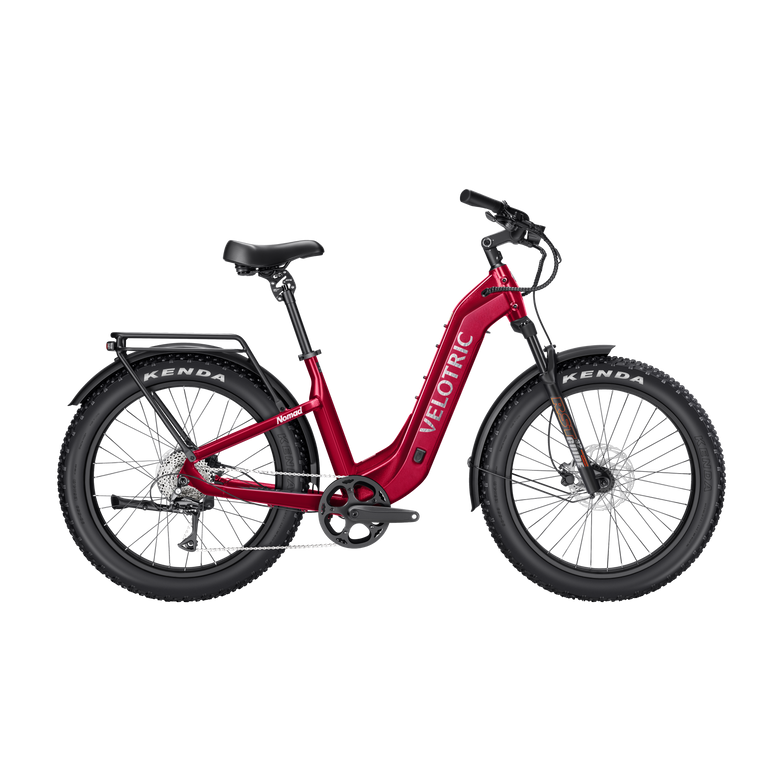
- 26 × 4.0" Kenda puncture-resistant fat tires: a wide contact patch for grip and stability on loose surfaces, with added protection against flats.
- 100mm hydraulic suspension fork with lockout: smooths out rough trails, and locks out for efficient riding on pavement.
- 750W motor with 90 Nm of torque: plenty of power for hills, soft ground, and loaded rides.
- 505 lb max payload: room for larger riders, gear, and cargo.
- Up to 65 miles of range for long days out.
- SensorSwap™: switch between torque and cadence sensing depending on how you want the ride to feel.
Pair the Nomad 2 with the tire care habits in this guide, and it'll be ready for whatever surface comes next. Want even more suspension? Compare it with the full-suspension Nomad 2X, or browse all fat tire ebikes.
FAQ
How often should I check my e-bike tire pressure?
At least once a week, and before any long ride. Tires lose air gradually even when nothing is wrong.
What tire pressure should I use on a fat tire e-bike?
Fat tires run at much lower pressure than standard tires. Start with the range printed on the sidewall, then go toward the higher end for pavement or heavy loads and the lower end for sand, snow, or loose trails—never below the minimum.
How long do e-bike tires last?
It depends on your weight, riding style, terrain, and tire type. Rather than going by mileage alone, check the tread and sidewalls regularly and replace the tire when you see the warning signs above. The rear tire usually wears out first.
Can I use regular bike tires on my e-bike?
Only if they match your rim size and are rated for the weight and speed of an e-bike. E-bike-rated tires have stronger casings and better puncture protection, so they're the safer choice.
Smooth Rides Ahead
Good tire care comes down to a few simple habits: check your pressure often, inspect your tires regularly, keep them clean, and replace them before they wear out. Do that, and you'll get better grip, fewer flats, more range, and a safer, more comfortable ride every time you head out.