



For many hunters, the difficult part begins before the hunt itself. The best location may be several miles beyond the parking area, the route may change from a maintained road to loose dirt, and the return trip may involve more weight than the ride in.
An electric hunting bike can help bridge that distance. It allows hunters to cover permitted access routes with less physical strain, carry equipment more efficiently and save energy for the time spent on foot. It also occupies a useful middle ground between walking and using a gas-powered ATV.
However, a hunting ebike is not defined by motor size alone. Legal access, terrain, controllable assistance, loaded range, braking and cargo limits all affect whether a bike will work for the complete trip. This guide explains how to evaluate those factors, plan the route and use an ebike responsibly in the field.
Why Hunters Use Ebikes: The Middle Ground Between Walking and an ATV
The main advantage of a hunting ebike is that it extends how far a hunter can travel without turning the trip into a full motor-vehicle operation. On permitted routes, electric assistance can reduce the effort required to cover access miles, help the rider arrive with more energy and make repeated scouting trips easier to manage.
It also creates more practical carrying capacity than walking alone. A compatible rack, panniers or trailer can support equipment that would otherwise be carried on the rider's back. This becomes especially useful when a trail-camera location, stand, blind or final approach point begins several miles beyond the parking area.

Compared with a gas-powered ATV, an ebike is narrower, easier to transport and store, and usually quieter. It produces no combustion exhaust and can use some access roads where a larger vehicle would be inconvenient. It is not silent, and permission still depends on the route and ebike classification, but it can offer a useful balance of mobility, carrying ability and lower disturbance.
Walking vs Hunting Ebike vs ATV
| Factor | Walking | Hunting Ebike | ATV / UTV |
|---|---|---|---|
| Best Role | Final approaches, hike-only routes and shorter distances | Permitted access roads, scouting trips and moderate equipment transport | Heavy transport on routes open to motor vehicles |
| Effort and Reach | Highest effort and shortest practical range | Less effort and more range than walking | Lowest effort and longest motorized range |
| Carrying Capacity | Limited to what the hunter can carry | Moderate; depends on bike, rack and trailer ratings | Generally highest |
| Noise and Exhaust | Lowest noise and no exhaust | Quieter than a gas vehicle and no combustion exhaust, but not silent | Highest noise with combustion exhaust |
| Route Access | Often broadest | Depends on the exact route and ebike classification | Limited to motorized access |
| Width and Maneuverability | Best in narrow or obstructed terrain | Narrower and easier to maneuver than an ATV | Needs wider routes and more turning space |
| Transport and Storage | Minimal | Requires a heavy-duty bike rack or secure vehicle space | Most demanding |
| Main Limitation | Fatigue and limited equipment capacity | Battery, load ratings and route-specific access | Noise, size, transport needs and motorized-route restrictions |
The advantage of a hunting ebike is the middle ground it occupies between walking and an ATV. It can cover longer access sections and carry more gear with less effort, then be parked before the final approach. Walking still suits hike-only terrain, while an ATV remains better for very heavy loads on motorized roads.
Explore Hunting EbikesCheck Hunting and Ebike Access Before You Ride
Permission to hunt and permission to ride an ebike are separate questions. Before entering the field, confirm all three of the following:
- Hunting permission: The species, season, unit, weapon type, license and tags are valid for the planned hunt.
- Land access: Public access or landowner permission covers the area you intend to enter.
- Ebike access: The exact road or trail allows your ebike type and intended form of assistance.
And hunting dates and requirements also vary by state, species, management unit and weapon type. Use our U.S. Hunting Seasons Guide to find current season information and official state wildlife resources. Route-level ebike access should still be confirmed through the responsible land manager, current travel map and posted signs.
How to Choose an Ebike for Hunting
The best hunting ebike is not necessarily the model with the largest motor or highest advertised range. Begin with the route, the expected load and the way the bike will be transported and stored.
Start With What You Need the Hunting Ebike to Do
Before comparing motor wattage, identify the jobs the ebike needs to handle, such as:
- Heavy loads: Prioritize payload capacity, stability and trailer compatibility.
- Rough or steep terrain: Look for fat tires, strong traction and sufficient motor torque.
Choose around the demands you encounter regularly rather than a rare worst-case scenario.
Look Beyond Motor Power
Many hunting ebikes already provide strong motor performance. Focus on the details that affect comfort, control and reliability in the field:
- Suspension: Adequate travel helps absorb ruts, roots and repeated impacts, especially when the bike is carrying extra weight.
- Water resistance: Check the protection ratings for both the bike and battery if you expect rain, mud or wet trails.
- Lighting: A capable headlight improves visibility during early departures and late returns, while rear lighting helps the rider remain visible on connecting roads.
These features may matter more over a full hunting trip than a small difference in motor wattage.
Plan Enough Range for the Loaded Return
Hunting ebikes are typically heavy, and wide tires, rough terrain and additional cargo make them difficult to pedal without assistance. Plan enough range for the entire round trip.
For longer or multi-day hunts, check whether the battery is removable, whether the ebike supports a manufacturer-approved spare and whether the battery can be charged conveniently on or off the bike. These details can make range easier to manage when access to power is limited.
Match Tires and Suspension to the Ground
Fat tires are not mandatory for every hunt. Narrower all-terrain tires may be sufficient for firm roads and maintained gravel. Higher-volume tires become more useful when the route regularly includes soft soil, snow, sand, mud or loose surfaces.
Suspension should be selected in the same way. A front fork may suit smoother access roads, while full suspension can improve comfort and composure when repeated impacts reach both wheels.
Prioritize Braking for the Heavier Trip Home
Loaded descents place greater demands on the brakes. Hydraulic disc brakes generally provide stronger, more controllable braking than basic mechanical systems, while larger rotors can help manage heat.
Understand the Load-Limit Stack
Four ratings may affect a hunting setup, and none should be treated as interchangeable:
| Rating | What It Controls |
|---|---|
| Total Bike Payload | Rider plus equipment carried by the bike |
| Rear-Rack Rating | Weight placed directly on the rack |
| Trailer Rating | Weight the trailer is designed to carry |
| Bike Towing Rating | Weight the bike is approved to tow with a compatible setup |
Why the Velotric Nomad 2X Fits Hunting Routes
When these requirements are considered together, the Velotric Nomad 2X stands out as one of the best hunting ebike options for riders. It's designed around the combination of changing terrain, longer routes and heavier loads that can appear during hunting access and scouting trips.
● Quiet Power and Range for the Full Hunt
Nomad 2X’s rear hub motor provides assistance without the continuous engine noise. Its 750W motor (1,400W peak power) and 105Nm of torque help riders manage steep climbs, loose terrain and heavier return loads while conserving energy for the hunt itself.
The 75 miles pedal-assist range also provides more room to plan for both the ride in and the loaded return. The removable battery can be charged separately from the bike.
● Fat Tires and Full Air Suspension
Nomad 2X’s puncture-resistant fat tires make the bike feel more planted and less easily unsettled by changes in the surface. You can move across rough access routes with greater confidence, even when carrying additional gear.
With a 120mm adjustable front air fork and 80mm of rear-wheel travel, riders feel fewer sharp jolts through the handlebar and saddle. The result is less fatigue over longer distances.
● Payload and Towing for Hunting Gear
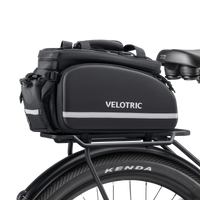
With a maximum payload of 560 pounds (including a rear rack rated for up to 120 pounds), Nomad 2X lets hunters carry more without keeping everything on their backs. Compatible bags and accessories allow the setup to adapt to different hunting needs.
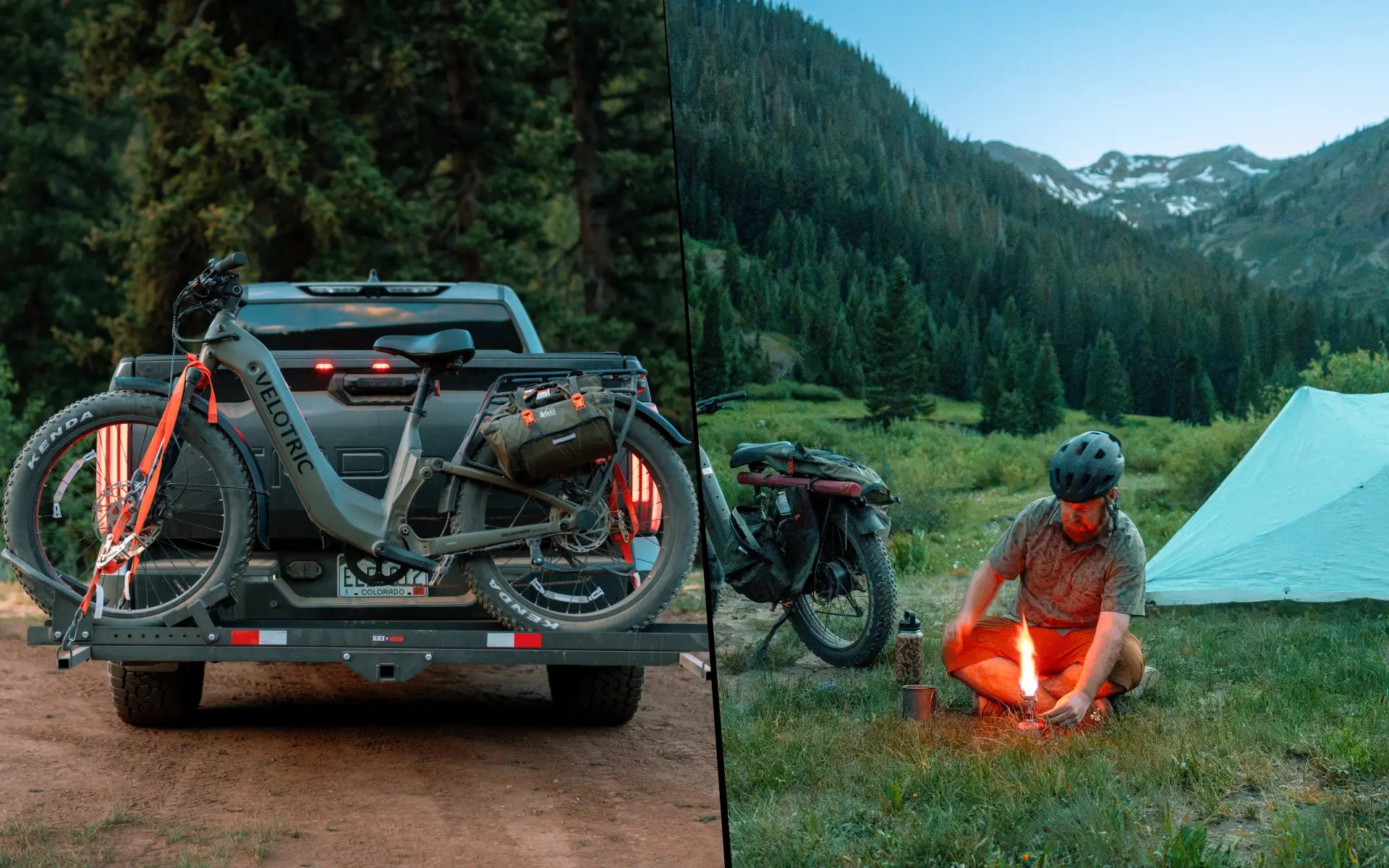
The bike can tow up to 1,000 pounds with a compatible setup or travel by car on a properly rated ebike rack.
● Built for a Better Hunting Experience
Nomad 2X’s Stealth Mode limits the bike’s top speed and turns off the integrated lights when activated while stationary. This helps reduce sound and visual disturbance during early approaches or quiet repositioning.
The bike’s IPX6 rating and the battery’s IPX7 rating add protection against rain and wet trail conditions.
Pre-Hunt Ebike Checklist
A short inspection can identify problems before the bike is several miles from the vehicle.
Bike and Battery
- Charge the battery and confirm it locks securely into the frame.
- Check tire pressure with a gauge and stay within the approved range.
- Inspect the tires for cuts, embedded objects and casing damage.
- Test both brakes and confirm the levers feel consistent.
- Check the chain, drivetrain and assist system.
- Confirm lights, display and controls are working.
- Inspect rack, hitch and trailer fasteners.
Repair and Safety Equipment
- Carry a pump, compatible tire repair supplies and a multitool.
- Bring navigation and communication equipment suitable for the area.
- Pack a first-aid kit and weather-appropriate emergency layer.
- Carry the battery key and any required charging equipment.
- Use a lock if the bike will be left at a final approach point.
Hunting Equipment
Secure equipment so nothing can contact the wheel, chain, drivetrain or brake rotor. Firearms and bows should be transported using an appropriate case, rack or scabbard and according to the requirements of the state, land manager and hunting season.
How to Approach Quietly and Responsibly
Quiet Does Not Mean Silent
An electric motor is usually quieter than a gas-powered ATV and produces no combustion exhaust. However, an ebike still creates sound through its motor, tires, chain, freewheel, brakes and cargo. The rider also continues to carry human scent.
As the route approaches the hunting area, reduce speed and choose a lower assistance level when conditions allow. Avoid abrupt acceleration and braking, especially on loose ground. Park before the final approach if continuing to ride would create more noise or disturbance.
Respect the Route and Other Users
Stay on the designated surface and follow posted closures. Wet or fragile trails can be damaged more easily, and extra weight or a trailer can increase that impact. Yield according to local trail rules and slow down when visibility is limited.
An ebike should improve access without changing the responsibility to respect wildlife, habitat, private property and other hunters.
Using Racks and Trailers for Gear or Game
Pack the Bike for the Ride In
Keep weight low, secure and as balanced as possible. Avoid placing every heavy item over the rear wheel, particularly when the bike also uses a rear-hub motor. Use mounting points and straps designed for the load rather than allowing loose cords to hang near moving parts.

Practice starts, turns and braking with the expected equipment before entering a remote area. Even when the bike remains within its rating, the handling will differ from an unloaded ride.
Recalculate the Return Trip
A heavier return reduces acceleration, increases stopping distance and can lower range. A trailer also changes turning radius and may not track through narrow obstacles the same way the bike does.
If the route includes steep descents, soft terrain or tight turns, determine whether the loaded setup can cross those sections before the hunt. A load that can be moved on a flat road may not be safe on a loose slope.
Can an Ebike Pull a Deer?
Some ebikes can tow compatible hunting trailers, but the answer depends on the bike's published towing capacity, the trailer and hitch ratings, processed game weight, terrain and braking conditions. Motor wattage alone is not enough to determine whether the setup is safe.

Game transport must also follow applicable tagging, carcass transport and food-handling requirements. If the expected load or route exceeds any rating, use a different pack-out plan rather than depending on the motor to compensate.
After the Hunt: Cleaning and Battery Care
Mud, dust and plant material can collect around the tires, drivetrain, suspension and trailer hitch. Remove debris with bike-safe cleaning methods, dry the bike and inspect the frame and electrical connections before storage. Avoid directing high-pressure water at bearings, the motor or electronic components.

Check the brake pads and rotors after loaded or muddy riding. Clean and lubricate the chain as needed, inspect the tires for new damage and confirm that rack and hitch hardware has not loosened.
Recharge and store the battery according to the owner's manual. Allow a wet or very cold battery to return to an appropriate charging condition before connecting it to the charger.
Ebike Hunting FAQ
Choose Around the Complete Hunt
A hunting ebike should be selected around the entire job rather than one specification. Confirm legal access first, then match the tires, suspension and power delivery to the terrain. Plan range around the loaded return and respect the separate limits for the bike, rack, hitch and trailer.
For hunters whose permitted routes combine forest roads, loose surfaces, repeated impacts and heavier equipment, the Velotric Nomad 2X brings those requirements together in one platform. Its value is not simply that it can leave pavement. It is that its range, control, suspension and published load ratings support the complete route from access point to return.