



Electric bikes have transformed personal transportation, offering riders an efficient, eco-friendly, and enjoyable way to travel. Among the many ebike categories available today, cruiser ebikes and hybrid ebikes remain two of the most popular choices.
When comparing two ebike categories, the decision often comes down to comfort, versatility, performance, and intended use. While both styles provide electric assistance, they are designed for very different riding experiences.
This guide explores the major differences between cruiser and hybrid ebikes, helping you determine which model best suits your lifestyle and riding goals.
What Is a Cruiser Ebike?
As the name suggests, a cruiser ebike is designed primarily for comfort and relaxed riding. Inspired by traditional beach cruisers, these electric bikes feature upright seating positions, wide handlebars, and oversized saddles.
Key Features of Cruiser Ebikes
- Upright riding posture
- Wide cushioned seat
- Swept-back handlebars
- Relaxed frame geometry
- Smooth riding experience
Best Riders for Cruiser Ebikes
Most riders choose cruiser ebikes for casual outings, leisure rides, and short-distance trips. They are especially well-suited for beach communities, recreational cyclists, senior riders, neighborhood commuters, and weekend riders who value comfort and a relaxed riding experience.
Velotric Breeze 1: The Best Cruiser Ebike You Should Try
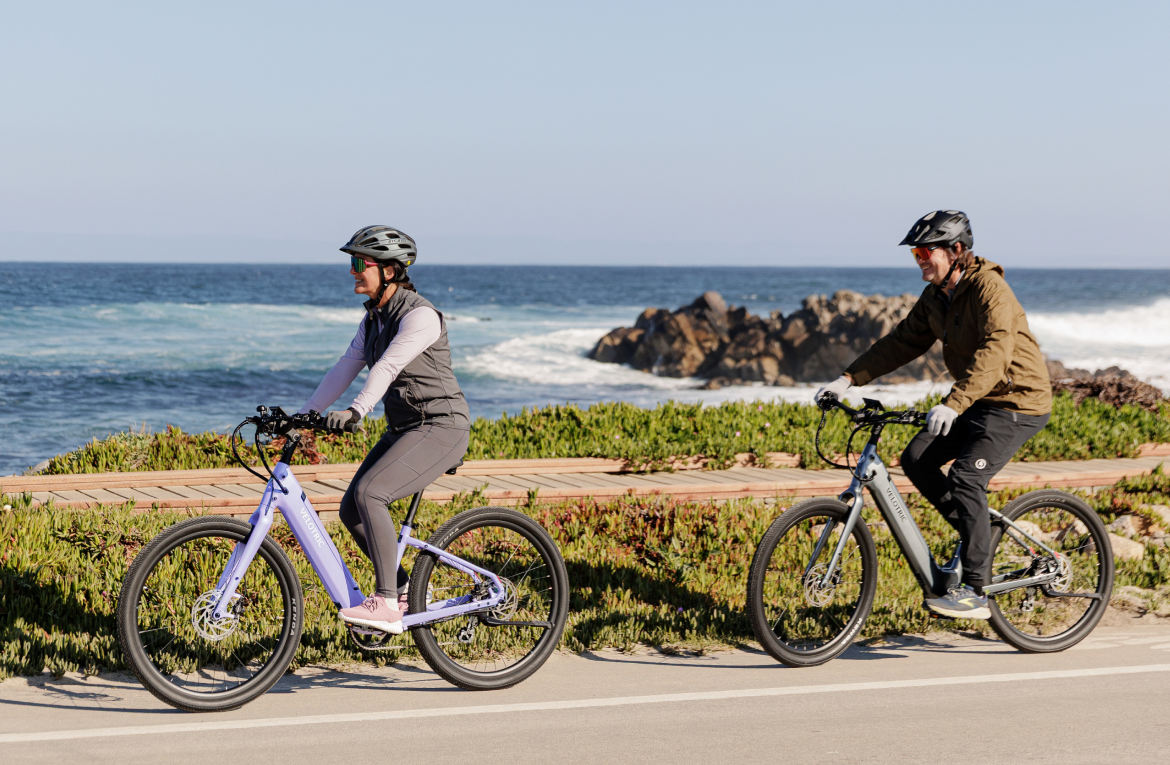
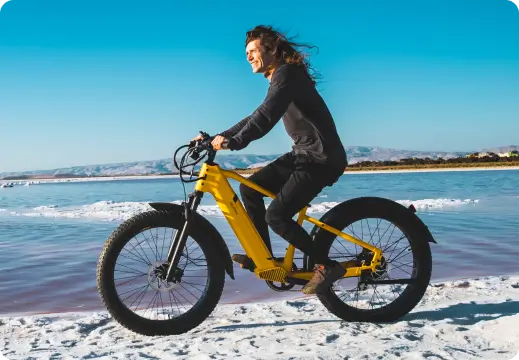
The Velotric Breeze 1 is a comfort-focused cruiser ebike built for relaxed everyday riding. With the Velotric ComfortMax™ system, it prioritizes comfort and ease of use for commuting. Its lightweight frame keeps the ride easy, while the 750W motor delivers strong power, making it ideal for riders who want both effortless handling and confident performance.
What Is a Hybrid Ebike?
A hybrid ebike is also derived from traditional hybrid bikes, developed to cover a wider range of riding needs and environments. It combines elements of both road and off-road ebikes. It is designed to offer versatility, efficiency, and comfort across multiple riding environments.
Key Features of Hybrid Ebikes
- Slightly forward-leaning riding position
- Suspension system for shock absorption
- Multi-purpose tires
- Efficient drivetrain
- Responsive handling
Best Riders for Hybrid Ebikes
Compared to cruiser ebikes, hybrid ebikes excel in adapting to various road conditions and improving riding efficiency, making them a better choice for users who need to commute or ride long distances. They're suitable for daily commuters, urban riders, fitness enthusiasts, long-distance cyclists, weekend adventurers, and multi-terrain riders.
Velotric Summit 2 Hybrid Ebike

The Velotric Summit 2 is a versatile hybrid ebike built for riders who want to combine daily commuting with outdoor adventures. Equipped with a powerful 750w motor and mixed-terrain capability, it can confidently handle city streets, gravel paths, and light off-road trails.
Cruiser Ebike vs Hybrid Ebike: Major Differences
Taking into account multiple aspects such as vehicle design and riding experience, the following outlines 10 key differences for you.
Riding Experience
1. Riding Position & Frame Design
Due to the differences in usage scenarios between the two types of bikes, this is directly reflected in their frame design and riding posture.

Cruiser ebikes feature a fully upright position that reduces pressure on the back, shoulders, and wrists. This creates a comfortable and relaxed riding experience. Their frame design is typically longer and more relaxed, often with a low step-through geometry that makes mounting and dismounting easy, especially for casual riders.
Hybrid ebikes place riders in a slightly forward-leaning position. While still comfortable, this posture improves pedaling efficiency and overall speed. Their frames are usually more compact and performance-oriented, with a higher top tube and a geometry designed for better power transfer, stability, and control across different terrains.
2. Seat Design
Cruiser ebikes usually feature oversized padded saddles designed for maximum comfort. This is because they are intended for relaxed, low-intensity riding where riders spend more time sitting upright and putting less pressure on the pedals. The wider, softer seat helps distribute body weight evenly and reduces pressure points.
Hybrid ebikes use narrower saddles that support efficient pedaling over longer distances. The slimmer design allows for better leg movement and reduces friction during continuous pedaling. Their seats are optimized to improve pedaling efficiency and prevent discomfort over extended periods, even if it feels firmer at first.
3. Handlebar Design
Cruiser handlebars sweep backward toward the rider, creating a relaxed hand position. This design reduces strain on the wrists and shoulders by allowing the rider to sit upright, which shifts body weight more evenly and minimizes pressure on the upper body.

Hybrid handlebars offer greater control and responsiveness for varied riding conditions. Their straighter or slightly angled design positions the rider in a more forward-leaning stance, improving steering precision and weight distribution.
Overall Comfort
Cruiser ebikes are specifically built for comfort. Their larger saddles, wider tires, and upright riding positions absorb road vibrations effectively.
Hybrid ebikes provide a comfortable ride as well but prioritize efficiency and versatility over maximum comfort.
Performance & Efficiency
4. Speed and Efficiency
Hybrid ebikes generally outperform cruiser ebikes when it comes to speed and efficiency.
Reasons include:
- More powerful motor and power assistance output
- Geometry better suited for long-distance riding
- More flexible gear shifting system
- Larger battery capacity
Cruiser ebikes focus more on comfort than outright performance.
5. Motor Power
Common motor sizes include:
| Motor Rating | Typical Usage |
|---|---|
| 250W | Light riding |
| 500W | Commuting |
| 750W | Hills and heavier riders |
| 1000W+ | High-performance riding |
Cruiser ebikes typically prioritize torque and smooth acceleration, while hybrid ebikes balance power with efficiency.
6. Battery Range
Most modern ebikes provide between 30 and 80 miles of range, depending on factors such as battery size, rider weight, terrain, riding style, and the level of pedal assistance used.
Hybrid ebikes may feature larger batteries to support stronger motor output and light off-road capability, rather than purely for efficiency gains.
7. Speed & Ebike Class
Cruiser ebikes usually offer moderate speeds for leisurely rides, often reaching assisted speeds of around 20 mph (32 km/h), which typically places them in Class 1 or Class 2 categories depending on the model. For a deeper understanding of ebike classifications, check out our detailed guide on ebike classes.
The use case makes hybrid ebikes generally faster and more efficient. Many hybrid ebikes can comfortably reach higher assisted speeds, particularly in Class 3 models that go up to 28 mph (45 km/h).
Terrain & Versatility
8. Tire and Terrain Capability
Cruiser ebikes typically use wide comfort tires that provide stability and cushioning, but are not designed for puncture resistance or rough terrain. They perform best on smooth pavement, bike paths, boardwalks and neighborhood streets.

Hybrid models often come equipped with more versatile tires, including puncture-resistant options. Some hybrid ebikes even feature fat tires, offering better grip and durability across varied surfaces. They can comfortably handle urban roads, bike lanes, light trails and mixed terrain routes.
9. Suspension system
Cruiser ebikes are primarily designed for flat surfaces, so they often do not include dedicated suspension systems. So riders may need to purchase additional upgrade components if they want enhanced shock absorption.
Hybrid ebikes, on the other hand, are typically equipped with suspension components such as front suspension forks and suspension seat posts to better handle uneven terrain. Additionally, thicker or wider tires can further reduce vibrations to some extent.
Cost & Value
10. Entry-Level Pricing
| Category | Price Range |
|---|---|
| Cruiser Ebike | $800–$1,800 |
| Hybrid Ebike | $2,000+ |
Factors such as battery capacity, motor technology, frame materials, integrated electronics, and overall brand reputation all play a role, with hybrid ebikes often priced slightly higher due to their more advanced engineering and versatile performance capabilities.
Which Ebike Should You Choose?
Choose a Cruiser Ebike If:
- Comfort is your top priority
- You primarily ride for leisure
- You prefer an upright riding position
- You ride mostly on paved surfaces
If you simply want an easier, more effortless ride and mainly cruise leisurely around your neighborhood, along the beach, or on flat city roads, then a cruiser ebike would be a great fit for you.
Learn more about Cruiser EbikesChoose a Hybrid Ebike If:
- You commute regularly
- You need versatility
- You ride various terrains
- You prioritize efficiency and performance
If you also frequently engage in outdoor activities and ride on gravel or uneven surfaces, you may need to balance both comfort and terrain capability.
Learn more about Hybrid EbikesFrequently Asked Questions
Is a cruiser ebike more comfortable than a hybrid ebike?
Yes. Cruiser ebikes generally provide greater comfort because their upright seating position reduces strain on the back and shoulders, wider saddles distribute weight more evenly, and step-through frame design makes mounting and dismounting easier. All of these features contribute to a more relaxed and supportive riding experience.
Which is better for commuting?
Generally speaking, cruiser ebikes are more comfortable for everyday use. But hybrid ebikes tend to look more stylish and eye-catching, making them a great choice if you want a bike that stands out.
Can cruiser ebikes handle hills?
Yes, cruiser ebikes can handle city slopes if equipped with a strong motor, but they are not suitable for very steep hills due to their frame and relaxed geometry.
Are hybrid ebikes faster?
In most cases, yes. Hybrid ebikes are faster because they often come equipped with higher-powered motors and greater torque, allowing for stronger acceleration and better performance at higher speeds.
Which ebike is better for beginners?
Both are beginner-friendly, but cruiser ebikes are easier to get used to because their upright position and stable handling feel more natural for new riders.