



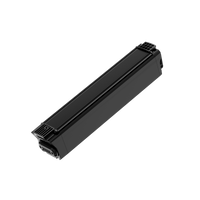
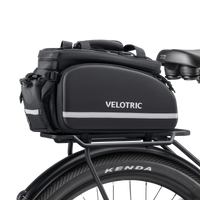


Electric bikes are everywhere. But here's something many first-time buyers don't fully think about: an ebike isn't just a bicycle. It's an electrical appliance and runs on a lithium-ion battery pack.
And it's been happening. As previously warned by the CPSC, certain Rad Power batteries may pose a risk of fire and explosion. Cities like New York have seen enough to push for legislation. Building managers are banning uncertified e-bike batteries outright. As a result, UL certification is quickly emerging as a baseline requirement for modern ebikes.
In this article, you'll learn what UL certification means and how different standards compare.
What Is UL Certification?
UL stands for Underwriters Laboratories. It's an independent, globally recognized safety science organization that has been testing and certifying products for over a century.

When a product earns UL Certification, it means an independent lab has tested it against established safety standards — for fire risk, electrical hazards, mechanical failure, and more. It's not a self-reported claim. It's not a marketing badge. It's a verified result.
UL 2271 vs. UL 2849: What's the Difference?
For ebikes specifically, two certifications matter most:
| Standard | What It Covers | Why It Matters |
|---|---|---|
| UL 2271 | Covers the battery pack itself, including cell quality, thermal management, charging behavior, and protection against short circuits, overcharging, and overheating. | It's designed to minimize fire hazards and operate safely during charging, storage, and everyday use. |
| UL 2849 |
Covers the entire electrical system, including the motor, wiring, controller, charger, and battery integration. Evaluates how all components work together under real-world conditions. |
This helps reduce risks caused by component interaction issues, such as electrical faults, wiring failures, or improper power distribution. |
In plain terms:
UL 2271 tests the battery pack in isolation: How the cells behave, how the battery management system responds to stress, and whether the pack itself is safe to charge, discharge, and handle.
UL 2849 tests the complete electrical system: All working together as they would on an actual ride. It validates that the full system is safe, not just one part of it.
An ebike with only UL 2271 has a tested battery in an untested system. An ebike with UL 2849 has been validated end-to-end.
The ideal? Both. When a brand certifies to UL 2849, they've done the harder, more comprehensive work — and that's the standard worth looking for.
Which Ebikes Are Actually UL Certified?
This is where the market separates itself. Many brands make vague safety claims. Far fewer have done the work to back them up.
Velotric: Safety Built In From the Start
Velotric has made UL certification a foundational part of how they build ebikes — not an afterthought, and not a marketing checkbox.

A good example of what UL certification looks like in practice is the Velotric Discover 3 — Velotric's best-selling commuter ebike, and one that comes with a UL-certified battery system as a core part of its design.
Beyond the certification, the Discover 3 is a genuinely capable commuter. It runs on a powerful 750w motor paired with a long-range battery that handles everything from flat city blocks to moderate hills. The upright, comfortable geometry means you arrive at work without feeling like you just ran a marathon. Hydraulic disc brakes, an integrated rear rack, and a clean frame design round out a bike that's clearly built to be ridden every day — not just on good days.

What the Discover 3 represents isn't just a well-spec'd ebike. It's proof that UL certification and great performance aren't a tradeoff. You don't have to choose between a bike that's safe and capable. The best ones are both.
Why UL Certification Matters More Than Ever
🔥 It Prevents Battery Fires
Lithium-ion batteries store a lot of energy in a small space. When something goes wrong — a manufacturing defect, a flawed BMS, a cheap cell — that energy releases fast. UL testing is specifically designed to catch these failure points before a product ever reaches a consumer.
🏠 It's Becoming a Legal Requirement
New York City now requires UL-certified ebikes and batteries for sale and use in the city. Other municipalities are following. If you live in a dense urban area, an uncertified battery may already be a liability issue. Many landlords and building managers won't allow uncertified batteries to be charged indoors at all.
🛡️ It Protects You and Your Home
Most ebike charging happens indoors. That's also where fires cause the most damage. A UL-certified battery has been tested to handle the conditions of everyday charging without posing a risk to your home, your neighbors, or your family.
💰 It Holds Its Value
Certified bikes carry more trust in the resale market. As safety awareness grows among buyers, UL certification is becoming a baseline expectation — not a premium feature. Ebikes without it are increasingly harder to sell and insure.
How to Verify UL Certification Before You Buy
Don't take a brand's word for it. Here's how to confirm:
- Look for the UL mark on the battery pack, frame label, or product packaging — it should be clearly visible, not buried in fine print.
- Check the certification number — UL marks include a file number you can verify directly on UL's public database at ul.com.
- Read the product specs carefully — look for explicit mentions of "UL 2271" or "UL 2849," not just "safety tested" or "meets safety standards."
- Be skeptical of vague language — phrases like "designed with safety in mind" or "rigorously tested" without specific certification numbers mean nothing.
If a brand can't point you to a specific UL certification, treat that as an answer.
Don't Gamble With Battery Safety
The best ride is one you come home from without incident. Not just because you wore a helmet, but because the bike you're riding was built by people who took your safety seriously before it ever left the factory.