



Working out is supposed to make us feel stronger, healthier, and more confident. But stepping into a gym, running through a busy park, or joining a public fitness class can bring a different set of emotions. For some people, the hardest part of a workout is simply feeling comfortable enough to begin.
Body image concerns, unwanted attention, and the possibility of being photographed or filmed can all make public exercise feel intimidating. To better understand these experiences, Velotric surveyed 1,006 people about where they prefer to exercise, what makes public workouts uncomfortable, and what helps them stay active.
The results reveal something important: there is no single “right” place to exercise. Some people feel more motivated around others, while others are more comfortable at home or outdoors. Understanding what makes you feel secure and confident can help you build a fitness routine you actually want to keep.
What Keeps People From Exercising in Public?
Body Image Concerns
Respondents said body image concerns had caused them to avoid working out in public.
Fear of Being Recorded
Avoided public exercise because they worried about being recorded or photographed for social media. TikTok was associated with this concern most often.
Support Camera Bans
Thought cameras and smartphones should be banned inside gyms.
Avoiding Unwanted Approaches
Avoided the gym because they did not want to be approached or hit on.
Prefer Home Workouts
Preferred working out at home rather than exercising in a public setting.
Feel Safe Exercising in Public
Said they generally felt safe while exercising in public spaces.
- Why Working Out in Public Can Feel Intimidating
- How Social Media Can Shape Body Image at the Gym
- How to Feel More Comfortable Working Out in Public
- Prefer More Privacy? Home Workouts Can Still Deliver
- Outdoor Exercise Offers a Middle Ground
- When the Gym Is About More Than Exercise
- Choose the Fitness Environment That Works for You
- A Different Kind of Workout: The “No-Sweat” eBike Ride
Why Working Out in Public Can Feel Intimidating
Feeling uncomfortable at the gym is not necessarily about disliking exercise. Sometimes the discomfort comes from feeling visible. Mirrors, fitted workout clothes, unfamiliar equipment, experienced gym-goers, and cameras can make people more aware of how they look and how they think others might perceive them.
Our survey found that 34% of respondents had avoided the gym because of body image concerns. That discomfort can become especially noticeable during seasons when appearance receives even more attention.
The Pressure of the “Summer Body”
Summer often brings more opportunities to get outside, but it can also bring increased pressure surrounding physical appearance. More than half of respondents (53%) said they were working toward a “summer body,” and 28% had started their summer fitness routine before the new year even began.

Women reported feeling this pressure more strongly. Twenty-seven percent of women said they experienced a moderate to large amount of pressure to prepare their bodies for summer, compared with 15% of men.
The problem is that fitness can easily become connected to appearance rather than what the body can do. A workout that could otherwise be about feeling stronger, having more energy, sleeping better, or enjoying movement can start to feel like a public evaluation.
When Cameras Add Another Layer of Anxiety
Social media has introduced another concern that previous generations of gym-goers did not experience to the same degree: the possibility of becoming part of someone else's content.

In our survey, 23% of respondents said fear of being photographed or recorded for social media had caused them to avoid exercising in public. Among those respondents, more than 80% identified TikTok as the platform most associated with this concern.
Almost 1 in 10 respondents said they had been photographed or videotaped without their consent while exercising. Among those who had experienced it, 46% said they felt violated. Perhaps unsurprisingly, 49% of all respondents thought gyms should ban cameras and smartphones.
How Social Media Can Shape Body Image at the Gym
Social media can influence fitness anxiety in ways that go beyond worrying about appearing in someone else's video. What we see before and after a workout can also affect how we evaluate ourselves while exercising.

Research suggests that appearance-focused social media can encourage appearance-based social comparison. Instead of asking, “Do I feel stronger?” or “Am I enjoying this workout?” people may begin comparing their bodies with carefully selected images of athletes, influencers, or strangers online.

Fitness content is not automatically harmful, and people respond to it differently. However, experimental research has found that viewing idealized “fitspiration” content can increase body dissatisfaction, while some body-positive and body-neutral content may have a more positive effect on how people perceive their bodies.
That distinction matters. A feed filled with transformation photos, physique comparisons, calorie-focused messaging, or highly edited bodies may quietly change the standard against which you judge your own progress. The gym can then begin to feel less like a place to move and more like a place where your appearance is being measured.
If fitness content consistently leaves you feeling worse about yourself, consider changing what appears in your feed. Unfollowing or muting accounts that trigger constant comparison, following people with more diverse body types and abilities, and paying more attention to strength, endurance, mobility, energy, or enjoyment can shift some of the focus away from appearance.
How to Feel More Comfortable Working Out in Public
If you are new to public workouts, you do not have to force yourself into the busiest gym at peak hour and immediately feel confident. Familiarity can be built gradually.
The current Physical Activity Guidelines for Americans encourage people who are inactive to begin with manageable activity and gradually increase how much they do. The same principle can be useful when the environment itself feels intimidating.
1. Make the First Visit Low Pressure
Your first trip does not have to be a full workout. Tour the gym, locate the locker room, find the equipment you want to use, or spend 15 minutes walking on a treadmill. Knowing the space can remove some of the uncertainty from your next visit.
2. Go When the Space Is Quieter
If crowds make you self-conscious, ask the gym when its quieter hours are. Learning equipment and routines can feel easier when fewer people are around. You can always experiment with busier times later if you want to.
3. Arrive With a Simple Workout Plan
Uncertainty can make an unfamiliar environment feel even more overwhelming. Decide beforehand what you plan to do, even if it is only three or four exercises. Having a simple plan gives you something concrete to focus on instead of wondering where to go next or what other people might be thinking.
4. Choose Exercises You Already Understand
You do not need to master every machine immediately. Walking, stationary cycling, familiar strength exercises, or a beginner class can provide an easier starting point. As your comfort grows, you can gradually explore new equipment or activities.
5. Bring Someone or Ask for Guidance
A workout partner can make a new environment feel more familiar. If that is not an option, an introductory session with gym staff or a qualified fitness professional can help you learn equipment and basic gym etiquette without having to figure everything out alone.
6. Set Boundaries Around Cameras and Attention
If being filmed worries you, ask about the gym's photography policy before joining. You can also choose areas away from people who are recording. If someone's behavior makes you uncomfortable, move away and speak with staff when appropriate. You do not owe another gym-goer conversation, attention, or access to your image.
7. Measure Progress by More Than Appearance
Try tracking something your body can do instead of only how it looks. That might be riding farther, lifting more comfortably, climbing stairs with less fatigue, exercising more consistently, or simply leaving a workout in a better mood.
Confidence does not have to come before exercise. Sometimes it develops from repeatedly having ordinary, uneventful workouts and realizing that you belong in the space just as much as anyone else.
Prefer More Privacy? Home Workouts Can Still Deliver
For some people, reducing public workout anxiety does not mean becoming comfortable at a gym. It means finding a different environment altogether.
Home was the preferred workout location for 54% of the people in our survey, and 72% believed they could meet their fitness needs through at-home exercise.

The most commonly used at-home exercise resources were body weight exercises (62%), weight sets or dumbbells (60%), and free workout videos (41%). Weight lifting was the most popular home activity at 48%, followed by body weight and mat exercises at 43% and cardio at 30%. Respondents also reported enjoying dance (20%) and Tai Chi or Qi Gong (3%).
Home exercise offers privacy and control. You choose the music, clothing, pace, equipment, and length of the workout without worrying about whether someone nearby is watching or recording.
Outdoor Exercise Offers a Middle Ground
Home and the gym are not the only options. For people who want privacy without spending every workout indoors, outdoor exercise can provide a useful middle ground.
Walking, running, hiking, yoga, and cycling can all turn movement into something you do while exploring rather than something centered on a gym environment. Parks, neighborhood streets, greenways, and bike paths also allow you to choose routes and times that match your preferred level of social interaction.
This can be particularly helpful for people who do not connect with traditional workouts. A bike ride through a park or a walk through the neighborhood still counts as physical activity, even if it does not look like a conventional gym session.
When the Gym Is About More Than Exercise
While some people prefer the privacy of home or outdoor exercise, others genuinely enjoy the social energy of a gym. Public workout spaces can offer equipment, classes, professional guidance, and the motivation that comes from exercising around other people.
In our survey, 56% of respondents who enjoyed exercising in public said it helped keep them motivated. The gym was also a social space for some: 13% of men and 10% of women said they had gone out with someone they met there.
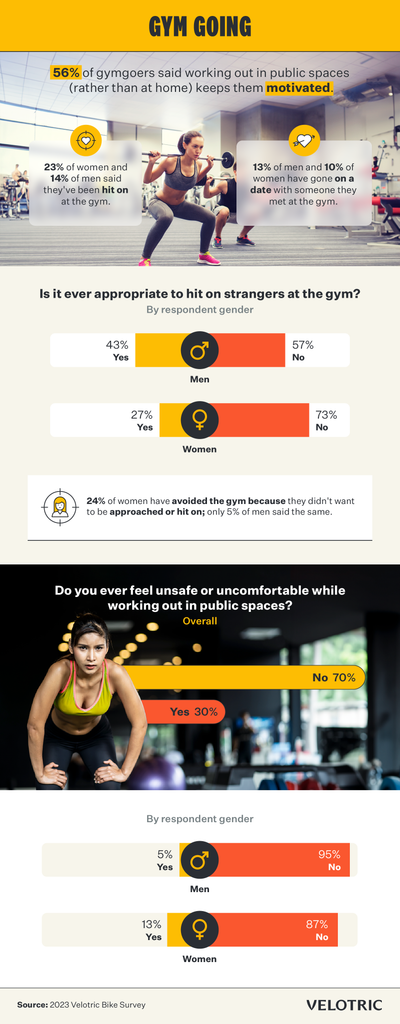
But being social and being available for attention are not the same thing. Twenty-four percent of women said they had avoided the gym because they did not want to be approached or hit on, compared with 5% of men.
That difference highlights why gym etiquette matters. Someone wearing headphones, concentrating on a set, or giving short responses may simply want to exercise. Respecting personal space and accepting a lack of interest without persistence helps make shared fitness environments more comfortable for everyone.
Despite the concerns reported throughout our survey, most respondents did not describe public exercise as inherently unsafe. Overall, 70% said they felt safe exercising in public. The picture is therefore more nuanced than “gym versus no gym.” People can enjoy public exercise while still wanting stronger boundaries around cameras, personal space, and unwanted attention.
Choose the Fitness Environment That Works for You
A successful fitness routine does not have to happen in a particular place or look a particular way. Some people thrive on the energy of a crowded gym. Others are happiest lifting weights at home, riding a bike through a park, walking around the neighborhood, or mixing several types of activity throughout the week.
If public exercise makes you nervous, start small and give yourself time to become familiar with the environment. If social media makes you more critical of your appearance, reconsider what you follow and what you use to measure progress. And if a traditional gym never feels like the right fit, choosing another way to move is not a lesser version of fitness.
The best workout environment is ultimately one where you feel comfortable enough to return. When movement fits your preferences, boundaries, and lifestyle, consistency becomes much easier to build.
Methodology
Velotric conducted a survey of 1,006 people about their exercise habits and experiences. Respondents included 492 men, 501 women, and 13 nonbinary people. The sample consisted of 107 baby boomers, 272 Generation Xers, 553 millennials, 72 Generation Zers, and two individuals from a generation older than baby boomers.
All survey responses were self-reported. The findings represent the experiences of the people surveyed and should not be interpreted as estimates for the entire U.S. population. Survey results also describe associations and reported experiences rather than establishing that one factor directly caused another.
A Different Kind of Workout: The “No-Sweat” eBike Ride
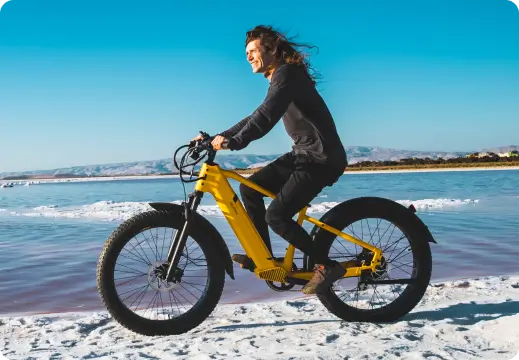
Exercise doesn't always have to mean changing into workout clothes and setting aside an hour at the gym. An electric bike offers another way to stay active by building movement naturally into trips you were already going to make.
Ride to work, pick up coffee, visit a friend, or take the longer route through a park, and everyday transportation becomes part of your exercise routine. You are still pedaling and moving your body, but electric assistance can take the edge off hills, headwinds, and longer distances. For people who dislike intense workouts or simply don't want to arrive at their destination exhausted and sweaty, an ebike can make staying active feel much easier to fit into daily life.
Make the Ride as Easy or Active as You Want
The Velotric Tempo takes this idea a step further with Pulse Mode™. When connected to a compatible heart-rate device, Pulse Mode uses real-time heart-rate data to automatically adjust pedal assistance as you ride. Instead of constantly changing assist levels yourself, the bike helps balance your effort with motor support.

That means the same ride can serve two purposes. It can be an easy, low-sweat commute when you want to arrive fresh, or a more active ride when you want movement to be part of your day. Rather than treating exercise as another task on your schedule, Tempo helps turn the journey itself into the workout.
Fair Use Statement
We welcome sharing these findings for noncommercial purposes. Please link back to this article so readers can explore the full survey findings and methodology.