Sales








If you’re entering your “senior” years, you might think this is the time to kick back and relax on the couch. Think again!
Exercise is important at every age. In particular, regular physical activity can prevent or delay many of the health problems that come with age. For example, maintaining a healthy weight can reduce the risk of diabetes, high blood pressure, and heart disease.
The Centers for Disease Control and Prevention (CDC) recommends that adults 65 and older get three types of activity every week:
- Aerobic activity: at least 150 minutes of “moderate-intensity” activity (a brisk walk counts), or 75 minutes of “vigorous-intensity” activity (like jogging or hiking), or an equivalent mix of the two.
- Muscle-strengthening activity: at least 2 days a week, working all the major muscle groups.
- Balance activity: such as standing on one foot or walking heel-to-toe.
If you can’t hit those numbers yet, don’t worry. The CDC’s advice is to be as active as your abilities and health conditions allow, because some activity is better than none.
That said, it’s important to choose your exercise routine wisely. Cartilage can wear down as you age, which can make joints more delicate and high-impact exercises (like jogging) harder on your body. Knee pain? No thanks!
Opt for low-impact workouts instead. A fitting form of exercise is easy on the knees and ankles while still boosting cardiovascular health, muscle tone, balance, and coordination.
Here are some of the best low-impact exercises for seniors, with options suitable for every fitness level. Before you start a new routine, check with your doctor, especially if you have a chronic condition, joint pain, or haven’t been active in a while.
Which exercises cover which CDC categories?
Use this table to mix and match, so your week covers aerobic, strength, and balance work.
| Exercise | Aerobic | Strength | Balance |
|---|---|---|---|
| Cycling (including e-bikes) | Yes | Legs | - |
| Walking | Yes | Light | - |
| Tai chi | Light | Light | Yes |
| Water aerobics | Yes | Yes | Yes |
| Pilates | - | Yes | Yes |
| Suspension training | - | Yes | Yes |
| Yoga | Light | Yes | Yes |
| Swimming | Yes | Yes | - |
| Light weight lifting | - | Yes | - |
| Golf (walking the course) | Yes | - | - |
1. Cycling
Cycling is a low-impact exercise that works the major leg muscles, including the quadriceps and calves, without putting a lot of pressure on your ankles and knees. Cycling also promotes good cardiovascular health. Plus, it’s a very versatile exercise.
You can opt for a stationary bike if you feel more comfortable riding indoors. If you like to get out in nature, a mountain or fat tire bike, which has fatter tires than a road bike, might be best. A recumbent bike is a great pick if a traditional bike seat isn’t comfortable for you.
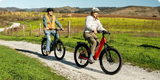
An electric bike is another option. On a pedal-assist e-bike, you still pedal, but a motor adds power so the ride feels easier. You choose how much help you get, which can make longer workouts more manageable, since you can turn the assistance up when you get tired or tackle a hill. This flexibility also makes e-bikes a good fit for people with arthritic knees.

Velotric offers e-bikes for comfortable riding experience. The Discover 3 adds an air suspension fork and a suspension seatpost for extra comfort on longer rides. You can browse more options in our ebikes for seniors collection.
2. Walking
Getting a workout in doesn’t have to be complicated. A brisk walk is a great way to get your heart rate up without stressing your knees. Plus, it’s a low-intensity activity you can easily do with a loved one, chatting as you go. That can make the workout more enjoyable, which helps you stay motivated.
Use a step counter to track your activity level. You can also make it a fuller workout by swinging your arms as you go, or by carrying small dumbbells to build arm muscle. Finally, consider walking in nature, which is shown to be good for your mental health.
3. Tai chi
Tai chi involves slowly shifting the body through a series of postures and gentle movements that don’t place a lot of stress on joints. Holding and moving between these positions exercises your muscles, improves balance, and enhances coordination, which makes it a great fit for the CDC’s balance recommendation. Research also suggests tai chi can help reduce stress and anxiety.
If you’re new to tai chi, consider finding a class in your area. Alternatively, you can try one of many videos on YouTube. For people with poor balance, consider turning tai chi into a chair exercise. This guide to seated tai chi movements can help you get started.
4. Water aerobics
Water aerobics (also known as aquafit) involves going through various movements in a body of water, like a pool. It can include cardio exercises like jogging in the water, as well as muscle-building exercises using dumbbells. Dance-like movements, body twists, and leg kicks can improve range of motion and balance.
It’s a great low-impact exercise thanks to the buoyancy water creates. Your body weight is lower in water, so your knees and ankles don’t have to carry as much. The water also creates resistance, so you get more of a workout as you “push” through it.
5. Pilates
Pilates involves going through a series of repetitive exercises designed to improve flexibility, strength, and stability. You can do them with a piece of equipment known as a reformer or on a yoga mat. Pilates doesn’t place a lot of impact on joints, since you’ll do many moves on the floor and don’t have to carry your full weight.
It’s best to consult a Pilates instructor if you’re interested in trying it. They can make sure you’re practicing proper form, which lowers the risk of injury. Senior-friendly Pilates programs are designed for the unique needs of older bodies.
6. Suspension training
Suspension training is a type of strength training that uses a system of webbing and ropes (known as a suspension trainer) to build muscle using your own body weight. You might also see it referred to as TRX training, which is a brand of suspension training equipment.
It’s a great way to build flexibility, core strength, balance, and head-to-toe muscle. Since you’re only using your own body weight, it’s also easy on the joints. That said, you’ll want a gym with suspension training equipment and an instructor to guide you, especially when you’re starting out.
7. Yoga
Yoga involves moving your body through a series of stances and poses designed to enhance strength, balance, flexibility, and coordination. There are many different types of yoga, including Ashtanga, Hatha, Kundalini, Vinyasa, and hot yoga.
You can also find yoga designed for seniors, which uses slow and gentle poses that won’t stress joints. In addition to a physical workout, yoga is also shown to support good mental health. The breathing exercises can create a meditative state, reducing stress and anxiety.
8. Swimming
Like aquafit, swimming is a great low-impact activity because it takes place in water. The buoyancy puts less weight on your joints, and the water adds resistance. Swimming is also versatile, giving you a variety of strokes, from a low-effort breaststroke to a high-intensity butterfly stroke.
Another benefit of swimming is that it’s a full-body exercise. You’ll use the muscles in your arms, legs, and core. It can also be strenuous, which boosts cardio health. That said, swimming requires access to a pool or open water. You can check with places like your local YMCA to see what pool availability they have.
9. Light strength training (weights and resistance bands)
We understand that the words “weight lifting” don’t always go with “senior.” You might picture an athlete pulling off a dazzling feat of strength, but that’s not what we have in mind. A simple strength program with light weights or resistance bands is all you need.
The CDC recommends muscle-strengthening activity on at least 2 days a week, working your legs, hips, back, abdomen, chest, shoulders, and arms. A good rule of thumb is to do each exercise until another repetition feels hard, typically 8 to 12 repetitions. Regular strength work helps you maintain muscle and bone strength, which supports an independent, active lifestyle.
The best part is that you don’t need expensive equipment to get started. Resistance bands and light dumbbells are relatively inexpensive, and many exercises, like chair stands, use only your body weight. If you’re new to lifting, a session or two with a trainer can help you get your form right.
10. Golf
Golf doesn’t involve intense activity like running or jumping. However, it does involve a lot of walking, especially if you skip the cart, which makes it a great low-impact exercise for seniors. Plus, it gives you the opportunity to get outside into the fresh air.
That said, golf may not be a great option if you live in an area where the weather tends to be cold or rainy for most of the year. It can also be an expensive and time-consuming hobby, since you have to pay for equipment and course fees and get yourself to the course. It’s best to try golfing with a friend or rent equipment to see if you enjoy it before investing in your own.
Putting it together: a sample week
Here’s one simple way to cover the CDC’s three categories. Adjust it to your own fitness level and schedule.
- Monday, Wednesday, Friday: 30 minutes of aerobic activity, such as a brisk walk, an e-bike ride, or a swim.
- Tuesday, Thursday: 20 to 30 minutes of light strength training, followed by a few balance exercises.
- Saturday: a longer, easy session of about 60 minutes, such as a scenic ride, water aerobics, or a walk on the golf course.
- Sunday: rest, or a gentle tai chi or yoga session.
That adds up to 150 minutes of aerobic activity, two strength days, and regular balance work.
Discover the health benefits of a Velotric electric bike
As you can see, there are many types of exercise for seniors. Of the cardio options above, e-cycling offers some unique benefits for your well-being, thanks to the e-bike motor.
It’s also real exercise. A 2018 review of 17 studies found moderate evidence that electrically assisted cycling provides at least moderate-intensity physical activity, with effort lower than conventional cycling but higher than walking. The review also found moderate evidence that it can improve cardiorespiratory fitness in people who are physically inactive. A simple way to check your effort is the CDC’s talk test: at moderate intensity, you can talk but not sing.
Because you control the level of assistance, you can turn it up on hills or when you’re tired, which can help you ride longer and farther than you might on a regular bike. Pedal assist can also help you get moving smoothly from a stop and keep pace with traffic. Wear a helmet, and use lights when you ride.
Think e-cycling is the right exercise option for you? Velotric has a bike to meet your needs:
- Breeze 1: a lightweight (48 lbs) cruiser with a low 380mm step-through frame, an upright riding position, and up to 70 miles of range. It’s also quiet, so you can enjoy the ride.
- Discover 3: a comfort-focused ride with an 80mm air suspension fork, a suspension seatpost, and up to 80 miles of range for longer outings.
- Tempo: at 39 lbs, our lightest option, with Pulse Mode, which adjusts pedal assist to your heart rate to help you stay in your chosen zone.
Our e-bikes offer three riding modes with five levels of pedal assist and can switch between Class 1, 2, and 3, so you can match your local regulations. The batteries are removable for easy charging at home and are certified to UL 2271, and the bikes include integrated lights for visibility. Every Velotric ebike also comes with a 2-year limited warranty, with +1 year of coverage when you register within 60 days of purchase (terms apply).