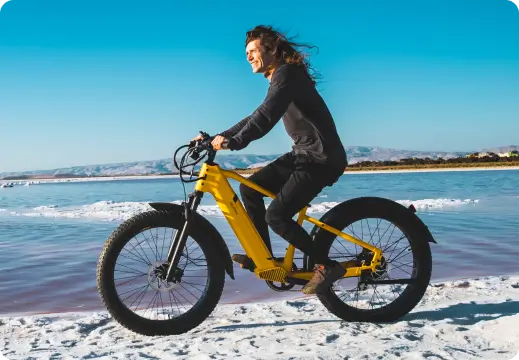




When riders who enjoy trail riding start looking for an ebike, many of them naturally lean toward a fat tire ebike. The wide tires, rugged look, and strong off-road reputation make fat tire bikes seem like the obvious choice for exploring dirt paths, forest roads, and uneven terrain.
But in reality, not every trail rider actually needs a full fat tire setup. Many people ride a mix of light trails, gravel paths, park routes, and city streets, rather than deep sand or extreme off-road conditions. In these cases, a hybrid ebike can often provide a more balanced riding experience.
That’s why more riders today find themselves choosing between hybrid ebikes and fat tire ebikes. Both can handle adventure rides, but they are optimized for different types of terrain and riding styles.
In this guide, we’ll break down the key differences between hybrid ebikes and fat tire ebikes, explain the riding scenarios where each type shines, and help you choose the ebike that best fits how and where you actually ride.
Hybrid Ebike vs Fat Tire Ebike: What Are They?
Before comparing the differences between the two, let's briefly explain what each type of bike is.
What Is a Hybrid Ebike?
A hybrid ebike is a versatile electric bike that combines the efficiency of a road ebike with the comfort and practicality of a commuter ebike. It usually features a lightweight frame, medium-width tires, and an upright riding position, making it ideal for efficient riding over longer distances.
Hybrid ebikes are commonly used for city commuting, bike path riding, park trails, daily fitness rides, and mixed terrain like pavement and gravel. They are designed to be fast, comfortable, and practical for everyday riding.
What Is a Fat Tire Ebike?
A fat tire ebike is designed for more challenging terrain and uses extra-wide tires (typically 4.0 inches or wider) to provide maximum traction and stability. The larger tire surface helps riders maintain control on loose or uneven ground.
Fat tire ebikes are especially suitable for sand, snow, mountain trails, and rugged off-road riding, where additional grip and shock absorption are important for maintaining stability and confidence on unpredictable surfaces.
Hybrid Ebike vs Fat Tire Ebike: Key Differences
| Category | Hybrid eBike | Fat Tire eBike |
|---|---|---|
| Frame & Geometry | Balanced geometry between road and mountain bikes, designed for commuting and fitness riding. | Stronger frame with relaxed geometry to support wide tires and off-road terrain. |
| Tires & Wheels | Usually 700C or 27.5" wheels with medium-width tires. | Typically 20–26" wheels with 3.0–4.0"+ wide tires. |
| Motor & Battery | Optimized for efficient commuting and longer range. | Often tuned for higher torque and off-road riding. |
| Brakes & Suspension | Rigid fork or short-travel suspension for smooth roads and light trails. | Commonly equipped with long-travel suspension for rough terrain. |
| Comfort | Comfortable upright riding position for longer rides. | Wide tires absorb bumps and provide extra cushioning. |
| Handling | Light and agile, easy to maneuver in cities. | More stable but heavier and less agile. |
| Speed & Efficiency | Lower rolling resistance, better speed and battery range. | Higher rolling resistance, slower on paved roads. |
| Noise & Vibration | Quieter and smoother on pavement. | More road noise but better vibration absorption off-road. |
Next, we’ll take a closer look at several key differences between the two.
Terrain Capability
One of the biggest differences between hybrid ebikes and fat tire ebikes is the type of terrain they are designed for. While some hybrid ebikes may come with wider tires, not every hybrid is a fat tire bike, and the tire choice often reflects the rider’s typical riding environment. Many riders choose a hybrid ebike because their routes are mostly city streets, paved bike paths, or well-maintained park trails, where efficiency, speed, and maneuverability matter more than extreme traction.

A fat tire ebike, on the other hand, is built specifically for challenging terrain. The wide tires provide excellent grip and stability on sand, snow, loose gravel, and rough mountain trails, allowing riders to maintain control where narrower tires might slip or sink. This makes fat tire bikes particularly appealing for riders who enjoy off-road exploration or frequently ride on unpredictable surfaces.
However, those same wide tires also come with trade-offs. Fat tire ebikes typically have higher rolling resistance, heavier weight, and lower riding efficiency on pavement, which can make them feel slower and require more battery power during everyday city riding. For riders who spend most of their time on smooth roads, a hybrid eBike often offers a more balanced and efficient experience.
Brakes & Suspension
Another key difference lies in the suspension setup, which reflects the type of terrain each bike is built for. Hybrid ebikes typically come with a rigid fork or a short-travel suspension fork, which is enough to absorb small bumps from city streets, bike lanes, and light gravel paths while keeping the bike lighter and more efficient for daily riding.

In contrast, fat tire ebikes are often equipped with long-travel suspension forks, and some models even feature full suspension systems. Combined with their wide tires, this setup helps absorb bigger impacts and maintain stability on rough trails, rocky paths, or uneven off-road terrain, providing more comfort and control when riding on challenging surfaces.
Motor, Power & Efficiency
The two models are often designed with different power and efficiency priorities. Hybrid ebikes are usually optimized for commuting and longer-distance riding, focusing on smooth power delivery, better speed efficiency, and extended battery range on paved roads. Their narrower tires create lower rolling resistance, allowing riders to maintain higher speeds while using less battery power.

In contrast, fat tire ebikes are typically tuned more toward off-road capability and torque. The motor setup often prioritizes stronger assistance for climbing hills and riding through loose terrain. However, the wide tires also create higher rolling resistance, which can reduce overall speed and battery efficiency when riding on paved roads compared to hybrid ebikes.
Which Ebike Fits Your Riding Scenarios?
The best choice between a hybrid eBike and a fat tire eBike often comes down to where and how you actually ride. Different riding scenarios place different demands on the bike, from efficiency and agility to traction and stability.
For daily commuting and short trips
For riding to work, running errands, grocery shopping, or school drop-offs, a hybrid ebike is usually the more practical option. It’s lighter, easier to maneuver in traffic, and more efficient on paved roads, making everyday transportation smoother and less tiring.
For weekend leisure rides or fitness cycling
Hybrid eBikes also tend to perform well. They are comfortable for longer rides on bike paths, greenways, and mixed paved routes, where efficiency and riding posture matter more than extreme traction.

However, for riders who enjoy outdoor exploration and light off-road adventures, a fat tire ebike can offer clear advantages. The wide tires provide better grip and stability on sand, snow, forest trails, and loose gravel, giving riders more confidence when the terrain becomes unpredictable.
Weather and seasonal conditions can also influence the choice. In rain, snow, or slippery surfaces, fat tire ebikes often provide more traction and stability thanks to their larger contact area with the ground. Meanwhile, hybrid ebikes tend to perform best in dry or well-maintained road conditions, where their efficiency and speed can really shine.
Other Factors to Consider in Your Decision
Beyond the different ebike characteristics mentioned above, you may also want to consider several additional factors.
Cost & Maintenance Comparison
When choosing between them, it’s also worth considering the long-term cost and maintenance needs, since the two categories are often built with different priorities.
In terms of purchase cost, hybrid ebikes are usually positioned for commuting and everyday riding, so many models focus on lightweight frames, efficient drivetrains, and practical components within a moderate price range. Fat tire ebikes, by contrast, often include larger tires, stronger frames, and more robust suspension systems, which can increase the overall price depending on the off-road features included.

For daily maintenance, hybrid ebikes tend to be simpler to care for. Their narrower tires, lighter wheelsets, and simpler suspension setups generally mean lower maintenance frequency and lower replacement costs. Fat tire ebikes, on the other hand, use wide tires that can wear faster on pavement, and models with long-travel suspension may require more regular servicing.
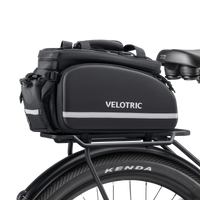
When it comes to accessories and upgrade options, hybrid ebikes often have an advantage for commuting. They are usually designed with better compatibility for racks, fenders, baskets, panniers, and other practical add-ons used for daily transportation. Fat tire ebikes can still support some accessories, but their frame geometry and tire clearance sometimes limit the range of commuter-style upgrades.
Hybrid Ebike vs Fat Tire Ebike: Velotric Summit 2 vs Velotric Nomad 2X
| Category | Velotric Summit 2 (Hybrid eBike) | Velotric Nomad 2X (Fat Tire eBike) |
|---|---|---|
| Bike Type | Hybrid all-terrain ebike for road and light trails | Full-suspension fat tire ebike for rough terrain |
| Motor | 750W (1300W peak), 100Nm torque | 750W (1400W peak), 105Nm torque |
| Battery | 801.6Wh, up to 95 miles range | 801.6Wh, up to 75 miles range |
| Suspension | 120mm RST air suspension fork | 120mm air fork + 80mm wheel air suspension |
| Tires | Kenda 27.5x2.4" MTB Puncture Resistant Tires | 4" fat tires for traction and stability |
| Bike Weight | 57 lbs | 80 lbs |
| Max Bike Load Capacity | 440 lbs | 560 lbs |
| Best For | Commuting, gravel paths, light trails | Sand, snow, rough trails, heavy loads |
Velotric Summit 2 — A Versatile Hybrid Ebike for Mixed-Terrain
The Velotric Summit 2 is designed for riders who want one bike that can handle both daily riding and light off-road adventures. As a hybrid ebike, it balances efficiency, control, and comfort across a wide range of surfaces.

Powered by a 750W motor with up to 1300W peak power and 100Nm torque, the Summit 2 climbs hills confidently while still feeling efficient on pavement.
Its air suspension fork absorbs bumps from gravel paths, forest trails, and rough city roads, keeping the ride stable without the extra weight and rolling resistance that often come with fat-tire bikes.
This makes the Summit 2 a strong choice if your riding typically includes:
- City commuting and bike lanes
- Gravel paths or park trails
- Weekend fitness rides
- Light off-road exploration
In short, the Summit 2 is ideal for riders who want efficiency and versatility without committing to a heavy off-road-focused bike.
Velotric Nomad 2X — A Full-Power Fat Tire Adventure Bike
The Velotric Nomad 2X is built for riders who prioritize maximum traction, stability, and off-road capability. It features 4-inch fat tires and full suspension, making it much more capable on challenging terrain than a typical hybrid ebike.

Its 750W motor (1400W peak) with 105Nm torque provides strong climbing power for steep trails, sand, or loose gravel.
Unlike many fat tire ebikes, the Nomad 2X includes full air suspension with 120 mm front travel and 80 mm rear travel, creating a smoother ride on rocky trails and uneven terrain.
The ebike is particularly well suited for:
- Snow, sand, or loose terrain
- Hunting or backcountry exploration
- Rough forest trails
- Carrying heavy cargo or gear
With a 560-lb payload capacity, it’s also designed for riders who need serious hauling capability.
Choosing the Right eBike for Your Needs
When comparing hybrid ebikes and fat tire ebikes, the best choice ultimately depends on where and how you plan to ride. Both types offer great performance, but they are designed with different priorities in mind.
The key is to match the bike to your real riding environment and lifestyle. By understanding how each type performs, you can choose an ebike that not only fits your terrain but also makes every ride more enjoyable.
FAQs
Are fat tire ebikes harder to pedal?
Yes, fat tire eBikes can feel slightly harder to pedal compared with standard or hybrid ebikes because the wider tires create more rolling resistance. However, on an electric bike this difference is usually small since the motor assist helps compensate for the extra effort. The trade-off is better traction and stability on surfaces like sand, snow, or loose gravel.
Are hybrid ebikes good for trails?
Yes, hybrid ebikes are well suited for light trails, gravel paths, and forest roads. They typically use medium-width tires and front suspension, which provide enough comfort and grip for uneven terrain while still remaining efficient on pavement. However, they are not designed for aggressive mountain biking or very technical trails.
Which ebike is better for beginners?
For most beginners, a hybrid ebike is usually the easiest to start with. Hybrid models tend to be lighter, easier to handle, and more efficient on common riding surfaces like roads and bike paths. Fat tire ebikes offer excellent stability but are often heavier and designed more for off-road adventures.
Do fat tire ebikes use more battery?
In many cases, yes. Fat tire ebikes often consume more battery because the wider tires create higher rolling resistance and the bikes themselves tend to be heavier. This means the motor may work harder, especially on pavement. However, riding conditions and assist levels can have a bigger impact on battery usage than tire size alone.
Can hybrid ebikes ride on gravel?
Yes, hybrid ebikes are well suited for gravel riding. Their tire width and suspension setup are designed to handle mixed surfaces such as paved roads, gravel paths, and park trails. While they may not provide the extreme traction of fat tire bikes, they offer a good balance of comfort, control, and pedaling efficiency.