




When people start shopping for an ebike, they often feel pulled toward extremes.
Some think they need a full eMTB — just in case they ride a trail someday. Others consider a pure commuter — because they mainly ride on pavement.
But the reality is most riders don't live at either extreme. That's where a hybrid ebike comes in.
Learn more about Hybrid EbikesWhat Is a Hybrid Ebike?
A hybrid ebike is designed for the way most people actually ride — not just one type of terrain, but all of it. It's not built for aggressive downhill trails where you need full suspension and knobby tires. And it's not limited to smooth city streets where anything rougher than a pothole feels like a challenge. It sits comfortably in between, which for a lot of riders, is the sweet spot.

Think about a typical week. You might ride to work on pavement Monday through Friday, cruise through a park on the weekend, cut across a gravel path to avoid traffic, or roll over a stretch of uneven road without thinking twice. A hybrid ebike handles all of that without asking you to compromise. You don't need a separate bike for each situation — one ride covers it all.
How Hybrid Ebikes Differ from Commuter Ebikes, eMTBs, and Cruiser Ebikes
| Category | Hybrid Ebike | Commuter Ebike | eMTB | Cruiser Ebike |
|---|---|---|---|---|
| Primary Purpose | Mixed-terrain versatility | Urban transportation | Technical trail riding | Leisure and comfort |
| Typical Terrain | Pavement + light trails | Paved roads & bike lanes | Rough, steep, technical trails | Flat paved areas |
| Riding Position | Neutral / slightly forward | Upright | Aggressive / forward-leaning | Very upright |
| Suspension | Front suspension (100–120mm) | Minimal or short travel | Long-travel front or full suspension | Usually none or short travel |
| Motor Focus | Balanced torque for hills & distance | Smooth, steady assist | High torque for climbs & descents | Moderate assist for easy riding |
| Strength | Adaptable across environments | Efficient and practical | Maximum off-road control | Relaxed, easy comfort |
| Best For | Riders who split time between city and trails | Daily commuters | Dedicated trail riders | Casual neighborhood rides |
| Limitation | Not built for extreme MTB terrain | Limited off-road capability | Heavier, less efficient on pavement | Not suited for hills or mixed terrain |
Hybrid Ebike: The Middle Ground
A hybrid ebike is designed to sit between commuter models and mountain ebikes. If your rides stay mostly on smooth city streets and you rarely venture off pavement, a commuter ebike will likely serve you well. If you're regularly tackling technical trails, steep descents, or genuinely rough off-road terrain, a mountain ebike is built for that.
- Balanced geometry (not overly aggressive, not overly upright)
- Front suspension for moderate bump absorption
- Tires that handle both asphalt and gravel
- Enough torque for hills without being overbuilt
- Suitable for commuting and recreational riding
For most everyday riders, a hybrid ebike covers the full range of what real life actually looks like on two wheels.
Who Should Buy a Hybrid Ebike?
If your riding includes a mix of commuting, light recreation, and occasional trail use, a hybrid model may be the most practical choice.
- Multi-Scenario Users: One bike that transitions from weekday commuting to weekend recreation without compromise.
- Adventure Seekers: Ideal for longer mixed-terrain rides, bike-path exploration, and light off-road routes without the weight of a full eMTB.
- Urban Commuters: Comfortable geometry for daily riding, enough torque for hills, and stability for varied city roads.
- Weekend Leisure Riders: Capable of handling park trails and gravel paths without needing a full mountain setup.
Is a Hybrid Ebike Right for You?
| ✓ Suitable If You… | ✗ Not Ideal If You… |
|---|---|
| Ride mostly on pavement but occasionally explore trails | Frequently ride steep, technical mountain terrain |
| Want to commute and also take longer weekend rides | Only ride very short, flat neighborhood routes |
| Prefer one versatile bike instead of multiple specialized models | Need full suspension and aggressive trail geometry |
| Want motor assistance but still value an active riding posture | Are looking for a lightweight, non-electric fitness bike only |
Key Factors to Consider Before Buying a Hybrid Ebike
A hybrid ebike is meant to balance multiple riding scenarios. Instead of focusing only on specs, here are 7 practical decision factors that actually matter — and how to judge them for your own needs.
This affects how the ebike feels and how it performs on trails.
- Are your hills short and moderate? → Hub motor is usually sufficient.
- Do you regularly climb long, steep terrain? → Mid-drive may be worth it.
- Do you want lower maintenance complexity? → Hub motor is simpler.
For many hybrid riders, a well-tuned hub motor provides enough performance without added complexity.
Manufacturers list a maximum range, but that number assumes ideal conditions. Multiple factors will impact the actual range, including rider weight, terrain, and the chosen assistance level.
- Daily commute under 20 miles round-trip → 60–80 mile rated range is usually more than enough.
- Mixed use + weekend exploration → Look for 80+ mile rated range for flexibility.
- Frequent high-assist riding → Expect real-world range to drop 20–30%.
Don't buy based on the highest claimed number — buy based on your actual weekly mileage.
This affects comfort more than most people realize.
- Frequent stops / commuting / comfort priority → Step-through.
- Sportier feel / slightly stiffer frame → Step-over.
If you prefer a slightly sportier posture and don't mind mounting over the top tube, step-over may feel more stable.
Many riders assume more gears are better. But for a hybrid ebike, 8–9 speeds with a wide-range cassette are sufficient for most riders.
- Riding aggressively on technical terrain? → Consider higher-end components.
- Mainly commuting with occasional hills? → Mid-range is more than enough.
Ultra-high-end drivetrains add cost more than practical benefit in mixed urban use.
Brakes matter, especially with heavier ebikes.
- Flat, light city riding → Mechanical disc brakes can work.
- Hills, cargo, higher speeds → Hydraulic disc brakes are recommended.
Tires determine how your bike actually handles different surfaces.
- Rarely leave pavement → City tires are fine.
- Pavement + light gravel / park trails → Hybrid / mixed-terrain tires.
Choose mixed-terrain tires for better stability without going full mountain knobby.
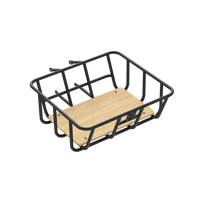
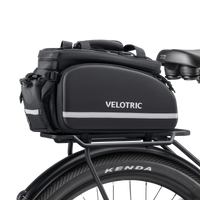
Some ebikes look affordable but require upgrades later. Consider whether the ebike includes: rear rack, fenders, integrated lights, and brake light or turn signals.
- Main use is commuting → Buying a fully equipped model often saves money long-term.
- Mostly recreational use → Accessories may matter less, but integrated lighting is still important for safety.
Velotric Summit 2 — Your Strong Hybrid Ebike Option
If you're looking for a hybrid ebike that balances commuting and trail capability, Velotric Summit 2 checks the practical boxes that matter most.


In short, Velotric Summit 2 isn't built for extreme downhill trails or ultra-light road racing. It's built for riders who want one bike that handles daily commuting and weekend exploration with equal confidence — which is exactly what a hybrid ebike is meant to do.
Frequently Asked Questions About Hybrid Ebike
How fast can a hybrid electric bike go?
Most hybrid ebikes in the U.S. fall into Ebike Class 1, 2, or 3 categories.
- Class 1 & Class 2: Up to 20 mph with motor assistance
- Class 3: Up to 28 mph with pedal assist
Actual riding speed depends on terrain, rider weight, and assist level. Without motor assistance, speed depends entirely on your pedaling effort.
Can I ride a hybrid ebike without power?
Yes. Hybrid ebikes can be ridden like a regular bicycle when the motor is turned off. However, because of the added weight from the motor and battery, pedaling without assistance may feel heavier than a non-electric bike.
Many riders lower the assist level instead of fully turning it off when they want more exercise.
Are hybrid ebikes illegal?
Hybrid ebikes are legal in most parts of the United States, as long as they meet federal and state ebike classification requirements (Class 1, 2, or 3).
However, regulations vary by state and sometimes by local trail systems. Speed limits, class restrictions, and helmet rules may differ. To understand where and how you can legally ride, check our complete guide to U.S. ebike laws here.