Sales









An electric bike battery influences how far you can ride with assistance, how often you need to charge, and how practical the bike is to use and store. Choosing well starts with understanding a few specifications. Keeping it in good condition depends on compatible equipment, sensible charging, and the right storage routine.
Battery capacity is only part of the picture. Two ebikes with similar batteries can deliver different ranges, and a larger battery is not automatically the best match for every rider. Your route, assistance settings, carrying needs, and access to charging all matter.
Black Friday Starts Now

- How an electric bike battery works
- Understanding voltage, amp-hours, and watt-hours
- What affects battery range?
- How to charge your ebike battery
- Battery lifespan and capacity loss
- Storage, cleaning, and inspection
- Choosing a replacement battery
- The Velotric Discover 3 battery
- Frequently asked questions
How does an electric bike battery work?
An ebike battery stores electrical energy and supplies it to the bike's electrical system. The controller manages power delivery to the electric motor according to the bike's design, rider input, and assistance settings. Without usable battery power, the motor cannot provide pedal or throttle assistance.

The battery pack contains more than individual cells. Its housing, connections, protective circuitry, and battery management system, or BMS, form part of a coordinated assembly. The BMS monitors operating conditions and provides protections within the pack's design limits. It does not make damaged cells, incompatible chargers, or unauthorized modifications safe.
Many ebikes have a removable battery that can be charged on or off the bike. Others use an integrated design. Follow your model's instructions for battery removal, installation, and charging rather than assuming every pack works the same way.
Which battery types do ebikes use?
Most modern consumer ebikes use rechargeable lithium-ion batteries, which can store substantial energy in a relatively compact pack. Lead-acid batteries appear in some older or lower-cost electric vehicles, but their greater weight for comparable stored energy makes them less practical for many bicycle applications.
Lithium-ion is a family of technologies. Names such as nickel manganese cobalt, or NMC; lithium manganese oxide, or LMO (LiMn2O4); and lithium iron phosphate, or LFP (LiFePO4), refer to different cathode chemistries. LFP is a type of lithium-ion battery, not a separate alternative to all lithium-ion batteries. Lithium-polymer terminology also should not be treated as a parallel cathode-chemistry category.
These distinctions do not tell you which replacement pack fits an ebike. For ownership decisions, the approved battery system, capacity, safety certification, warranty, and availability of support are usually more useful than choosing by chemistry alone. Do not assume a particular chemistry unless the manufacturer identifies it.

Understanding voltage, amp-hours, and watt-hours
Battery labels use several measurements that answer different questions. Reading them together makes comparisons more meaningful.
| Specification | What it means | How to use it |
|---|---|---|
| Voltage, V | The battery's nominal electrical voltage | Check compatibility with the bike's electrical system. Higher voltage alone does not establish better acceleration or range. |
| Amp-hours, Ah | The battery's rated electrical charge capacity | Compare alongside voltage. A larger Ah number does not necessarily mean more stored energy across different-voltage systems. |
| Watt-hours, Wh | The battery's rated stored energy | A useful starting point for comparing capacity, while allowing for differences in usable energy and riding efficiency. |
| Charger current, A | The charger's specified output current | Relevant to charging time, but only within a charger and battery combination approved by the manufacturer. |
How to calculate battery energy
A useful approximation is watt-hours = nominal voltage × amp-hours. For example, the Discover 3's published 48V, 15.2Ah specification gives 729.6Wh, rounded to 730Wh on the product page. Watt-hours describe energy, while watts describe power.
Do not confuse the battery's nominal voltage with the charger's required output specification. The correct charger is determined by the complete charging system, not by matching one number or finding a plug that fits.
Consider battery weight and placement
A larger-capacity battery can help reduce charging stops, but it may add weight and bulk. Consider how often you lift the bike, carry the battery indoors, or load the bike onto a rack. Compare ready-to-ride bike weights on the same basis, including the battery where appropriate.
Placement also affects how the complete bike feels to handle. Evaluate fit and balance with the battery installed. Extra battery weight does not automatically reduce range; the additional stored energy and the bike's overall efficiency need to be considered together.
What affects electric bike battery range?
Battery range is the distance you can travel with assistance on a charge. Published maximums are measured under stated conditions and should be used as reference points, not promises for every route.
- Assistance level: More motor support generally uses energy faster.
- Speed and wind: Higher speeds and headwinds increase the effort needed to keep moving.
- Hills and repeated starts: Climbing and accelerating require more energy than steady riding on level ground.
- Rider and cargo load: Additional load can increase energy use, particularly when climbing or accelerating.
- Tires and terrain: Tire design, pressure, and surface conditions affect rolling losses.
- Temperature: Cold conditions can temporarily reduce available energy and performance.
- Rider input and drivetrain condition: Pedaling effort, suitable gearing, and maintenance influence how much help the motor needs to provide.
- Battery condition: Capacity can decline with age and use.
Compare pedal-assist and throttle range separately when both are published. For a new route, allow a reserve and learn from your own rides before planning to use the full advertised range. Your experience at a familiar assistance level is a better planning tool than capacity alone.
How to charge your ebike battery
Use the charger supplied with or specifically recommended for your bike's battery. The correct connector, voltage profile, current, and system compatibility all matter. A higher-output charger is not automatically an approved fast-charging upgrade.
- Check the equipment. Inspect the battery, charger, cable, and charging port for damage or moisture before connecting them.
- Check the temperature. Charge only within the range specified in the manual. Let a very hot or cold battery return to the permitted range naturally.
- Choose the charging location. Use a dry, ventilated area, away from combustible materials and escape routes. Do not cover the charger or battery.
- Follow the connection procedure. Use the manual's sequence for switching the bike off, connecting power, and charging on or off the bike.
- Stay present. Charge while you are awake and at home, monitor for abnormal behavior, and disconnect according to the instructions when charging is complete.
The U.S. Consumer Product Safety Commission advises against charging micromobility batteries while sleeping or away from home and recommends manufacturer-approved chargers and replacement packs.
How long does an ebike battery take to charge?
Charging time varies with capacity, the approved charger, starting charge level, temperature, and the battery's charging controls. The final part of charging may be slower, so a simple capacity calculation is not an exact full-charge estimate.
Use the charging-time guidance for your specific model and charger. Don‘t assume all Velotric batteries take six hours or that a larger current rating makes an unrelated charger suitable. For practical planning, consider whether you need a full recharge between rides or enough energy for the next trip.
Do you need to drain the battery before charging?
Do not deliberately run a lithium-ion ebike battery flat as a routine maintenance step. Follow the manufacturer's charging guidance and recharge for your planned riding. A partial top-up is different from a complete charge cycle.
Charging to the manufacturer's full-charge indication before a long ride is also different from overcharging beyond the system's approved limits. Avoid treating 100% as inherently damaging or leaving the battery continuously connected to a charger. Long-term storage requires a separate routine.
How long does an electric bike battery last?
Battery lifespan has two meanings: distance per charge and service life before capacity loss or another problem makes replacement necessary. A battery can deliver less range as it ages even though the charger still indicates a full charge.
Both use and time contribute to aging. Temperature, storage conditions, charging behavior, and the pack's design affect how quickly capacity changes. There is no single replacement mileage, year count, or cycle limit that applies to every ebike battery.
- A charge cycle is not simply one plug-in. Partial charges can add up to the equivalent of a full cycle.
- A cycle-life figure needs context. It depends on the test conditions and the remaining-capacity threshold used.
- A warranty is a separate promise. Coverage periods, exclusions, and any cycle limits are policy terms, not a prediction of exactly when the battery will stop working.
If range falls, compare similar rides and check tire pressure, assistance settings, temperature, and load before concluding the battery is worn out. A persistent change or charging fault deserves inspection. Learn more in our guide to how long ebike batteries last.
How to store and maintain your ebike battery
Separate daily use from long-term storage
Daily charging should support the rides you plan to take. For several weeks or months without use, follow the battery's storage instructions rather than keeping it full or leaving it discharged.
Velotric's current general storage guidance recommends a long-term charge level of 60%–80%, with recharging if it falls below 60%. It also specifies a clean, dry, ventilated storage environment at 50–77°F (10–25°C). Follow your specific model's manual if it provides different instructions.
- Disconnect the charger and remove the battery for long-term storage as directed.
- Place it securely on a flat, dry surface, away from heat, moisture, children, and pets.
- Check charge periodically and follow the manual's inspection interval. Do not leave it unchecked for an entire season.
- Do not substitute a universal monthly full-charge rule for the specified storage range.

Protect it from temperature extremes
Keep the battery away from direct sun and heat sources, including a hot parked vehicle. In cold weather, use a suitable indoor storage location. A cover does not make charging outside the approved temperature range safe.
Riding, storage, and charging can have different temperature limits. Check all three in your manual. Low-temperature protection is a safeguard, not an instruction to charge a frozen battery or bypass a protective cutoff.
Keep the case and connectors clean and dry
Switch the bike off, disconnect the charger and power supply, and remove the battery when the manual requires it. Use a dry or slightly damp cloth for the exterior. For dust around ports, use the cleaning method approved for the model, such as a soft dry brush.
Do not scrub electrical contacts with a brush dipped in soapy water or rubbing alcohol. Velotric's battery operating manual advises against alcohol, solvents, and abrasive cleaners and requires damp ports to dry fully before reconnection. Do not direct water jets at electrical components or use a battery if water ingress is suspected.
Check the battery before riding
As part of your regular ebike maintenance, check that the battery is securely installed, the connections are dry, and the housing and cables show no visible damage. Follow the scheduled maintenance guidance and inspect sooner after an impact or abnormal behavior.
Stop using or charging a battery with swelling, cracks, significant impact damage, unusual heat, leakage, or an abnormal odor. Contact the manufacturer or an authorized service provider. Do not open the pack or attempt a cell or BMS repair yourself. If it emits smoke or appears to be burning, move away and contact emergency services.
What to consider when replacing an ebike battery
A replacement should be approved for the exact bike and system. Similar voltage, capacity, appearance, or a matching connector does not establish compatibility.
- Model compatibility: Confirm the bike model, model year, mounting system, and any required battery part number.
- Electrical compatibility: Use a pack approved for the controller, charger, and communication system.
- Physical condition: Avoid damaged packs, unknown modifications, or batteries rebuilt with used cells.
- Certification: Check the relevant certification for the actual pack or system, rather than relying on a vague safety claim.
- Support and warranty: Review replacement availability, authorized service options, and the terms applying to a separately purchased battery.
A compatible higher-capacity option may be useful when the manufacturer offers one, but an unapproved battery is not a safe range upgrade. Ask Velotric support to confirm the correct part for your bike before ordering.
Understand battery and electrical-system certification
UL 2271 addresses batteries for light electric vehicle applications. UL 2849 addresses ebike electrical systems, including the interaction of the drive, battery, and charging system. Certification to a standard is different from a blanket claim that a product is the safest or that misuse is harmless.
UL Solutions explains this system-level distinction in its ebike certification guidance. Continue to follow the operating instructions even when the battery and bike carry the relevant certifications.
Recycle a retired battery properly
Do not put an ebike battery in household trash or general recycling. Ask the manufacturer, an authorized dealer, or a local battery collection program how to handle it. Damaged or recalled packs may require special arrangements, so describe the condition before transporting or shipping one.
A practical example: The Velotric Discover 3 battery
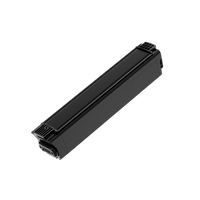
The Velotric Discover 3 shows how battery specifications fit into an everyday commuter. Its removable lithium-ion pack is rated at 48V, 15.2Ah, or approximately 730Wh. The product page lists Samsung/LG 21700 cells; this identifies the cells rather than claiming that Samsung manufactures the entire battery assembly.

- Pedal-assist range: Up to 80 miles (approximately 129 km).
- Throttle range: Up to 65 miles (approximately 105 km).
- Published range-test context: A 187-lb (approximately 85-kg) rider using Eco mode on flat roads. Actual range varies with use and conditions.
- Charging: A supplied 3A charger, used according to the model's charging instructions.
- Certification: UL 2271 for the battery and UL 2849 for the ebike electrical system.
That capacity provides a useful starting point for assessing a commute, but your route and assistance level determine how often you need to recharge. The removable design also lets you bring the battery to a suitable charging location without moving the whole bike.
Current standard coverage for the battery supplied with the bike is a two-year limited warranty. Separately purchased batteries and coverage upgrades have different terms. Review the current Velotric ebike warranty for the conditions applying to your purchase.
Frequently asked questions about ebike batteries
Is a higher-Ah battery always better?
Compare watt-hours as well as amp-hours. At the same nominal voltage, a higher Ah rating generally indicates more rated stored energy. Across different voltages, Ah alone is not a fair comparison. Compatibility, weight, and your riding needs still matter.
Can I charge the battery after every ride?
Plan charging around the next ride and the manufacturer's instructions. A partial recharge does not automatically consume an entire cycle. Avoid unnecessary continuous charging, and use the separate storage routine if the bike will sit unused.
Can I leave my ebike charging overnight?
Do not charge while sleeping. Charge when you can stay present and disconnect the equipment when complete, following the manual. Automatic charging controls do not replace supervision.
Why does my range drop in winter?
Cold temperatures can reduce available energy and performance temporarily. Wind, softer surfaces, and changing tire pressure can also affect winter range. Store and charge within the specified limits, and compare performance under similar conditions before assuming permanent capacity loss.
Does an IPX7 battery rating mean it can be stored outdoors?
A water-resistance rating is not permission for prolonged outdoor exposure, pressure washing, or deliberate immersion. Protect the battery and its connectors from moisture and follow the model's storage guidance.
Can I use a battery from another Velotric model?
Only if Velotric confirms that specific combination is compatible. Brand name and a matching nominal voltage are not enough. Check the approved battery part and charger before swapping packs.
Choose capacity for your rides and care for the complete system
The right electric bike battery should support your usual routes without creating unnecessary lifting, storage, or charging difficulties. Read V, Ah, and Wh together, allow a reserve when planning distance, and use the approved battery and charger combination.