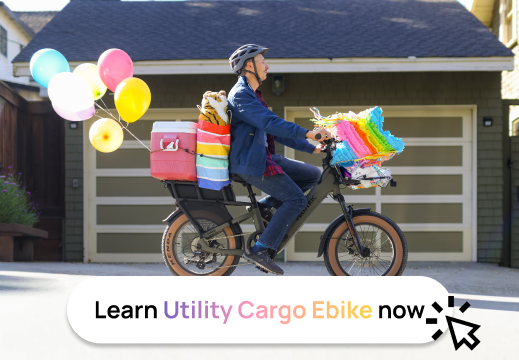

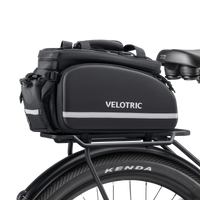


If you're looking for an ebike that can truly replace part of your daily car use, utility and cargo bikes are probably the two types you're weighing up. Most riders don't live in either-or territory. You might need the hauling power of a cargo bike one day and the nimble practicality of a utility ride the next. That's exactly why this list covers both.
Rather than separating the two categories, we've pulled together the best options across both, ranked on what actually matters. If you want a deeper breakdown of how the two types differ and which one fits your lifestyle, check out our cargo ebike vs utility ebike guide.
Utility or Cargo Ebike Comparison Table (Top Picks)
| Category | Velotric GoMad |
Aventon Abound SR | Lectric XPedition 2 | Rad Power RadRunner™ | Himiway C3 |
|---|---|---|---|---|---|
| Rank | #1 | #2 | #3 | #4 | #5 |
| Price | $1,999 | $1,899 | $1,399 | $1,499 | $1,499 |
| Max Payload | 500 lbs | 440 lbs | 450 lbs | 320 lbs | 440 lbs |
| Motor | 750W / 85Nm (1300W peak) | 750W / 80Nm (1440W Boost) | 750W / 85Nm (1310W peak) | 750W / 65Nm | 750W / 86Nm |
| Battery | 801.6Wh | 733Wh (36V 20Ah) | 624Wh | 624Wh | 48V 20Ah |
| Range | 75 mi (150 dual) | Up to 60 mi | 60 mi (170 dual) | 55+ mi | Up to 80 mi |
| Top Speed / Class | 28 mph Class 1/2/3 |
20–25 mph Class 1/2 |
28 mph Class 1/2/3 |
20 mph Class 2 |
20 mph Class 2 |
| Best For | All-in-one commuter + cargo | Family use, kid hauling | Budget + long-range cargo | Simple urban short trips | Long range + value cargo |
Velotric GoMad — The Best All-Around Everyday Utility Ebike

The Velotric GoMad takes the top spot not because it dominates a single spec, but because it delivers the best overall balance. With a 750W motor, 85Nm of torque, up to 75 miles of range, a 28 mph top speed, and a 500 lb payload capacity, it's built to handle real-world use.
That means it works equally well for daily commuting, grocery runs, weekend rides, and even carrying passengers or cargo—without feeling overly bulky like many long-tail cargo ebikes in urban environments.

What Makes It Stand Out
What really sets the GoMad apart is how it combines cargo capability with light all-terrain versatility. It supports up to 176 lbs on the rear rack and offers dual-battery expansion for up to 150 miles of range.
It also includes:
- Class 1/2/3 switching
- Torque + cadence sensor modes
- Apple Find My + Google's Find Hub
- NFC unlock
- IPX6-rated frame & IPX7-rated battery
For everyday use, these practical features matter more than simply chasing peak power numbers.
The GoMad also comes equipped with 20×4.0" fat tires, which improve stability under load and enhance overall balance. They also make the bike more capable across mixed terrain—handling gravel paths, uneven roads, and light off-road conditions with ease, beyond what typical city-focused utility ebikes can manage.

Trade-Offs to Consider
The GoMad isn't the most affordable option in this category, and while fat tires increase versatility, they don't feel as fast or efficient as narrower tires on smooth pavement.
May be overbuilt for some riders. If your riding is almost entirely on paved city roads and you rarely need higher payload capacity, its multi-purpose design may be more than you actually need.
Aventon Abound SR — Best for Heavy-Duty Urban Commuting

If your everyday use already leans toward family cargo needs—like school drop-offs, grocery runs, or replacing short car trips—the Aventon Abound SR is a better fit than most standard utility ebikes.
It comes equipped with a 750W motor, up to 90Nm of torque in Boost Mode, a 733Wh (36V 20Ah) LG battery, up to 60 miles of range, and a 440 lb payload capacity—making it well-suited for heavier, more demanding daily use.
Why It Stands Out
The Abound SR isn't designed to be light—it's designed to be stable and capable under load. For riders carrying kids, groceries, or bulk cargo on a regular basis, that "small utility vehicle" feel is actually a major advantage over lighter, more agile utility ebikes.
Aventon adds a strong layer of security and ecosystem support, including:
- 4G + GPS connectivity
- Theft deterrence features
- UL safety certification
- Access to 1,800+ retail locations
Trade-Offs to Consider
Heavier, cargo-level weight. At around 88 lbs, the Abound SR sits firmly in the cargo ebike category. It's stable, but noticeably heavier than most utility models. This weight makes it better suited for riders with dedicated parking or ground-level storage.
Less apartment-friendly. If you live in an apartment or frequently need to carry your bike upstairs, it's significantly less convenient than lighter options like the GoMad.
Lectric XPedition 2 — Best High-Payload Cargo Ebike on a Budget

If your goal is simple, spend less while still getting real cargo capability. The Lectric XPedition 2 is hard to ignore.
At around $1,399, it delivers a 450 lb payload capacity, a 750W motor (1310W peak), 85Nm of torque, a 624Wh battery, and up to 60 miles of range on a single battery. For the price, that's one of the most competitive cargo ebike value propositions on the market.
Why It Stands Out
This isn't a commuter ebike with light cargo features added—it's designed from the ground up with cargo-first logic.
Key capabilities include:
- Dual-battery support (up to 170 miles range)
- Up to 300 lb rear rack capacity
- Dual-leg kickstand for stability when loading
- Rear turn signals and 50mm suspension fork
Trade-Offs to Consider
Heavy and less portable. The XPedition 2 leans heavily toward function over form. It's built to work, not to feel light or minimal. Even without the battery, the bike weighs around 65 lbs. That makes it best suited for fixed parking setups and frequent cargo use, rather than riders who need to carry, lift, or combine it with public transportation.
Rad Power RadRunner — Best Simple, Entry-Level Utility Ebike for City Use

The Rad Power RadRunner has never been about maxing out specs—it's about making a utility ebike that's simple, approachable, and easy to live with.
At around $1,499, it comes with a 750W motor, 65Nm of torque, 55+ miles of range, a 20 mph top speed, and a 320 lb payload capacity. It covers the essentials without overwhelming new riders.
Why It Stands Out
The core appeal of the RadRunner is its low learning curve. Compared to more feature-heavy utility or cargo ebikes, it's easier to get started and easier to manage day-to-day. For many riders, that simplicity is exactly what makes it practical.
While the lineup also includes upgraded versions like the RadRunner Plus (currently out of stock), the base model arguably fits everyday use scenarios better—especially for grocery runs, short-distance commuting, and occasional light cargo.
Trade-Offs to Consider
Lower payload capacity. At 320 lbs, the RadRunner falls behind higher-capacity options like the GoMad, Abound SR, and XPedition 2.0. It's less suitable for heavier cargo or passenger setups.
Shorter range. With 55+ miles of range, it also offers the lowest range in this list—making it less ideal for longer commutes or extended daily use.
Himiway C3 — Best for Long Range Cargo Riding

If your priority is long range at a reasonable price, the Himiway C3 is one of the most competitive options in this category.
It combines a 750W motor, a large 48V 20Ah (≈960Wh) battery, and up to 80 miles of range, along with solid cargo capability—making it a strong fit for daily commuting, errands, and extended rides. For riders who want fewer charging cycles and more riding flexibility, this setup is especially appealing.
Why It Stands Out
Compared to more cargo-focused long-tail bikes, it feels more approachable for mixed urban use, rather than purely heavy-duty hauling.
Key highlights include:
- Large-capacity 960Wh battery (one of the biggest in this list)
- Up to 80 miles range
- 750W hub motor with steady power delivery
The C3 fills an important gap: long-range + value-focused cargo ebike. That makes it a strong option for riders who commute longer distances and don't need maximum payload.
Trade-Offs to Consider
Less cargo-focused than true long-tail bikes. While it supports cargo use, it's not as purpose-built for heavy hauling as models like the Abound SR or XPedition.
How to Choose the Right Utility or Cargo Ebike (Fastest Way)
If you want the fastest way to decide, here's the simplest breakdown:
How One Utility Ebike Handles Different Scenarios
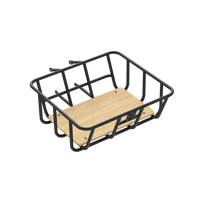
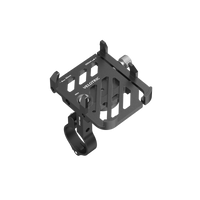
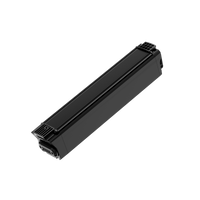
One of the biggest advantages of a utility ebike is its ability to adapt to different daily needs. Instead of buying multiple specialized bikes, you can often rely on a single platform—and customize it through accessories.
Adaptable Through Accessories
By adding or swapping different accessories, the same bike can serve completely different purposes:

Grocery runs and daily errands
School drop-offs or family rides
Carrying bulky or irregular items
Better weight distribution for heavier loads
This flexibility is what turns a utility ebike into a true car replacement option for many riders. Unlike standard commuter ebikes, utility models are designed with higher payload capacity and stronger frames. This means they can safely handle different setups without compromising stability or ride quality.
Frequently Asked Questions
- Under 300 lbs → basic utility use (commuting, light errands)
- 300–450 lbs → groceries, gear, occasional passenger
- 450+ lbs → heavy cargo, kids, or car replacement scenarios
Choosing the right payload range helps avoid overpaying for features you won't use.
Cargo ebikes (especially long-tail designs) are built primarily for hauling, offering higher load capacity but often at the cost of weight and maneuverability.