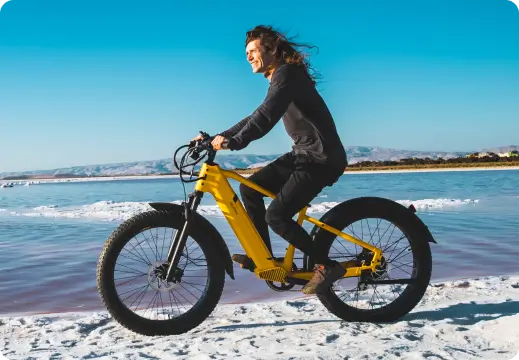




If you're a heavier rider, you've probably already felt it: a standard bike frame flexes where it shouldn't, low-speed balance feels shakier than it should, and long rides leave your knees complaining. That's usually what sends people looking for an ebike in the first place. Something actually feels stable and supportive under real weight, not just tolerant of it.
But picking the right one isn't as simple as sorting by the highest payload number on a spec sheet. What actually matters is how the bike behaves in the moments. This guide rounds up the best electric bikes for heavy riders across three styles: fat tire, utility & cargo, and electric tricycle.
Matching the Ebike Type to the Ride
Not every heavy-rider ebike solves the same problem, and picking based on payload numbers alone can lead you to the wrong bike for how you actually ride. The table below breaks down where each one genuinely pulls ahead.
| Type | Why It Works for Heavy Riders | Where It Truly Wins | Core Advantage |
|---|---|---|---|
| Fat Tire Ebike | Wide tires (4"+) spread rider weight over a larger contact patch for solid grip and less low-speed wobble; high-torque motors keep power steady under load | Rough terrain — trails, gravel, sand, snow, uneven backroads | Strong shock absorption protects knees and back; superior traction for controlled turns and braking |
| Utility & Cargo Ebike | Higher load rating covers rider weight plus cargo; longer wheelbase and lower center of gravity keep low-speed balance planted | Trips with real cargo — groceries, tools, a passenger, gear | Highest total payload (rider + cargo); upright position eases strain on wrists and back |
| Electric Tricycle | Three wheels remove low-speed balance entirely — no need to plant a foot when starting, stopping, or idling | Standing starts and slow, start-stop riding — tight turns, parking lots | Zero balance required at rest or low speed; most confidence-inspiring for stability-first riders |
Best Fat Tire Ebikes for Heavy Riders
Fat tire ebikes are consistently one of the top picks for heavier riders, and it's easy to see why. With that in mind, here are a few of the best fat tire ebikes worth considering for heavier riders.
Fat Tire Ebikes for Heavy Riders Compared
| Specification | Velotric Nomad 2X | Aventon Aventure 3 | Mokwheel Obsidian | Cyrusher Trax 2.0 | Rambo Hellcat 2.0 FS AWD |
|---|---|---|---|---|---|
| Price | $2,399 | $1,999 | $2,299.99 | $3,599 | $4,729.99 |
| Payload | 560 lbs | 400 lbs | 560 lbs | 350 lbs | 300 lbs |
| Motor & Torque | 750W, 1,400W peak, 105Nm | 750W, 80Nm; 1,440W Boost Mode | 750W rated, 1,300W peak, 105Nm+ | 750W, up to 95Nm | Dual 1,000W; 180Nm combined |
| Range | 75 miles | 65 miles | 60–80 miles | 75 miles | 65–110 miles |
| Rider Height | 4'11"–6'5" | 5'3"–6'4" | 5'7"–6'7" | 5'7"–6'6" | Not specified |
| Bike Weight | 80 lbs | 76 lbs | 77 lbs | 87 lbs | 90 lbs |
| Best For | Best overall combination of capacity, comfort, and versatility | Commuting and casual all-terrain riding | Long-distance and rough-terrain riding | Tall riders seeking step-through comfort | Hunting, snow, mud, and extreme traction |
1. Velotric Nomad 2X - Best overall fat tire ebike for heavy riders
“2026 Best Electric Bike for Heavy Riders"

Most fat tire ebikes start to feel strained the moment you put real weight on them — the motor labors on hills, the suspension bottoms out, the brakes need a second longer to catch. The Velotric Nomad 2X is Velotric's answer to that problem: a flagship build designed from the ground up to carry more without asking you to feel it.

With 560-pound total payload and 1000-pound max towing capacity, the Nomad 2X is one of the highest published figures in this category. That capacity would mean little without the power to back it up. A 750W motor with 1,400W peak output and 105Nm of torque means the bike doesn't hesitate when a heavier rider needs to pull away from a stop or climb a grade. An 801.6Wh battery backs that up with a range of up to 75 miles, so power doesn't come at the cost of distance.
Comfort is where the Nomad 2X really sets itself apart, and it starts before you even get moving. Step-through and high-step frames cover riders from 4'11" to 6'5", so getting on and off doesn't have to be its own small workout. Once you're riding, full air suspension soaks up the repeated impacts that make longer rides genuinely tiring on a heavier frame, while puncture-resistant fat tires keep grip solid across different terrains. And when it's time to stop, front and rear hydraulic disc brakes deliver the stopping power that extra weight demands.
Why it's great for heavy riders:
- 560 lb total payload capacity — enough headroom that you're never riding at the edge of what the bike can handle
- 750W motor, 1,400W peak power — pulls away from stops and climbs hills without hesitating under extra weight
- Full air suspension — absorbs repeated impacts so longer rides don't leave your back and joints sore
- 26 x 4.0" puncture-resistant tires — stay planted and predictable across pavement, gravel, sand, and snow
- Up to 75 miles range — enough range that battery anxiety doesn't become part of the ride
Best for: Larger riders who want a high-capacity, full-suspension ebike for pavement, gravel, trails, hunting trips, and longer recreational rides.
2. Aventon Aventure 3 - Best for commuting and weekend adventures
The Aventon Aventure 3 is a practical all-terrain option for riders who divide their time between city streets and recreational routes. It has a weight limit of 400 pounds and a more upright, everyday-friendly riding position than many aggressive off-road bikes.

Its 750W rear hub motor produces 80Nm of torque, with up to 1,440W available in Boost Mode. A double-sided torque sensor adjusts assistance according to pedaling input, which can make starts and low-speed riding feel more predictable than a basic cadence-only system.
The Aventure 3 uses a 733Wh removable battery with a claimed range of up to 65 miles. Its 4.0-inch puncture-resistant tires provide traction and cushioning, while an 80mm suspension fork helps absorb rough pavement and light trail impacts. Tektro hydraulic disc brakes with 180mm rotors are fitted at both ends.
At 76 pounds, this is still a large bike, so buyers should consider storage and transportation before purchasing.
Why it stands out:
- 400 lb total weight limit
- 750W motor, 80Nm torque, and up to 1,440W in Boost Mode
- Responsive double-sided torque sensor
- 733Wh battery with up to 65 miles of claimed range
- 26 x 4.0-inch puncture-resistant tires
- 80mm front suspension
- Tektro hydraulic brakes with 180mm rotors
Best for: Heavy riders who want one ebike for weekday commuting, paved greenways, gravel paths, and casual weekend adventures.
3. Mokwheel Obsidian - Best for long-distance rough-terrain riding
The Mokwheel Obsidian is another high-capacity choice, with a published payload rating of 560 pounds. It has a 750W rated motor with 1,300W peak power and more than 105Nm of torque, giving it strong specifications for hills and loose terrain.

A 48V 19.6Ah battery provides approximately 940.8Wh of nominal capacity, one of the larger standard batteries in this category. Mokwheel Obsidian gives a range of 60 to 80 miles, although real-world range will depend heavily on total load and terrain.
The Obsidian weighs 77 pounds and uses puncture-resistant fat tires, a 130mm adjustable front suspension fork, and a rear suspension system. Heavy-duty 12-gauge spokes provide additional wheel support. Tektro hydraulic disc brakes and a combined torque-and-cadence sensor help keep the bike controllable when the route becomes rough or steep.
Why heavy riders may like it:
- 560 lb published payload capacity
- 750W rated motor with 1,300W peak power and 105Nm-plus torque
- Large 48V 19.6Ah battery
- 60 to 80 miles of claimed range
- Full-suspension design with a 130mm adjustable fork
- 26 x 4.0-inch puncture-resistant tires
- Heavy-duty 12-gauge spokes
- Tektro hydraulic disc brakes
Best for: Riders who prioritize high payload capacity, battery size, hill performance, and comfort over rough terrain.
4. Cyrusher Trax 2.0 - Best comfort-focused option for taller riders
The Cyrusher Trax 2.0 is a step-through full-suspension ebike designed to fit riders from 5'7" to 6'6". Its long rider-height range, adjustable rear air suspension, wide tires, and comfort saddle make it especially relevant for taller riders.

The 750W Bafang rear hub motor delivers up to 95Nm of torque, while the 52V 20Ah battery provides 1,040Wh of capacity and a range of up to 75 miles. A torque sensor helps regulate assistance, and Shimano nine-speed gearing provides options for hills and changing terrain.
A four-bar rear suspension system, 60mm front fork, and 26 x 4.0-inch Kenda tires reduce vibration and improve traction. Four-piston Tektro hydraulic disc brakes add stopping control.
The main limitation is capacity. Cyrusher rates the Trax 2.0 for a 350-pound payload, which is lower than several other fat tire bikes in this guide. Riders close to that limit should leave room for clothing, locks, bags, and accessories.
Why it stands out:
- Fits riders from 5'7" to 6'6"
- Step-through frame for easier mounting
- 750W Bafang motor with up to 95Nm torque
- Large 1,040Wh battery
- Up to 75 miles of claimed range
- Four-bar rear suspension and adjustable air shock
- 26 x 4.0-inch Kenda tires
- Four-piston Tektro hydraulic brakes
Best for: Taller riders within the 350-pound payload limit who prioritize step-through access and full-suspension comfort.
5. Rambo Hellcat 2.0 FS AWD - Best for hunting and extreme off-road traction
The Rambo Hellcat 2.0 FS AWD is the most specialized bike in this group. It uses two 1,000W Bafang hub motors and allows the rider to switch between front-wheel, rear-wheel, and all-wheel drive. Rambo lists 2,000W of nominal power, 2,500W peak power, and 180Nm of combined torque.

That AWD system is useful on loose gravel, snow, mud, steep hunting trails, and other surfaces where a single driven wheel may lose traction. Maxxis Minion 26 x 4.0-inch tires, a 120mm air fork, and rear suspension further support its off-road focus.
The bike is offered with a 20Ah or 30Ah battery option. Rambo publishes a range of 65 to 110 miles with the 20Ah system and 95 to 140 miles with the 30Ah option, depending on riding conditions. The bike also includes 180mm Logan brakes and an eight-speed Shimano drivetrain.
Despite its extreme power, the Hellcat’s published load capacity is only 300 pounds. It should therefore be viewed as a traction-focused hunting bike for riders within that limit, not as the highest-capacity ebike in this article. Its potential speed of up to 32 mph and dual-motor output may also place it outside standard ebike classifications on public roads or trails.
Why it is unique:
- Switchable front, rear, and all-wheel drive
- Dual 1,000W motors
- 2,500W peak output and 180Nm combined torque
- 26 x 4.0-inch Maxxis Minion tires
- Full suspension with 120mm front travel
- 20Ah and 30Ah battery options
- Designed around hunting and difficult off-road terrain
Best for: Hunters and off-road riders who need exceptional traction and remain within the 300-pound published load limit.
Best Utility and Cargo Ebikes for Heavy Riders
For heavier riders, utility and cargo ebikes often feel more stable than they look on paper. A longer wheelbase and lower center of gravity keep the bike planted at low speed, so starts, stops, and balance feel more secure.
Utility and Cargo Ebikes for Heavy Riders Compared
| Model | Total Capacity | Motor and Torque | Range | Rider Height | Price* | Weight | Best For |
|---|---|---|---|---|---|---|---|
| Velotric GoMad | 500 lbs | 750W, 1,300W peak, 85Nm | 75 miles | 5'0"–6'3" | From $1,999 | 77 lbs | High-capacity commuting and everyday utility |
| Lectric XPedition2 | 450 lbs | 750W, 1,310W peak, 85Nm | 60 miles | 4'11"–6'5" | From $1,399 | 74 lbs | Families, deliveries, and long-tail cargo use |
1. Velotric GoMad Utility Ebike - Best high-capacity utility ebike for everyday use
Riding the Velotric GoMad feels less like riding a "cargo bike" and more like riding a regular ebike that just happens to shrug off heavy loads. It doesn't have the hard-to-maneuver frame of a full cargo bike. With a 500-pound total payload and a 176-pound rear rack, it stays compact enough to feel natural in everyday traffic and tight parking.

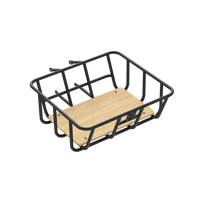
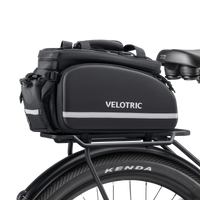
What stood out most was how easily the GoMad adapts to whatever you're actually doing that day. That same adaptability carries over to the accessories: swap on a basket, a passenger kit, or a cargo rack, and the bike reconfigures itself for the job instead of asking you to make do. Paired with 85Nm of torque, it never felt like it was working hard, no matter what was strapped on or riding along.

Comfort held up on rougher pavement too. The fat tires and hydraulic suspension fork more travel than most utility ebikes bother with — took the edge off potholes and cracked asphalt without the bike feeling floaty or vague.
Why it's a good choice:
- 500 lb total payload
- 176 lb rear rack, enough for real grocery or gear runs
- 750W motor, 1,300W peak, 85Nm torque — never felt strained under load
- SensorSwap™: torque mode for responsiveness, cadence mode for steady cruising
- 100mm hydraulic suspension fork, more travel than typical utility ebikes
- Hydraulic disc brakes that stayed predictable fully loaded
Best for: Everyday commuting, grocery runs, work equipment, and short trips that would otherwise mean grabbing the
2. Lectric XPedition2 - Best value cargo ebike for heavy riders
The Lectric XPedition2 leads with a strong number: 450 lbs of DIN-tested payload at a price that undercuts most competitors. The fine print matters here, though — that total splits into a 330-lb rider limit, a 300-lb rear rack, and a 30-lb front basket, so it's worth doing the math before assuming the headline figure applies to you alone. Even so, 330 lbs is a generous ceiling.

On the road, the 750W motor with 1,310W peak and 85Nm of torque made hills feel unremarkable rather than effortful, and the torque sensor kept power delivery matched to my pedaling effort rather than lagging behind it. The Courier 50 front fork's 50mm of travel, with independent preload per leg, let me tune the ride to how loaded I was running the bike — more adjustability than I expected at this price.
It has real presence at 65 lbs before the battery, and I noticed it took a little getting used to once I loaded it up with cargo or rode two-up. That's the trade-off: the same weight that makes it less nimble at a standstill is what keeps it planted once you're moving. Hydraulic brakes with 180mm rotors stayed confident even fully loaded down with groceries.
Why it's a good choice:
- 450 lb total payload, DIN-tested — 330 lb rider-specific limit
- 750W motor, 1,310W peak, 85Nm torque
- 624Wh battery, up to 60 miles claimed range
- Courier 50 suspension fork, 50mm travel with per-leg preload adjustment
- Hydraulic disc brakes, 180mm rotors
- Fits riders 4'11" to 6'5"
Best for: Heavier riders who want proven cargo capacity and hill-climbing power without paying a premium price.
Best Electric Tricycle for Heavy Riders
An electric tricycle can be the most practical choice for riders who are less comfortable balancing a heavy two-wheel ebike at low speeds. Three wheels provide a stable platform when stopped, while a low step-through frame can make mounting and dismounting easier.
Velotric Triker - Best electric tricycle for stability and high capacity
For heavier riders, a lot of the discomfort on a standard bike has nothing to do with fitness — it's the narrow saddle digging in, the awkward lean needed to keep a two-wheeler balanced that makes every stop feel like a small negotiation. Three wheels changes the entire experience, and it's obvious within the first few pedal strokes on the Velotric Triker.

The 750W motor with 1,300W peak and 90Nm of torque had no trouble with a rated 15-degree slope, and the rear differential kept the ride smooth through turns instead of the wheel-scrubbing feel some trikes have. I tested Beginner Mode first — capped at 8 mph, it's a low-pressure way to get comfortable — before switching to Standard Mode, which felt confident and controlled even as I pushed the top speed up.
Comfort held up well too: the 20 x 3.0" tires and 80mm front suspension smoothed out rough pavement, and the wide rear stance never felt tippy even with a loaded basket. The hydraulic brakes' parking-brake function turned out to be one of the more genuinely useful details — handy for loading cargo or holding still on an incline without riding the lever. My one real note is the weight: at 85.8 lbs, folding it up for storage is easy enough, but lifting it fully generally takes two people.
Why it's ideal:
- 500 lb maximum load (including rear basket)
- Three-wheel platform with a rear differential for stable, controlled turns
- 750W motor, 1,300W peak, 90Nm torque — handled a rated 15° slope with ease
- 48V 16.75Ah battery, up to 60 miles claimed PAS range
- 20 x 3.0" puncture-resistant tires and 80mm front suspension
- Hydraulic disc brakes with a parking-brake function
- Low step-through frame and adjustable saddle backrest
- 8 mph Beginner Mode for building confidence
- Folds for storage, though its weight means most riders will want help lifting it
Best for: Older adults, riders with balance concerns, heavier riders who want a stable platform, and anyone carrying groceries or everyday cargo.
What Heavy Riders Should Look for Before Buying an Ebike
1. Rider Weight Limit and Total Payload
Split "payload capacity" into three numbers: max rider weight, max cargo weight, and max total payload. If you're near 300 lbs and the bike's total limit is 300 lbs, you have no room left for a lock, water, or a bag. Don't treat the published max as a target — leave a margin.
2. Motor Torque
Wattage gets the attention, but torque (Nm) is what tells you how the bike handles starts, hills, and loaded climbs. For most heavier riders, 75–100Nm covers mixed riding well; go higher for steep hills or regular cargo. A smooth torque sensor matters too — sudden power delivery is harder to control on a heavier bike.
3. Hydraulic Disc Brakes
More weight means more momentum to shed, especially downhill. Hydraulic brakes need less hand force and modulate more smoothly than mechanical ones. Larger rotors (180–203mm) help with heat and stopping power, but good tires and maintenance still matter just as much.
4. Frame and Wheel Strength
Look for a frame built around its stated payload, not just "aluminum." Wheel strength — rim quality, spoke count, correct tension — matters just as much. Have wheels checked in the first few hundred miles, since new spokes tend to settle.
5. Tire Width and Pressure
Wide tires add traction and cushioning, but only within the right pressure range. Too low feels vague and risks rim strikes; too high loses comfort and grip. Adjust based on your actual load.
6. Suspension Setup
Adjustable suspension beats a bigger number on paper. Air forks let you tune pressure for your weight so the bike doesn't bottom out on normal bumps. If suspension is limited, a good saddle, grips, and correct tire pressure pick up the slack.
7. Battery Capacity
Expect less range than the manufacturer's best-case number — your weight, hills, and cargo all eat into it. A 700Wh+ battery gives real buffer. For regular cargo use, a dual-battery setup is often more useful than one big single battery.
8. Fit and Mounting Access
Capacity means little if the bike is uncomfortable to reach or hard to get on and off. Compare standover height, saddle range, and handlebar adjustment. Step-through frames help with limited hip or knee mobility — but confirm fit with a test ride if you can.
Frequently Asked Questions
1. What's the best ebike for a 300 lb rider?
One with a clearly stated capacity above 300 lbs, strong hydraulic brakes, and enough torque for your terrain. The Velotric Nomad 2X and Mokwheel Obsidian both list 560-lb payloads; confirm how each brand calculates that number.
2. Can a 350 lb person ride an ebike?
Yes, if the manufacturer approves at least 350 lbs for the rider specifically — not just the total payload. Check for a separate rider-only limit.
3. Are fat tire ebikes better for heavy riders?
They help with traction and stability on rough ground, but width alone doesn't make a bike stronger. Frame, wheel, and brake ratings matter more.
4. What motor size is best for heavy riders?
750W with roughly 75–100Nm of torque is a solid baseline. Smooth power delivery and good brakes matter as much as peak output.
5. What's the highest weight capacity for an ebike?
Among two-wheelers here, the Nomad 2X and Mokwheel Obsidian top out at 560 lbs. The Velotric Triker is rated to 500 lbs including its rear basket. These aren't directly comparable — brands define "payload" differently.
6. Does a heavier rider reduce range?
Yes — more weight means more energy spent climbing and accelerating. Lower assist levels and correct tire pressure help stretch it.
7. Is a step-through ebike strong enough for a heavy rider?
Yes, if its rated capacity supports your weight. Frame shape isn't a reliable strength indicator — go by the rating.