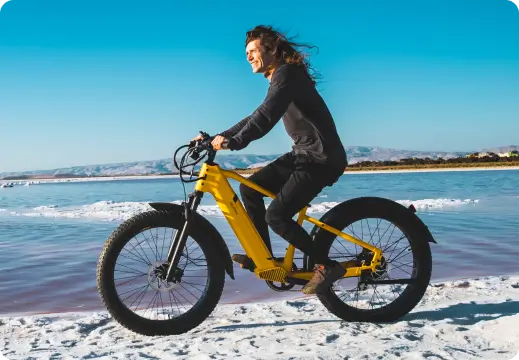






Electric bikes continue to grow in popularity across Oregon, from Portland’s urban bike lanes to the paved river trails in Eugene and the scenic routes of Bend. But as ebikes become more common, understanding Oregon’s ebike laws is essential—especially because the state's regulations differ slightly from the standard 3-class system used in most of the U.S.
Whether you're a daily commuter, a recreational rider, or just getting into ebikes, this guide breaks down everything you need to know about Oregon electric bike laws, including age limits, helmet rules, path access, and how Oregon defines an ebike under state law.
How Oregon Defines an Electric Bike
Under Oregon law, an electric assisted bicycle (e-bike) is treated as a bicycle, not a motor vehicle — but only if it meets specific criteria defined in the Oregon Vehicle Code (ORS 801.258).
To qualify as an e-bike:
- Must be designed to operate on wheels and have fully operative pedals.
- Must have a seat or saddle for the rider.
- Must have no more than three wheels in contact with the ground.
- Must have an electric motor with a power output ≤ 1,000 watts.
- The motor must not propel the bike faster than 20 mph on level ground without pedaling.
This means e-bikes are legally treated like normal bicycles for most traffic laws.
Official statute: ORS 801.258— Electric assisted bicycle
Oregon and the 3-Class ebike system
Oregon generally recognizes the industry standard Class 1, Class 2, Class 3 system, which helps riders and local agencies understand where e-bikes can be used:
| Class | How It Works | Max Assisted Speed |
|---|---|---|
| Class 1 | Pedal-assist only | 20 mph (Oregon State Parks) |
| Class 2 | Throttle or pedal, assists without pedaling | 20 mph (Oregon State Parks) |
| Class 3 | Pedal-assist only, higher assist speed | 28 mph (Oregon State Parks) |
Note: If a motor alone can propel the bike past these limits, it’s not considered an e-bike for most purposes and may be treated like a moped or motor vehicle.
Learn more about Class 2 Ebikes
Ebike Laws in Oregon
Now that we’ve established what’s considered an ebike in Oregon, let’s talk about e-bike laws. Below, we outline some key legislation electric bicyclists should know in Oregon.

Where you can ride an ebike in Oregon
Oregon has one of the most extensive bike networks in the country, and ebikes are broadly allowed anywhere traditional bicycles can go—unless signage states otherwise.
✅ Bike Lanes (On Streets): All ebike types are allowed.
✅ Shared-Use Paths (Paved Trails): Ebikes are generally allowed, but local jurisdictions may enforce speed limits or restrict high-speed Class 3 operation.
✅ State Parks & Natural Surface Trails: This is where rules vary the most.
- Oregon State Parks often restrict ebikes on non-motorized natural trails,
- Many jurisdictions only allow Class 1-style pedal assist on soft-surface MTB trails,
- Class 2 throttle use may be restricted in natural areas.
Always check the rules for Bend, Eugene parks, Metro parks, Forest Park (Portland), and regional MTB trail systems.
✅ Roadways: All ebikes that meet Oregon’s definition may be ridden on public roads and must follow standard traffic laws.
❌ Sidewalks: State law and many local ordinances prohibit riding e-bikes on sidewalks. Always check city rules in areas like Portland or Eugene.
Learn more about Class 1 Ebikes
What class of ebikes are legal in Oregon?
Why do ebike classes matter? Depending on the class, the laws surrounding e-bike use can vary — like where you ride the ebike and whether you have to wear a helmet.
In Oregon, three classes of ebikes are allowed: Class 1, Class 2, and Class 3, as described above. Note that these classifications are unique to Oregon. Other states may have their own definitions for each ebike class.
For example, in New York, a Class 3 ebike can’t go faster than 25 mph, which is different from the 28-mph industry standard.
Rider age requirements in Oregon
Under Oregon law, a rider must be at least 16 years old to legally operate an electric assisted bicycle on public roads, bike lanes, and shared-use paths.
This age requirement applies statewide and covers all types of electric assisted bicycles that meet Oregon’s legal definition, regardless of motor power or e-bike class.
Riders under the age of 16 are not permitted to operate an e-bike on public rights-of-way, even if they are supervised by an adult.
Do you need a helmet when riding an ebike in Oregon?
Oregon’s helmet law (ORS 814.485) applies to:
- All riders under age 16, regardless of class or power
- Adults are not required to wear helmets by state law, though it is strongly recommended
Some cities—such as Portland—have stricter local requirements for minors.
How old do you have to be to ride an ebike in Oregon?
Oregon law requires you to be at least 16 years of age to ride an ebike. The state is looking to take a tougher stance on underage e-bike cycling and even fine people who cycle without meeting the age minimum.
Children may ride as passengers (such as on a cargo bike), provided they are seated safely, but may not operate the ebike themselves.

Is there a speed limit or restriction on motor power for ebikes in Oregon?
Under Oregon state law, an electric bicycle can’t have a motor with a power output of more than 1,000 watts. An ebike motor also can’t propel the bike independently (without the cyclist pedaling — aka throttle assist) at speeds of more than 20 mph.
Learn more about Class 1 Ebikes
Do you need a license, insurance, or registration to ride an ebike in Oregon?
- E-bikes do not require a driver’s license.
- They do not need vehicle registration.
- Insurance is not mandated for e-bike riders under Oregon law.
Good news: There’s no need to get a driver’s license for an ebike. Oregon also doesn’t have any registration requirements for electric bicycles.
You also don’t need to get insurance for an ebike. However, ebike insurance can be a smart investment. Depending on the policy and coverage details, insurance can cover everything from ebike repairs to medical expenses following an accident.
Can you ride an ebike on sidewalks in Oregon?
Sidewalk laws are determined locally.
In many Oregon cities—including Portland, Eugene, and Corvallis—bicycles and e-bikes are prohibited from riding on sidewalks in business districts.
In residential and low-density areas, sidewalk riding may be allowed unless posted otherwise.
When sidewalk riding is allowed, cyclists must:
- Yield to pedestrians
- Travel at walking speed
Local ordinances for Ebikes in Oregon
The above content covers basic ebike laws that apply across the state of Oregon. However, be aware that local ordinances may differ from general regulations. It’s always worth checking your area’s laws before you ride.
If you’re in an urban space, consult your local police department or DMV. Some cities or counties also have publicly available ordinances.
For example, the city of Eugene, Oregon, has its own guidelines. Class 1 and Class 2 ebikes aren’t allowed on side paths in the Whilamut Natural Area or East Alton Baker Park if the electric motor is on. Also, you can’t use Class 3 ebikes on any shared-use paths.
How Oregon enforces ebike laws
Enforcement focuses on:
- Riders must be 16+.
- Speeding on multi-use paths
- Riding on prohibited natural-surface trails
- Helmet compliance for riders under 16
- Unsafe operation in high-traffic areas
- Sidewalk restrictions in business districts
While citations are possible, most enforcement occurs through posted signage, education, or verbal warnings.
Learn more about Class 1 Ebikes
Oregon is best explored with a Velotric Ebike
Familiarizing yourself with Oregon ebike laws can keep you safe when cycling in the state and help you avoid pesky tickets and fines. Besides knowing Oregon ebike laws, you need one other thing: an ebike!
Velotric’s ebikes offer a model for every kind of cyclist. If you’re looking for an urban bike for commuting to work, try the brand-new Discover 3. If you want to go off-road and explore the great outdoors, opt for the fat tire Nomad 2X.
The Velotric Discover 3 redefines the daily commute ebikes with a perfect blend of power, comfort, and long-range capability. Designed for riders who want a reliable ebike for city streets, commuter routes, and weekend explorations, Discover 3 delivers thoughtful features that make every ride smoother, safer, and more enjoyable.

- SensorSwap™ Dual Sensor System: Instantly switch between torque sensing and cadence sensing to match different riding styles and conditions.
- Long-Range Battery (Up to ~80 Miles): High-capacity battery supports long commutes and extended weekend rides with fewer recharges.
- ComfortMax™ Ride System: Air suspension fork, suspension seatpost, and ergonomic saddle work together to reduce vibration and rider fatigue.
- Class 1/2/3 Switchable Modes: Easily adjust assist behavior to comply with local regulations or personal riding preferences.
- All-Weather Ready Design: IPX6 bike and IPX7 battery waterproofing ensure reliable performance in rain and wet conditions.
- Integrated Safety & Security: Built-in lighting, UL-certified battery system, and Apple Find My / Android Find Hub support enhance everyday peace of mind.
Learn more about Velotric Discover 3
Final Thoughts
Oregon’s ebike laws are more flexible than many states, largely because Oregon has not formally adopted the nationwide 3-class system. Instead, the focus is on safe speeds, appropriate use of shared paths, and ensuring that riders—especially minors—follow basic safety rules.
Regardless of whether you ride a commuter ebike, a fat tire adventure model, or a cargo-focused design, understanding the state’s rules can help you ride confidently across Oregon’s trails, urban bike networks, and scenic routes.
As legislation continues to evolve, especially around higher-speed pedal-assist e-bikes, checking local regulations before exploring new areas will ensure every ride is smooth, safe, and compliant.
Data Sources
The above information is sourced from these websites and was last updated in January 2026. If you have any questions, you can visit the following sites directly for confirmation.