


Unlike traditional bikes, electric bikes carry motors, batteries, control units, and wiring — all of which are vulnerable to moisture. A single compromised seal can lead to short circuits, battery failure, or a motor that simply stops working. Water damage is also one of the most common. And most preventable, causes of costly ebike repairs.
The good news? There's a standardized rating system that tells you exactly how well your ebike handles water. It's called the IPX rating, and understanding it could save you a lot of money (and a lot of headaches).
Not all "water-resistant" claims printed on packaging mean the same thing. Some are backed by science. Others are just marketing. Here's how to tell the difference.
What Does IPX Mean?
IP stands for Ingress Protection — an internationally recognized standard that measures how well a device resists the entry of foreign materials like dust and water.
The "X" in IPX simply means the product hasn't been rated for dust resistance. When you see IPX on an ebike, the focus is entirely on water protection.
However, the IEC itself does not perform product testing. Instead, IPX ratings are verified by independent, certified third-party laboratories such as TÜV SÜD, Intertek, and SGS. These organizations conduct controlled, repeatable tests based on IEC protocols to ensure accuracy and consistency.

That means IPX ratings are not self-reported claims. They are the result of standardized laboratory testing under globally accepted procedures.
This is why IPX ratings are far more trustworthy than vague claims like "weather-resistant" or "built for all conditions." Those phrases have no defined criteria. IPX does.
IPX Rating Levels at a Glance
| Rating | Protection Level | What It Means |
|---|---|---|
| IPX0 | No protection | No resistance to water whatsoever |
| IPX1 | Dripping water | Protected against vertically falling water drops |
| IPX2 | Angled dripping | Protected against drips at up to 15° angle |
| IPX3 | Spraying water | Protected against sprays up to 60° from vertical |
| IPX4 | Splashing water | Protected against water splashing from any direction |
| IPX5 | Water jets | Protected against low-pressure jets from any direction |
| IPX6 | Powerful jets | Protected against high-pressure, heavy water jets |
| IPX7 | Immersion | Protected against submersion up to 1 meter for 30 minutes |
| IPX8 | Continuous immersion | Deeper or longer submersion (manufacturer-defined) |
Most quality ebikes fall somewhere between IPX4 and IPX7. The higher the number, the more confidently you can ride through real-world conditions.
Not Sure Which IPX Rating You Need?
Choose your riding habits and local weather conditions, and we’ll suggest a practical IPX level for your ebike.
Good for casual dry-weather riding
IPX4 is usually enough if you ride mostly on dry roads and only deal with occasional splashes or light rain.
The Last Ebike You'll Check the Weather For - Velotric Nomad 2X
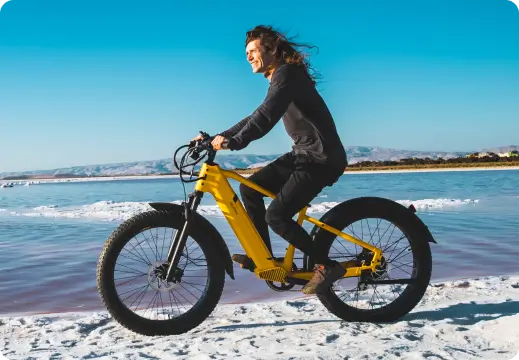
If you want an ebike that takes water resistance seriously, the Velotric Nomad 2X is worth your attention.

Rated IPX7, the Nomad 2X has been tested to withstand submersion in up to 1 meter of water for 30 minutes — the highest practical waterproofing standard for consumer ebikes. That means rain, puddle crossings, and muddy trails are well within its comfort zone.
Beyond the rating itself, the Nomad 2X is purpose-built for demanding conditions. Its fat tires handle loose, wet, and uneven terrain with confidence, while the full suspension setup helps absorb shocks from rocks, roots, and rough trails — keeping your ride stable and controlled even when conditions get unpredictable.

Power is another part of the equation. The 750w high-torque motor delivers strong, consistent assistance when climbing hills or riding through soft terrain like sand or mud, so you’re not fighting the bike when the surface gets challenging. Combined with a 75-mile long-range battery and multi-class speed options, it’s built to go further without compromise.
Common Misconceptions About IPX Ratings
Even riders who know their IPX numbers sometimes misread what those numbers mean. Let's clear a few things up.
❌ IPX7 means my bike is waterproof
Not quite. IPX7 means your bike passed a specific immersion test under specific conditions. It doesn't mean water can never get in under any circumstance — it means the bike was engineered and tested to handle a defined level of exposure. Treat it as a capable tool, not an invincible one.
❌ I can pressure wash my ebike
Please don't. Even an IPX6-rated bike (which handles powerful jets) isn't designed for the sustained, concentrated force of a pressure washer. High-pressure water can force its way past seals that are perfectly adequate under normal conditions. Use a damp cloth or a gentle hose rinse instead.
❌ IPX7 means I can ride underwater
The IPX7 test is 1 meter, 30 minutes, static. That's a very different scenario from actively riding through a river or repeatedly submerging your bike. The rating tells you the bike can survive an accidental dunking — not that it was designed for aquatic adventures.
Tips to Protect Your Ebike from Water Damage
Even with a high IPX rating, a little care goes a long way.
Avoid deep water when you can
Your IPX rating is a safety net, not an invitation. If you can route around a deep puddle or flooded section, do it. Repeated stress on seals shortens their lifespan.
Dry the battery contacts after wet rides
Water that sits on connector points — even on the outside — can cause corrosion over time. A quick wipe-down after a wet ride takes 30 seconds and prevents problems that take hours to fix.
Store your ebike indoors
Prolonged outdoor storage exposes your bike to temperature swings, humidity, and UV — all of which degrade seals and materials over time. A garage, shed, or covered space makes a real difference
Do regular maintenance checks
Inspect seals, connectors, and the battery housing periodically. Look for cracks, discoloration, or corrosion. Catching a compromised seal early is far cheaper than replacing a motor or battery later.
Your ebike is a significant investment. The IPX rating tells you how it was built — and how you take care of it determines how long it lasts.
Ride Every Day. In Every Weather.
An ebike is only as good as the days it lets you ride. Rain shouldn't be a reason to leave it in the garage. Puddles shouldn't make you second-guess your route. And a little mud definitely shouldn't slow you down.
That's what IPX ratings are really about — not just a number on a spec sheet, but the freedom to ride on your terms. When your bike is built to handle real conditions, every day becomes a riding day.
So next time the forecast looks uncertain, check your IPX rating — then go ride anyway.