



Whether you ride an electric bike or a bike, it's in your best interest to wear a helmet. Sure, we know it might not be the hottest look around, but it can be a life saver — literally.
Studies have looked at the effectiveness of bike helmets when it comes to preventing pediatric brain injury as well, so it's just as important to take this safety measure with children as it is with adults.
Clearly, wearing a helmet is critical if you're a biker or e-bike rider. But is it mandatory? There is no national bicycle helmet law. Every state has its own regulations regarding bicycle helmet requirements. What's more, those requirements may vary for minors versus adults. Read on for a quick guide to bicycle helmet laws in the United States.
Is it mandatory to wear a bicycle helmet?
There is no country-wide bicycle helmet law. In the U.S., legislation varies between states and according to factors like age. Below, you'll find a guide to the different statewide laws.
Even if you live in an area where local laws don't require helmets, it's definitely a good idea to wear one. Head injuries are especially common among cyclists. According to the National Safety Council, one-third of non-fatal injuries to bicycle riders are head injuries.
Unlike when you're riding in a car, on a bike you don't have a seat belt holding you in place. There's no protective casing around you to keep you from being ejected from the seat — and flying off head-first. If you have to brake suddenly and you're thrown from your bike, you run the risk of injuring your head in the fall. A helmet provides protection in the case of a traumatic blow.
Bicycle helmet laws
Despite strong evidence supporting helmet use, the U.S. has no national law making them mandatory — regulations are left to individual states. Requirements vary widely: some states have none at all, while others mandate helmets for riders under a certain age.
Electric bicycle helmet laws
The same principle applies to e-bikes: no national helmet law exists, and rules are set state by state. Requirements can vary by rider age and also by the class of e-bike you're riding.
There are three main classes of e-bikes:
- Class 1 - Pedal assist only, no throttle, max speed 20 mph
- Class 2 — Throttle assist available, max speed 20 mph
- Class 3 — Pedal assist only, no throttle, max speed 28 mph

Bicycle helmet laws by state
Laws regarding helmet requirements for cyclists and e-bicyclists vary between states. Some states make helmet wearing mandatory while others don't have any laws at all. Some states have age-specific laws, making helmets mandatory only if you're under a certain age.
See the below table for a comprehensive list of bike helmet laws state-by-state. These laws apply to both regular bikes and e-bikes.
Data sources: Insurance Institute for Highway Safety (IIHS) & Bicycle Helmet Safety Institute. Data current as of April 2026.
Type a state name to quickly find the matching row.
| State | Helmet laws for bikes | Helmet laws for electric bikes |
|---|---|---|
| Alabama | 15 and younger | All classes, all ages |
| Alaska | No law | Local bike requirements only |
| Arizona | No law | Local bike requirements only |
| Arkansas | No law | Class 3 riders under 21 years old |
| California | 17 and younger | Class 1 & 2, under 18. Class 3, all ages. + Marin Co. Class 2, all ages. |
| Colorado | No law | Class 3, under 21 |
| Connecticut | 17 and younger | Class 1 & 2, under 16. Class 3, all ages |
| Delaware | 17 and younger | All classes, under 18 |
| District of Columbia | 15 and younger | All classes, under 16 |
| Florida | 15 and younger | All classes, under 16 |
| Georgia | 15 and younger | Class 1 & 2, under 16. Class 3, all ages |
| Hawaii | 15 and younger | All classes, under 16 |
| Idaho | No law | No requirement |
| Illinois | No law | Local bike requirements only |
| Indiana | No law | Class 3, under 18 |
| Iowa | No law | No requirement |
| Kansas | No law | Local bike requirements only |
| Kentucky | No law | Local bike requirements only |
| Louisiana | 11 and younger | Class 3, all ages |
| Maine | 15 and younger | All classes, under 16 |
| Maryland | 15 and younger | All classes, under 16 |
| Massachusetts | 16 and younger | All classes, all ages |
| Michigan | No law | Class 1 & 2, local bike requirements. Class 3, under 16 |
| Minnesota | No law | No requirement |
| Mississippi | No law | Local bike requirements only |
| Missouri | No law | Local bike requirements only |
| Montana | No law | Local bike requirements only |
| Nebraska | No law | No requirement |
| Nevada | No law | Local bike requirements only |
| New Hampshire | 15 and younger | Class 1 & 2, under 16. Class 3, under 18 |
| New Jersey | 16 and younger | All under 17 (see note: law updated Jan 2026) |
| New Mexico | 17 and younger | Moped law, all classes, under 18 |
| New York | 13 and younger | Class 1 & 2, state and local bike helmet laws |
| North Carolina | 15 and younger | All classes, under 16 |
| North Dakota | No law | "Motorized Bicycles" — No requirement |
| Ohio | No law | Class 1 & 2, local requirements. Class 3, all ages |
| Oklahoma | No law | All classes, local requirements only |
| Oregon | 15 and younger | All classes, under 16 |
| Pennsylvania | 11 and younger | All classes, under 12 |
| Rhode Island | 15 and younger | All classes, under 16 |
| South Carolina | No law | No requirement |
| South Dakota | No law | No requirement |
| Tennessee | 15 and younger | Class 1 & 2, under 16. Class 3, all ages |
| Texas | No law | All classes, local requirements only |
| Utah | No law | No requirement |
| Vermont | No law | No requirement |
| Virginia | No law | Class 1 & 2, local requirements. Class 3, all ages |
| Washington | No law | All classes, local requirements only |
| West Virginia | 14 and younger | Class 1 and 3, under 15 plus local requirements |
| Wisconsin | No law | Local requirements only |
| Wyoming | No law | No requirement |
Cities that require bicycle riders to wear helmets
As you can see from the table above, helmet laws vary drastically between states. Some have zero regulation while others are more strict. What's more, some cities have their own helmet laws, and these can differ from state regulations.
Here are three examples of cities that take a different approach to helmet laws:
-
New York City, New York
In New York State, bicycle helmets are required for anyone under 14 years of age. When it comes to class 1 and class 2 e-bike riders, state and local helmet laws apply. In New York City, however, class 1 and 2 riders under 18 must wear helmets. Working cyclists (like couriers) are also required to wear helmets. For class 3 riders, everyone is required to wear a helmet regardless of age or profession.📋 Legislative note: A proposed bill (S2526) would expand helmet requirements to all ages for bicycles, e-bikes, and e-scooters in New York City, though it has not yet been signed into law. -
Louisville, Kentucky
Kentucky doesn't have any statewide laws for wearing helmets for either e-bike riders or traditional bikers. However, Louisville has its own rules. Within general city limits, riders under 12 years of age are required to wear a helmet. Additionally, anyone under 18 years of age riding in a Louisville Metro Park must wear a helmet. -
Los Angeles, California
Los Angeles, California requires bicycle riders 17 years of age and younger to wear helmets. Helmets are also required for class 1 and 2 riders under 18 years of age and class 3 riders of all ages.
As you can see, regulations vary depending not only on location but also on factors like age and whether you're on a bicycle or an e-bicycle. It's best to check directly with your local authority to see what rules apply to you.
Why are helmets mandatory in some states?
Some cities or states have enacted their own helmet laws in efforts to protect public wellbeing.
Why? The benefits are clear. This protective headgear can prevent serious injury and save lives. The statistics and studies mentioned at the beginning of this article illustrate that well enough. Experts in traffic safety confirm benefits, and helmet use is broadly recommended by some of the most respected health and safety agencies in the U.S. government.
The Department of Transportation's National Highway Safety Administration (NHTSA) has identified bicycle helmets as one of the "countermeasures that work" in protecting both children and adults on the road.
Similarly, the Centers for Disease Control and Prevention have flagged wearing helmets as an important measure in protecting both adult and child bicycle riders.
The United States Consumer Product Safety Commission has emphasized the importance of wearing helmets — most recently in response to a scary statistic that showed more adults dying from bicycle accidents currently than they used to in the past.
By passing laws that make helmets mandatory for populations, cities and states are doing their part to protect their citizens.
Choosing a bike helmet
Convinced that you should always cycle (or e-cycle) with a helmet? Good! You've made a smart choice. To get the most out of your helmet, it's important to get a good-quality model that fits well.
When choosing a helmet, make sure the model you buy has been tested for safety — it should carry CPSC certification.
You also need to make sure that the helmet is properly sized and fitted for your (or your child's) head. Here are some pointers from the CDC to encourage proper wearing:
- Size. You can determine your head size using a soft tape measure. Wrap it around your head, placing the tape measure just above your eyebrows and ears. The tape measure should be level front to back. Check the helmet brand's sizing chart to determine if a helmet will fit you correctly (sizing varies between brands).
- Fit. The helmet should fit snugly around your head. There shouldn't be any spaces between the foam and your head. However, the helmet shouldn't be too tight, which could be uncomfortable and cause headaches.
- Position. Once the helmet is on your head, there should be one to two fingers'-width of space between the brim of your helmet and your eyebrows. This ensures a clear line of sight. At the back, your helmet's brim should be high enough to avoid touching the top of your neck.
- Adjustments. Some helmets come with removable padding or a fit ring that makes them easier to adjust. Every bike helmet comes with straps to secure it around your head. The side straps should make a "V" slightly in front of and beneath your ears. The chin strap should fit snugly but allow for one to two fingers' width of space.
Remember, it's important to revisit your helmet needs regularly. If you change your hairstyle, for example, your helmet could fit differently. And if a helmet has experienced an impact, it should be replaced, according to the CDC. Even if you can't see any visible damage, the helmet's integrity may suffer after a blow, making it less protective.
Prioritize safety while bike riding
Don't leave safety to chance when riding a bike or e-bike. Invest in a good-quality helmet that will protect you if you get into a crash. Even if helmets aren't mandatory in your city or state, it's worth safeguarding your body.
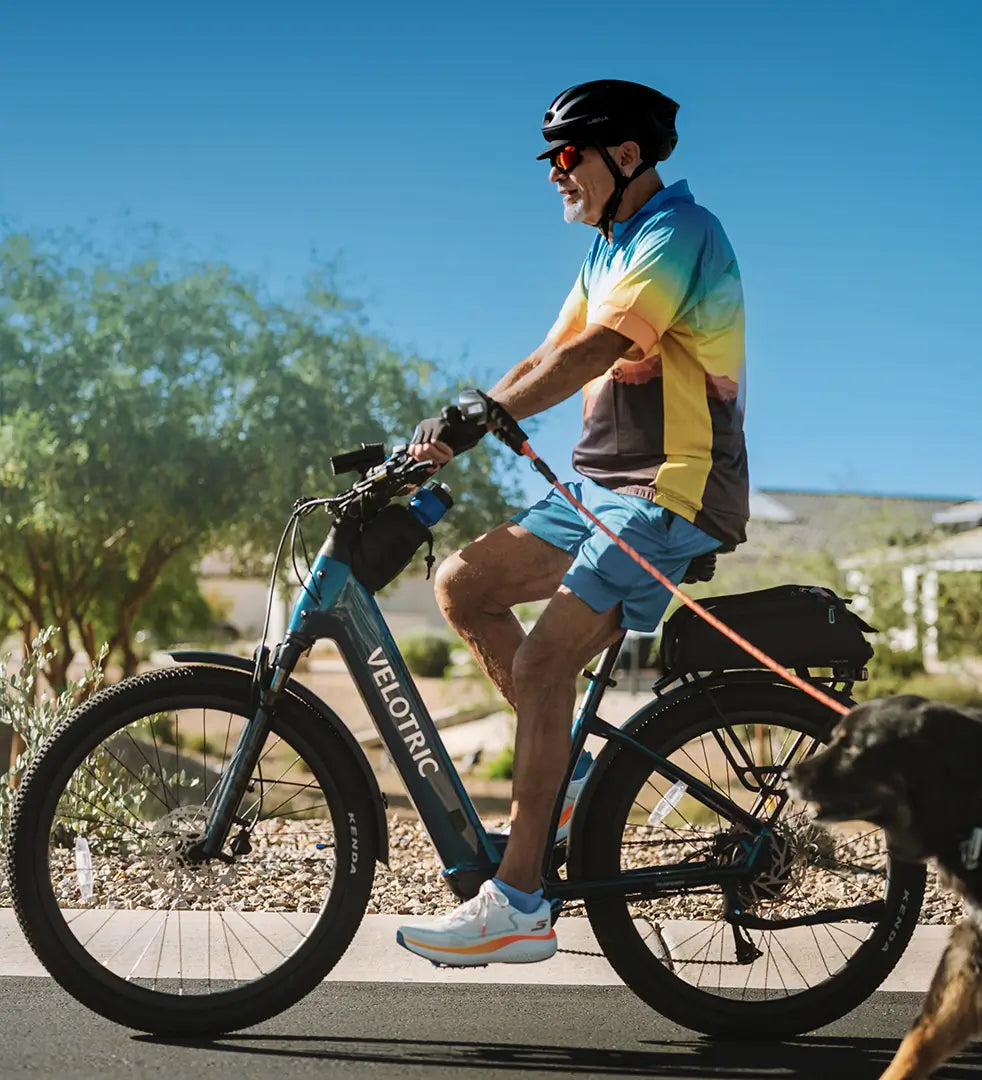
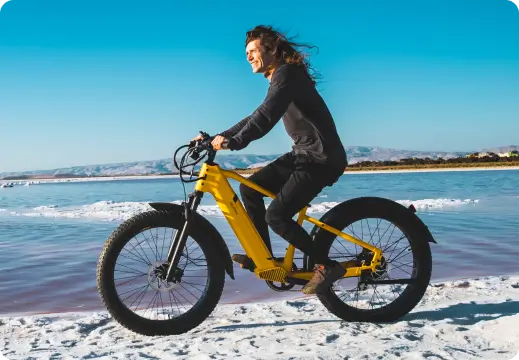
For a commuter ebike that's built with both safety and flexibility in mind, the Velotric Discover 3 is worth a serious look. One of the standout features for riders navigating different states and local laws is its built-in class switching: you can move between Class 1, Class 2, and Class 3 modes with a single button press directly on the display, so your ride stays compliant wherever you go.
For those who want even more control, the Discover 3 also offers Custom Mode — enabled through the Velotric app — which lets you independently set the speed limit for pedal assist and throttle anywhere. It's a practical solution for riders who cross into areas with different e-bike regulations and don't want to be locked into a one-size-fits-all setting.
Note: Custom Mode is available in most states, but not supported in California due to state regulations.
Under the hood, the Discover 3 runs a 750W rear hub motor that peaks at 1,100W with 75Nm of torque, paired with a 730Wh battery rated for up to 80 miles per charge. It comes with a Shimano 8-speed drivetrain, an 80mm adjustable air suspension fork, and a suspension seatpost — all designed to keep longer rides comfortable.

Safety features include Tektro hydraulic disc brakes, a 500-lumen integrated headlight, and a rear light with brake and turn signals built in. The frame is IPX6 waterproof; the battery, IPX7.
The above information is sourced from these websites and was last updated in April 2026. If you have any questions, you can visit the following sites directly for confirmation.
- ScienceDirect: Bicycle helmets – To wear or not to wear? A meta-analyses of the effects of bicycle helmets on injuries
- Springer Nature Link: Bike helmets prevent pediatric head injury in serious bicycle crashes with motor vehicles
- NSC: Bicycle Safety Statistics May Surprise You
- Iihs.org: Bicycle helmet use laws
- Dot.ny.gov: FAQ about Bicycling in New York
- Nyc.gov: Electric Bicycles & More
- LouisvilleKy.gov: Bike Laws
- Cpsc.gov: New CDC Report Finds More Adults Are Dying from Bicycle-Related Accidents
- Cpsc.gov: Which Helmet for Which Activity?